AUDIT & ADVISORY SERVICES |
|
|---|
|
|
|
|
In this issue:
- Standards of Ethical Conduct
- IT Security – Why Email Attachments Can be Dangerous and the Colonial Pipeline Ransomware Attack
- AAS Website Updates
- Introducing Frank DiSilvestro, Conflict of Interest Manager
- USC Integrity Line - Confidentiality
- News Links
- Contact Information
|
|
|---|
|
Standards of Ethical Conduct |
|
|---|
|
The University’s Employee Standards of Ethical Conduct (Standards) was developed to establish expectations for the behavior of University employees and to provide guidance for adhering to the many laws, regulations, policies and ethical standards they are expected to follow. The following topics are highlighted by the Standards:
Honesty and Trust
- Dishonest Acts and Fraud
- Internal Controls
- Integrity Line
- Protection from Retaliation
Respect
- Academic Freedom
- Workplace Civility
- Equal Opportunity Programs
- Diversity and Inclusion
|
|
|
Confidentiality and Compliance
- Confidentiality
- Financial Reporting Integrity
- Environmental, Health, and Safety
- Research Integrity
Ethics, Stewardship, and Accountability
- University Ethics Policy
- Internal Controls
- Authority to Sign Contracts
- Conflicts of Interest and Commitment
- Intellectual Property
- Computer Use
- Consequences of Violations
|
|
|---|
|
|
IT Security – Why Email Attachments Can Be Dangerous |
|
|---|
|
Email is easily circulated--Most viruses do not even require users to forward the email—they scan a users' mailbox for email addresses and automatically send the infected message to all of the addresses they find. Attackers take advantage of the reality that most users will automatically trust and open a message that comes from someone they know.
Almost any type of file can be attached to an email message, so attackers have more freedom with the types of viruses they can send.
What steps can you take to protect yourself and others in your address book?
- Be wary of unsolicited attachments, even from people you know. Many viruses can "spoof" the return address, making it look like the message came from someone else.
- Keep software up to date. Many operating systems offer automatic updates. If this option is available, your organization and department should ensure it is enabled.
- Trust your instincts. If an email or email attachment seems suspicious, don't open it, even if your antivirus software indicates that the message is clean. If something about the email or the attachment makes you uncomfortable, there may be a good reason. Don't let your curiosity put your computer at risk.
|
|
|---|
|
AAS Website Updates
If you haven’t visited our website lately, we invite you to take another look. You’ll find updates throughout the site, including language more accessible to a wider audience (we’ve cut back on the “auditor speak”), new visual elements, a news feed, and new highlight features. Keep an eye out for “Policy in Action” and the fun “Staff Spotlight.”
Under “Our Services,” you’ll discover a new section on Conflict of Interest (COI). While AAS has always offered COI services, we now have a dedicated Conflict of Interest Compliance Manager on staff, so the website features more in-depth information about COI and the services we provide in that arena. Look for the feature introducing our COI Manager, Frank DiSilvestro, elsewhere in this issue.
Our website reflects AAS’s desire to serve the university community and to keep our stakeholders informed. We hope you enjoy the updates and find the information and resources useful.
|
|
Introducing Frank DiSilvestro, Conflict of Interest Manager |
|
|---|
|
|
|
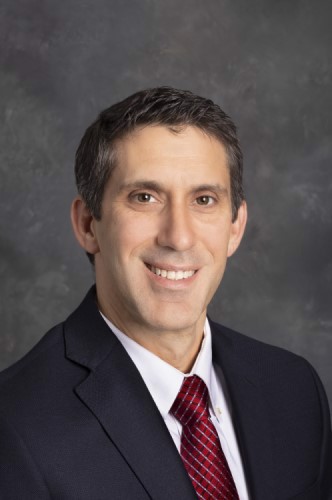 |
At the beginning of May, Frank DiSilvestro joined Audit & Advisory Services (AAS) as the department’s first Conflict of Interest (COI) Compliance Manager. A native of Indiana, Frank earned a BS in Marketing from Indiana University and a Master of Public Policy from Duke University. His career has taken him from Duke to the World Bank; in both organizations he served in roles supporting community development and service-learning programs. An opportunity to serve as the South Carolina State Director for AmeriCorps, a federal agency that supports community-based service and volunteering programs, brought Frank and his family to Columbia. He spent four years in that position before coming to Audit & Advisory Services.
When asked about the importance of having on staff someone who specializes in COI, Pam Dunleavy, Chief Audit Executive of the University of South Carolina, said, “Conflict of Interest has increasingly become an area of interest for a myriad of reasons, including concerns about foreign governments gaining improper access to U.S. research, undue influence from a business relationship, personal gain, corruption or the appearance of an inappropriate relationship causing a toxic environment.” The addition of Frank to the team means AAS can provide the university continual, expert guidance on this complicated issue to help protect the University and its employees.
Frank can be reached at disilvef@sc.mailbox.edu, or 803-777-3732.
Read the full interview with Frank on our website. |
|
|
|
|
USC Integrity Line - Confidentiality |
|
|---|
|
According to the Employee Standards of Ethical Conduct, confidential, proprietary, and private information retained by the University must be kept confidential as required by federal and state laws and regulations. University employees are responsible for understanding and following these laws and regulations regarding, access, use, protection, disclosure, retention, and disposal of confidential information. Employees should ensure information security through the use of electronic and physical safeguards. The privacy of individuals should also be respected by employees with access to personally identifiable information.
University employees are expected to report any concerns regarding possible noncompliance with laws, regulations, and policies.
|
|
|
USC Integrity Line Reporting
You can report your concern anonymously to the USC Integrity Line:
Reports are shared with a select group of three individuals:
-
Chair of the Audit, Compliance and Risk Committee of the Board of Trustees
-
Chief Audit Executive
-
General Counsel
These individuals determine the appropriate path forward for investigating your report.
Click
here
for more information on the USC Integrity Line
|
|
|---|
|
|
|
|
University Policies related to Confidentiality:
ACAF 3.03,
Handling of Student Records
FINA 4.11,
Credit/Debit Card Processing and Security
FINA 4.12,
University Identity Theft and Detection Program
HR 1.69,
Official Personnel Files and Records Release
IT 3.00,
Information Security
UNIV 1.51,
Data and Information Governance
UNIV 1.52,
Responsible Use of Data, Technology, and User Credentials
UNIV 1.60,
HIPAA Compliance
UNIV 2.00,
Freedom of Information Policy
|
|
|---|
|
Contact Audit & Advisory Services
1600 Hampton St.
Suite 610
Columbia, SC 29208
Have suggestions or requests for future newsletter topics? Send us an email.
|
|
|---|
|
|
|
|