CALENDAR OF EVENTS
Apr 4 - May 27
Omega Term 2011
May 20 - 28
BHCTI classes in Cuba
May 30 - 31
Summer Colloquy
May 31
Convocation
Jun 6 - Jul 29
Summer Term |
|
CONVOCATION
2011
|
Agape Baptist Church
3972 Southwest Blvd.
Fort Worth, Texas
Convocation speaker:
Dr. Stephen Hatfield
Pastor of FBC Lewisville, TX
Musical selections:
Sanctuary Choir
of Agape Baptist Church
|
QUICK LINKS
Archive of Previous Issues
Look for us on 
To add subscribers to the
Global Nexus Newsletter
click here to enter
an email address.
|

BHCTI Spotlight
on
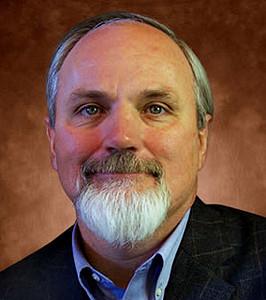
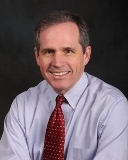
| Mark Carroll
Student - Master of Divinity
Mark Carroll is from Walker, Louisiana, and has been enrolled at BHCTI for over 6 years. He has finished his final courses and will be graduating in May 2011.
more . . .
|
|
2011 SUMMER COLLOQUY
and convocation
Colloquy theme:
Pain, Peace & Forgiveness:
The Restoration Model of Healing
Dr. Terry Hargrave, featured speaker for this
year's Summer Colloquy, is Professor of Marriage and Family Therapy at Fuller
Seminary in Pasadena, California and is a licensed Marriage and Family
Therapist in both Texas and California. The three plenary sessions will deal
with understanding pain from a love and trust medium, how to find peace by
utilizing restoration methodology, and the work of forgiveness in repairing
relationships.
The Monday session of the Colloquy will be held in the Wade Building, 301 S. Center St., Arlington, in the west wing directly across from the
BHCTI office suite. Tuesday's sessions will be held in the Fellowship Hall of
First Baptist Church, 300 S. Center St., Arlington, Texas.
The Tuesday evening Convocation and Graduation ceremony will be held at 7:00
p.m. at Agape Baptist Church, 3972 Southwest Boulevard, Fort Worth, Texas.
Schedule for the General Public:
Monday, May 30 — Wade Building, Ground Floor
1:15 — 2:45 Session 1: Terry Hargrave
2:45 — 3:15 Break
3:15 — 4:45 Q & A with Respondents
Tuesday, May 31 — FBC Arlington, Fellowship Hall
8:30 — 10:00 Session 2: Terry Hargrave
10:00 — 10:30 Break
10:30 — 11:45 Q & A with Respondents
1:15 — 2:30
Session 3: Terry Hargrave
2:30 — 2:45
Break
2:45 — 4:00
Q & A with Respondents
7:00 — 8:30
Convocation—Agape Baptist Church
|
|
BHCTI SPOTLIGHT
on
Dr. Gene Wilkes
Resident Fellow
Dr. Gene Wilkes, Pastor of Legacy Church in Plano, Texas, has taught at Carroll Institute for the past five years in the area of Leadership and New Testament. God called him to ministry in the local church as a junior in high school while on a mission trip to New Mexico with his youth group. Instead of going to Texas Tech where his father graduated as a chemist, he decided to attend Baylor University where he majored in Religion and Greek. In an email interview Dr. Wilkes writes, "I fell in love with the study of Scriptures while at Baylor and
continued my training through M.Div. and Ph.D. studies at
Southwestern Seminary when Dr. Russell Dilday was the President. I knew my call
was to the local church pastorate but also hoped I could train church
leaders in the classroom someday, too." When BHCTI asked Gene Wilkes to be a Resident Fellow and Legacy Church to be a Teaching Church, he felt that his calling had become complete.
When asked about his philosophy of teaching and what gives him the greatest satisfaction as a professor, Dr. Wilkes responded, "While as the teacher I provide content and direction, I enjoy watching a student grasp, apply and synthesize new information for his or her own ministry and potentially for others. Watching students mature in their understanding and application of what you teach is a teacher’s greatest achievement. The goal is someday to have one of your students take your place as the teacher. My goal as a professor is to influence the next generation of leaders in the movement of Christ and belong to a community of faculty and staff who share that goal. Carroll Institute has that community and through its nexus reaches all generations around the globe."
"As a Resident Fellow of BHCTI, I am able to not only train those beyond my church in a degree program for ministry, but I can also train the leaders of my church. I believe the local church is an ideal classroom for training in ministry. I also share Dr. Corley’s vision for the “Pastor-scholar,” a picture of pastors in years past that was lost when pastors became entrepreneurial business leaders during the Church Growth era. The model of Carroll’s “nexus of learning” is the model of future ministry training, and I did not want to miss the opportunity to be in on a sustainable model of training church leaders for the next century."
Last term, Dr. Wilkes taught the BHCTI master's level course "Biblical Interpretation" on location at Legacy Church. Several Readers (auditors), including staff members from the church who do not have the opportunity to train elsewhere, were able to take the course. Dr. Wilkes commented, "Carroll provides a program of training and depth of learning which is affordable that the people of Legacy and surrounding churches can benefit from."
In May, Dr. Wilkes will be accompanying Dr. Stan Moore, Dr. Adlin Cotto and her husband, Robert, to Cuba for a week of intensive courses with a cohort of MAT (M. A. in Theology) students. Dr. Wilkes also serves on Carroll's Board of Governors.
Gene Wilkes and his wife have two daughters and one granddaughter. In his spare time he enjoys hiking, cycling, trail running, and writing. |
|
|
An Interview with Mark Carroll
Q: What influenced you to become a student at BHCTI?
A: Beginning my studies later in life and having a growing family, the concept of being able to study at home and receive a quality education provided by quality people attracted me to BHCTI. Even though NOTBS is only an hour away and I had friends making that commute, I never considered it once I enrolled in BHCTI. Also, the controversy that has been a part of Southern Baptist life and its impact on seminary professors across the country would not have allowed me to enroll. From my perspective, enrollment would have been tacit approval of some actions taken and opinions expressed. The involvement of Dr. Russell Dilday and others in beginning the Institute also influenced my decision.
Q: Please tell us briefly about your call to ministry.
A: It is difficult to be brief when it took me twenty years to finally surrender everything to God and follow his direction upon my life. I publicly declared my intention to serve God in full time ministry at the young age of eighteen. At the time, I was very active in our church youth group, I had garnered state and national awards with the Royal Ambassadors and possessed what many people called an “old soul” which I guess meant that I viewed the world and lived in it in a way that most eighteen-year-olds did not. I told myself that I would do anything for God except pastor and preach. I just could not see myself in that role. So I pursued a degree in Religious Education.
During my college years I also worked closely with leadership at the convention level. It was during this time that the conservative resurgence began to take shape and power among state Baptists, and I experienced up-close and personal the destruction of lives and careers. I mistakenly let those experiences direct my life away from professional ministry. For nearly twenty years I served God in various ways but not with any vigor or energy. I drifted in my life with God and his church. Along the way God reminded me of his call on my life. As I again began to explore surrendering my life to full time ministry, I knew that if I went all the way with God, I would have to let go of my fear of being a pastor and preacher. It was my wife that spoke to me for God and told me that she did not think I would ever be happy until I gave my life over to becoming a pastor. She and I had never really discussed the frustrations and fears I had, but she knew. When she said those words that day in August of 2004, I felt a huge burden lift from me and a sweeping joy I had not experienced in twenty years. Two weeks later I was enrolled in B. H. Carroll. One year later I was serving a church and following God’s call and will for my life.
Q: Tell us your story: where you are currently involved in ministry; your responsibilities; your experiences in ministry.
A: I am currently pastor at South Walker Baptist Church in Walker, Louisiana. When we came to this fellowship in 2007, it was made up of 9 people who were over the age of 70. We now have an attendance of about 85 on most Sundays and a membership of about 130. Most worship services have in attendance a variety of ages ranging from 5 to 87 years, with the average age at about 45. We have whites and non-whites in our church. Our fellowship also expresses diverse social and economic environments. I mention this because many people thought the church was going to fade away. Historically, seven churches have begun and failed within two miles of this location. But God wanted a church here, and I am glad to be a part of what he is doing here. In a church this size with over 65% new converts, my responsibilities are to take care of just about everything from being lawn boy to janitor to Bible study teacher to pastor. But the greatest joy is experiencing the growth that so many in our fellowship are experiencing. We are developing organically as a church by what I hope is quality pastoral care that assists our members in becoming authentic disciples of Jesus.
We are also considering a merger with another church. A sister Baptist church is about to lose the property they currently lease and are in no financial condition to build. No other space is available in the community they serve which is a four mile drive from where we are located. So much of what I have learned during my tenure with BHCTI is helping me to better manage this coming transition. Courses dealing with leading a church, the function of the church, effective pastoral care, missiology, etc. have prepared our church and me for the process that is ahead of us. How great it is to have a task such as this to reexamine so much of what BHCTI has given me!
Since I began my pastorate here, I have served as president of our Minister’s Association for the past two years and have served on a team that just recently opened a Counseling Center in Livingston Parish. It is the first of its kind available to the public. In our first week, with only referrals from pastors in local Baptist churches, our counselors saw 19 clients. Being a part of meeting such a demanding need has indeed been gratifying.
Q: How are you using your preparation at Carroll Institute in your ministry?
A: I simply cannot imagine my ministry without what Carroll has provided me. Every aspect of ministry life is impacted by what I learned in my studies. No area of ministry was left unattended in the curriculum I pursued. I could give a laundry list of when and how I have been prepared, but the most significant part of my preparation is the integration of all aspects of ministry life into a single expression of caring for God's people as they extend his life and love to the world.
Q: What are your goals in ministry? How can Carroll Institute help you to achieve those goals?
A: My goal is to be the best pastor I can be to that portion of God’s church that he has put under my care. Carroll has more than helped me achieve this goal. Friends and family, church members and colleagues have all witnessed the growth and maturation of my ministry which is due to my studies. I experienced increased confidence and effectiveness in ministry as I moved through my program.
Q: What has influenced you the most about your educational experience at Carroll Institute?
A: The most influential part of my studies had little to do with academics. By being good teachers, every professor modeled how to be a great shepherd. Every one is a friend. Every one desires an open relationship that goes beyond the course. Specifically, as they stretched and challenged my thinking and knowledge, they did so with love and in anticipation of personal growth to which they responded in order to stretch and move me even farther in my development. This is precisely how I want to shepherd my congregation in their growing faith in Christ. The very capable professors that I sat under have shown me how to do it.
Q: Describe briefly your supervised ministry experience.
A: I thoroughly enjoyed working through the supervised ministry projects. Class work can rarely give the hands-on experience of baptism and the Lord’s Supper, budget preparation, personnel issues, or any number of other “nuts and bolts” types of responsibilities that can only be practiced in order to be learned. Working through the projects with my supervisor allowed me to have a glimpse into a different ministry style than my own which has proven to be of great benefit as our church has grown.
Q: What has given you the highest satisfaction from your academic experience here?
A: As I began my studies, I did not really know how I would handle online studies. I thought that if there would be any reason for not finishing, it would be the load that online courses can demand. As it turned out, the online environment and the study load pushed me in ways that became very exhilarating. I completed all my studies online, so every response to every inquiry had to be written. This required me to think through responses in ways I might not normally have thought in a classroom setting. I could be more contemplative in my responses. I think that some people may have been more open in their written responses than they might have been in a classroom. Written responses, I think, creates dialogue that causes all of us to think more. Also, when a response is written and not oral, there is a record in order to clarify a thought or to respond to another classmate later after giving their remarks more thought.
All of this pertains as well for the interaction shared with the professors. I have in my possession every comment every one of my professors made in class. It is not unusual for me to go back and review those comments as I work and come across a situation or point of study that I recall from class. Their notes together with their online comments continue to be a very practical resource for my ministry.
Q: How has BHCTI contributed to your spiritual formation?
A: I don’t think there is a way to separate BHCTI from any part of my development, including spiritually. I have received so many tools for strengthening my life while studying. A church leader can in no way encourage spiritual formation without experiencing it as well. My studies have emphasized for me the need to integrate spiritual formation into all aspects of life; to take the time to experience and apply spiritual formation to everything. My studies encouraged this directly at times and indirectly at other times. But again, it was my professors who modeled such spiritual formation in the way they conducted a course or responded to a question that was most significant. May I say that the strength of the curriculum is important, but the character and integrity of the faculty and staff is what was most significant in my time with Carroll Institute.
Q: Why would you recommend BHCTI to other students?
A: For the quality of the people and the instruction they provide. I would also point out the convenience of online study and the willingness of the entire B. H. Carroll community to be flexible and work with the student to meet their educational goals. I would also highlight the thoroughness of a degree plan designed to prepare the student for every aspect of ministry responsibilities.
Q: What do you plan to do after you graduate with your degree?
A: I will continue to serve South Walker Baptist Church for as long as God wills or they will have me. I am kicking around the idea of pursuing a D.Min., but my family and I have much to discuss before that final decision is made. There are some courses I want to take as a Reader and most certainly will do that.
Q: How do you see Carroll Institute helping the ministry of your church?
A: For the last couple of years I have publicized the Reader courses that I thought might benefit my church members, but they have not caught on as of yet. I envision one day having an ongoing type of extension course that my church members may enroll in together, let’s say, an introduction course, and actually be “in class” like a Reader would be. I believe that as our church grows this will be a significant way that Carroll Institute can directly impact the development of the members of our church.
|
|
Phone: (817) 274-4284; Fax: (817) 274-2226; Toll free: (866) 942-4284
301 S. Center St., Suite 100 - Arlington, TX 76010
|
|