|
Dear Subscriber,
and
You're Automatically Entered
to Win an iPod Touch.
Please take our quick, easy survey on how we can better serve you and your business needs.
You will be entered into our drawing for an iPod Touch.
Only one entry per email.
MSC Leadership is not eligible to win.
This poll will end on October 31, 2011 and the winner will be announced November 1, 2011.
Thank you for your time.
MSC Leadership Team |
What New Debit-Card Fees Could Mean For Swipe Reform and
Small Businesses
When Bank of America yesterday announced that it would levy a $5 monthly
charge on consumers who use their debit cards to make purchases, small-business
owners and merchant groups collectively shuddered.
The battle they won
last year through the passage of the Dodd-Frank financial-overhaul law --
which, among other things, called for the Federal Reserve to rein in debit-card
interchange fees, the swipe fees merchant pay banks for debit card purchases --
may be lost after all.
At the end of June, the Fed ruled to cap swipe fees on debit cards issued by banks
(excluding smaller financial institutions) at no more than
21 cents per transaction -- with the addition of 0.05 percent of the purchase
price and possibly an additional 1 cent for fraud prevention. The swipe fee for
debit-card purchases now runs at an average 44 cents per transaction. That new
cap kicks in on Saturday.
Starting next year,
the debit-card cap is expected to cost banks about $6.6 billion in revenue a
year, according to financial researcher Javelin Strategy and Research.
Bank of America isn't the only bank
intending to charge customers a monthly fee for making debit-card purchases,
however. Other banking giants including J.P. Morgan Chase, Wells Fargo and Sun
Trust have recently done the same or they're now testing similar fees in
certain markets.
Click HERE for entire article
|
How to 'Mobilize' Your Social Media Marketing
More than 200 million Facebook users access Facebook from
mobile devices every month, according to Facebook. If your business wants its
share of those mobile eyeballs, it’s time to combine your social media
marketing with mobile marketing.
Some consumers have embraced mobile-social
interactions without much interference from marketers, mostly because the major
social networks seem to have been relatively slow in developing opportunities to market to mobile-social users. That doesn’t mean you
have to be as slow moving.
Here are three ways
you can drive more social-mobile interactions with your business while you wait
for more abundant social-mobile marketing opportunities to emerge.
Click HERE for
entire article
____________________________________
Three Business Lessons from 'Moneyball'
When business as usual isn't cutting it, you might consider
turning your company's strategy on its head. Or, perhaps, find someone else who
can help you do it.
That's the premise of
Moneyball,
a film based on the 2003 Michael Lewis book
Moneyball: The Art of Winning an Unfair Game about the Oakland Athletics baseball
team. After several seasons of painful losses, the team's general manager,
Billy Beane, adopted a radical, statistics-driven approach to building a
competitive baseball team under an ownership that underinvested in the
franchise.
The film made its U.S. premiere last weekend.
As Major League
Baseball nears the end of its regular season and starts looking to the
playoffs, here are three lessons small-business owners can learn from the true
story behind the film:
Click HERE for
entire article
____________________________________
|
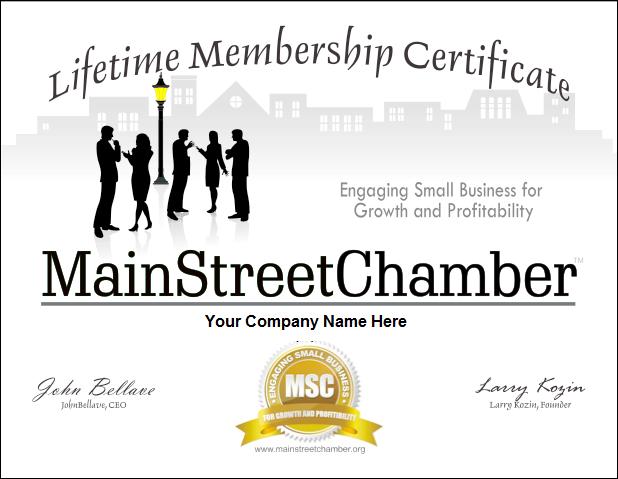
Print Our Member
Certificate
and customize it with Your Company Name
_________________________________
|
|
|
Barter is often
regarded as an old-fashioned means of exchange that was superseded by money because
money is far more efficient. After all,
in a monetary system, an apple grower who needs shoes simply has to find a
cobbler. In a pure barter system, the
apple grower would have to find not just any cobbler, but one who happened to
want apples at that time. Thus, in virtually all civilizations, money came to
play an important role.
However, the
inconvenience of barter was just one factor, and in most places, was probably
not the most significant one in the origin
of money.
Virtually every business regularly pays cash for
something that could be bought on trade, which can then be resold for cash. Imagine a marketplace where cash and credit are not
accepted. How would it be possible to
purchase goods and services you desired?
This modern era of business brings any business the ability to
convert the goods and services to other members and in return get the goods and
services they desire from other members. This is the world of barter.
Business
owners choose barter in order to gain specific benefits:
Growth
& Profitability
New sales and customers
Increased buying power
Conservation of cash flow
Alternative financing
Enhanced quality of life
Lowest cost transaction fees &
Easy to use
Most barter systems are electronically available through websites and/or
trading platforms. It may sound
complicated, but if a person can attach a file in an email, they can find
what’s available on barter. A person will have the resources needed to build the businesses
bottom line with access to thousands of new customers, stronger cash flow,
increased buying power, greater sales volume, and access to new markets for
sale of their product or service.
Tens of thousands of business owners and professionals
already trade in the global trade network.
Earn Barter Dollars from these new customers and put a new found
purchasing power to work running your business, expanding your operations, or
enhancing your personal standard of living without spending cash.
Want to learn more...email
chamberbarter@mainstreetchamber.org
|
|