We all want a healthy, green lawn for our families to enjoy. But did you know that using synthetic lawn chemicals in your yard may significantly increase your dog’s risk of developing certain types of cancer? If being more environmentally conscious wasn’t enough motivation for you to consider organic lawn care for yourselves, consider the health benefits to your dogs!
A landmark 2004 study from Purdue University showed that dogs exposed to chemically treated lawns, specifically those treated with a chemical called 2, 4-D dramatically increased the risk of Transitional Cell Carcinoma (bladder cancer) in Scottish terriers by four to seven times that of dogs not exposed to these toxins. Other breeds considered at high risk of developing this difficult-to-treat cancer include Shetland sheepdogs, West Highland terriers and beagles.
Studies also suggest that there may be a link between lymphoma, one of the most common types of cancer in dogs, and exposure to lawn chemicals. Breeds at highest risk of developing lymphoma include boxers, German shepherds, golden retrievers, Scottish terriers and pointers. Although there is still some controversy over the initial research linking lymphoma with these chemicals, it seems wise to err on the side of caution when it comes to the health of your dog.
The chemical 2,4-D is a very common ingredient in many broad-leaf weed killers. And to give you a better idea of just how toxic it is - so you can draw your own conclusions - it was also a primary component in Agent Orange, used during the Vietnam War. For those of you who are old enough to remember, you know that it was linked to cancer, birth defects and other diseases. I certainly do not put chemicals on my own lawn, but if I did I would want to know both the active ingredients and the inert ingredients of any product. It's important also to check on the inert ingredients, as 2,4-D is often classified in that category and lawn care companies are only obligated to provide information on active ingredients.
Why are dogs at increased risk from chemically treated lawns? They obviously do not wear protective clothing … chemicals get on their fur and are more easily absorbed into the skin. They don’t wear shoes so the chemicals are easily absorbed through their paws and even may be ingested when they clean their feet. They additionally don’t just walk in the grass, they lay in it, roll in it and dig in it. All of those activities give them many opportunities to inhale, ingest and absorb more toxins than a human being. They also eat it! And chemically treated grass was never meant to be eaten.
We have become very aware of the fact that many of our neighbors chemically treat their lawns. The parks that we frequent with our dogs have areas that clearly have been chemically treated … there are no dandelions. If you have the same concerns please consider doing betadyne soaks to sterilize your pets' feet after coming in contact with grass that has been chemically treated and wipe their fur and coat with a wet cloth as well or better yet give them a bath. It's always better to be safe than sorry.
~ Lee |
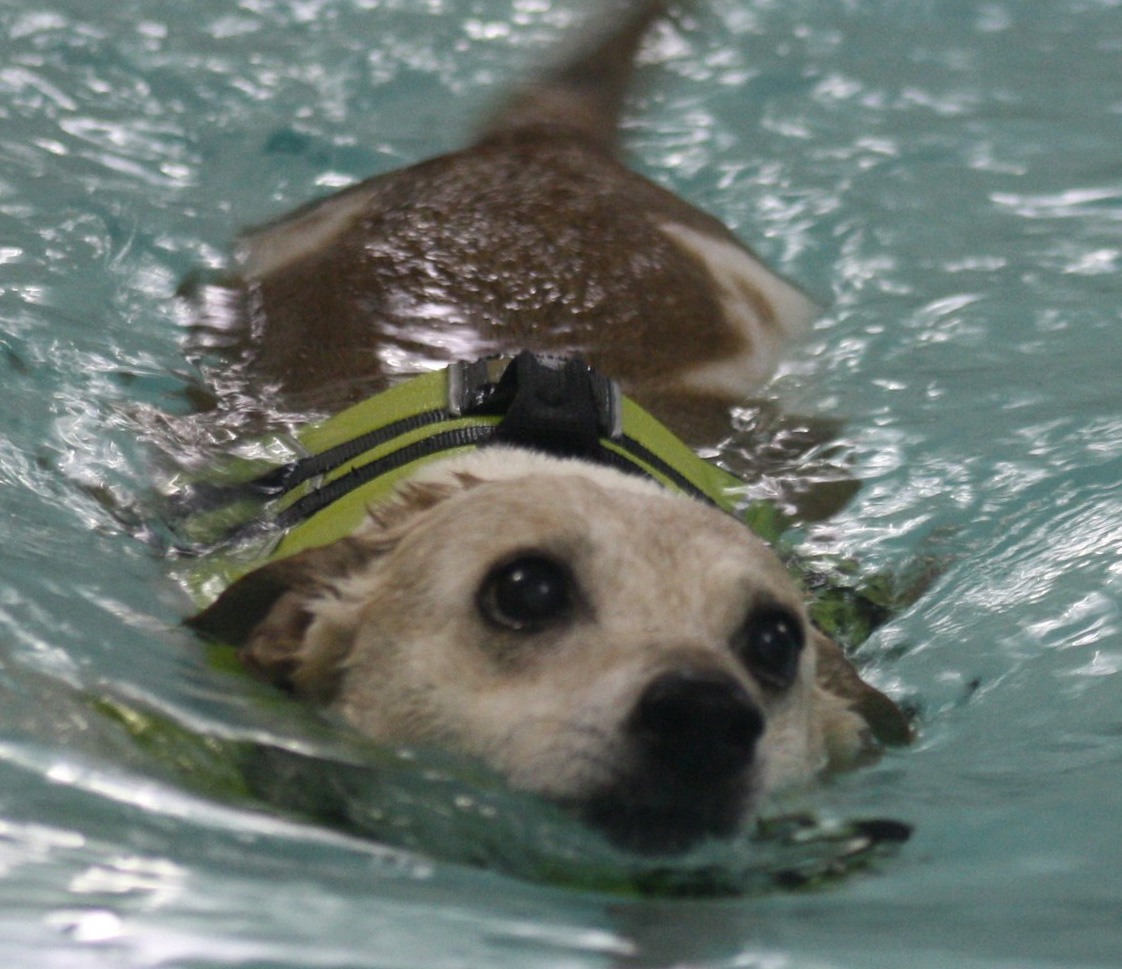
We had a bumper crop of new swimmers this month: Sydney and Gino, Stella, Joey, Comiskey, Snowball, Jodee, Tory, Lucy, Gus, Doogie Bowser and Cooper, Mia, Hazel, Zane, Shadoe, Franklin, Charly, Sarge, Sunny, Samson, PJ and Marley, Chris, Shadow, Oliver. Pictured above, left to right, is Kaila, Stella, Oliver, Toby, Joey and Sunny.
|
**************
“If your dog doesn’t like somebody you probably shouldn’t either.” ~Unknown
|
|
|
In This Issue
* Make sure your yard is safe for your dog
* Lucy's back in a spunky mood
* April's new swimmers
* We've got a sure-proof way to keep mosquitos away from your yard
|
|
Who made great strides recently?
|
Our most improved swimmer is Lucy…she is a 12-year-old Jack Russell terrier who was starting to have difficulty going up and down stairs and was showing signs of stiffness and soreness.
After six weeks of swimming she is going up and down stairs again and has a lot of her old energy level back again. She is doing so well that her owner reports Lucy charged off after a visiting German Shepherd who was pestering her house mate, Vivian, a one-year-old Jack Russell.
Lucy has her spunk back! |
|
What's new at the store?
|
|
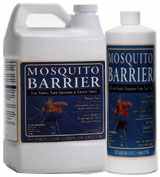
Looking for a safe, natural and effective way to rid your yard of mosquitoes, fleas and ticks, try Mosquito Barrier. This liquid is made from garlic cloves of a variety much more potent than is found in grocery stores. A natural sulfur in garlic repels insects like mosquitoes, ticks, and fleas. Farmers and gardeners used this method for many years.
Mosquitoes are soft-bodied insects and the concentrated garlic juice can be deadly to them. It does not harm humans, pets or plants and in only a few hours after application it's odor is not detectable to humans. Mosquitoes have extremely sensitive odor-sensing antennae and can detect the garlic extract for up to a month.
When Mosquito Barrier is mixed with canola oil and water, any standing water in the area is coated with a very thin film of garlic oil, suffocating mosquito larvae developing there. Unlike harmful chemicals, it doesn't kill bees or butterflies and is completely safe for children, fish, birds, dogs, cats and other pets. We sell quarts for $31.95 and gallons for $99.95.
|
|