ISSUE #10
August 26, 2010
|
|  |
Happy Soccer Genius Day, (unofficial ;)
Welcome back to the Soccer Genius Planet! I hope you've been having a fantastic week.
I've put together a really important feature article this week. It addresses the need to consciously and deliberately eliminate as much fear as possible from the developing player's practice and game experiences. This one idea alone can be the 'game-changer' in determining the long-term success of each young athlete.
Be sure to catch Part 2 of the "Helping or Hindering Development" video. In this concluding segment I look at a number of ways that we as parents can hinder our child's soccer development - some of which have definitely applied to me over the years. Enjoy the video and let me know what you think!
From My Soccer Genius to Yours!
Charles Cotton
charles@enlightenedsoccer.com
|
Quote of the Week
|
“Children rarely flourish under the constant fear of failure. Rather they excel in an environment that celebrates and encourages their every step, including both successes and failures." d
Charles Cotton
|
|
 Featured Article Featured Article
|
Take the Fear out of Playing -
A long-term success strategy
Fear is a funny thing. In days gone by, we relied on fear simply to survive. It helped us avoid being the delicious meal of some hungry animal. Things have changed and we no longer have as many constant threats to our immediate survival. Yet the fear 'instincts' still linger. As coaches and parents we must do our very best to minimize triggering the fear-based instincts in players.
When children learn their soccer in an environment that attempts to minimize risk, avoid mistakes and vocally condemn the 'wrong' play, they develop fear during the game. When they learn their soccer in an environment that creates 'panic situations' that demand players to 'get rid of it' or 'boot it out', they develop fear in their game. And when they learn that winning is more important than anything else, they learn fear of the game itself.
These fears will typically show up as:
- Fear of getting in trouble from the coach, teammates, parents or fans on the sidelines
- Fear of not being good enough (a good enough kicker, runner, thrower, passer, scorer, player, person)
- Fear of getting hurt - by the ball and other players
- Fear of making a mistake
- Fear of taking chances or risks
- Fear of the opposition (see above points)
- Fear of failure
While all of these are understandable they are not inevitable. And they certainly are not beneficial to any player's long-term development.
So what are the alternatives? How do we take fear out of playing for the player's greatest long-term benefit?
Let's first start with being 'proactive' in our approach to coaching and development, including:
- Taking a "Development First" approach to soccer learning and then take time to educate parents, players and club/community members that this is what you're doing. Be specific, be clear and be consistent.
- Teaching the skills necessary to be successful in all facets of the game and laying a foundation of technical excellence
- Setting goals for each player and the entire team within each practice and game; goals that include doing the skills and moves they are learning, completing a certain number of passes in a row, successfully using a specific defensive or throwing technique, using teammates names for enhanced communication on passing plays --- the list goes on and on...
- Model safe risk taking (i.e. injury avoiding) during practice and then use game time to encourage players to 'go for it' by positively challenging them to take those same risks. Then positively reward the risk taking with a pat on the back, a high-five, 'move of the match' patch or team-wide cheers
- Emphasize creativity, ball control, field awareness and total team and player responsibility - including active 2-way play by every player
- Giving all player's equal opportunity to try out each and every position and situation on the field - let them be goalies, throw-in and free kick takers, corner kickers, midfielders and center forwards
The great Brazilian coaches have a classic expression they use with developing players - "calme" (said calm-eh). They purposefully repeat this term during practice to help the young person feel relaxed and at ease when they are playing. Tension is considered counterproductive. Fear only enhances tension.
Let's all commit to taking the fear out of the game.
For the players, for ourselves and for the long-term success of soccer.
|
|
Better Out Than In!
|
A weekly video by Charles about something that he's just gotta share with you!
Parents, are you helping or hindering your child's soccer development?
Part 2 of 2
The 8 Habits of the
"Hindering Development" Parent
|
|
Charles' Tech Tip
|
|
Each week in this section I include a
detailed description of a specific technical skill or ability. This
information is offered to help you achieve technical mastery through
perfect practice. After all, if you're going to practice you might as
well do it perfectly!
Outstep Flick Kick | 
The Outstep is the surface of the foot along the two outside toes toward and including the middle outside of the foot toward the ankle. Kicking here can create great out-turning spin on the ball. We can do short Flick Kick passes and shots as well. The outstep is also used for dribbling and receiving. It is a challenging surface to master and requires patience, practice and persistence in the player's long-term growth.
Do this one with barefeet. It will develop your feel for the outstep area much better than with a shoe on.
Get into a Genius Ready stance (see previous issues for that one) with a ball one step in front of your kicking foot and slightly to the outside.
Breathing relaxed. - Pick a target about 6 steps to the front and side of you at a 45 degree angle.
Eyes focused totally on the contact surface - the inside bottom area of the ball.
Quickly jump-step off the kicking foot and load the kicking foot in a
bent-knee V shape behind you. Lock your ankle. - Land on your opposite foot 6" to the inside of the ball. (#5 and #6 happen very quickly)
Release your kicking leg forward and swing gently through making contact with your outstep on the ball. Your ankle will help quickly snap-flick the ball towards the target.
Keep your head down, complete your arm swing and quickly run 10 steps straight ahead and touch the ground.
Repeat three times with each foot.
Repeat again three times with each foot after a 10 meter dribble with the ball.
You really want to feel the movement and contact surface of the outstep each and every time.
|
|
|
This Week's Genius Success Habit
|
|
adsf
| Grow Your Inner Wisdom
Like many things in our world, wisdom has become a commodity that can be packaged, purchased or downloaded. Bookstores have shelves lined with current, ancient and future focused words of wisdom. We can take retreats, attend workshops and become students of wisdom teachers. We can even join groups that declare their wisdom is 'better' than any 'other' wisdom.
None of this is either bad or good. It's really a sign of the times we live in. People are searching for answers to a wide range of life's questions - some more challenging than others.
What tends to happen, however, is that we spend a lot more time focusing on getting wisdom outside of ourselves than we do growing it within ourselves. (What I call the difference between the 'outself' wisdom and the 'inself' wisdom.)
All of the outside sources are really meant to help lead us to our own inner pot of wisdom. They can do this by sparking a greater depth of awareness through our own experiences, words and perceptions.
And this awareness can all start with a simple series of questions the next time we are presented with 'outself' wisdom:
- Is this true? (beyond a shadow of a doubt?)
These two questions may just be 'true' for you.
Test it out for yourself. If you find it works, then keep on testing it on all the 'outself' sources of wisdom in your life.
It's a genius success habit worth committing to.
|
|
|
About the author - Charles Cotton
|
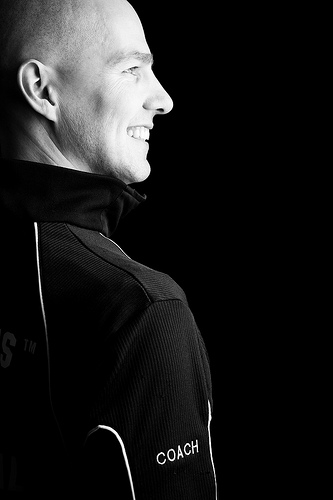 The Soccer Genius Coach, Charles Cotton, is an internationally licensed expert specializing in teaching kids 7-17 how to unleash their own Soccer Genius - for on and off field success. He has over 30 years experience playing, coaching, and leading soccer communities. His accelerated training methods and unique soccer "Mind, Body, Heart and Spirit" approach help players and coaches achieve their highest levels of play and personal development. Charles lives in Calgary, Canada with his 3 beautiful daughters and shares time in Chicago with his "Dancing Genius" life partner. The Soccer Genius Coach, Charles Cotton, is an internationally licensed expert specializing in teaching kids 7-17 how to unleash their own Soccer Genius - for on and off field success. He has over 30 years experience playing, coaching, and leading soccer communities. His accelerated training methods and unique soccer "Mind, Body, Heart and Spirit" approach help players and coaches achieve their highest levels of play and personal development. Charles lives in Calgary, Canada with his 3 beautiful daughters and shares time in Chicago with his "Dancing Genius" life partner. |
|
|