Dear ,
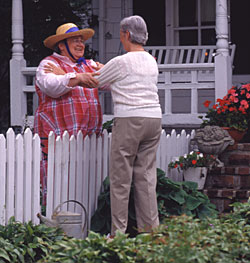
"Esta es mi tierra." This is my land. So said a Watsonville woman with pride just after carefully selecting a garden bed for her family in a Mesa Verde Gardens community garden recently. This was not a large piece of land, nor one the woman expected to claim for a lifetime, nor one in the most idyllic location. None of this mattered; what was key was to have a bit of land to call her own and grow food in for herself and her family. Many of us feel the same way.
Alongside this pride of place--so crucial for the survival of our species--was another equally important phenomenon: the spontaneous formation of a sharing community among the gardeners who are working their plots side by side. It's the combination of a sense of ownership and sharing that makes community gardens so powerful.
At the Live Oak Grange garden, there is a mixture of shared garden rows with no particular "owner," and rows rented to individuals. The fate of the shared garden rows is uncertain, as they have tended to be neglected. But the important part is that we have the great resource of a community garden and hall, run by and for the people. This is where Transition Santa Cruz has found a home.
The National Grange started in 1867 as a farmer's cooperative to fight the domination of big banks and railroads. The Live Oak Grange has continued this proud tradition by becoming the country's first "Action Grange," revitalizing the Grange movement with activism for sustainable agriculture.
Now our area boasts another, new Action Grange: the Springfield Grange in Pajaro. (Read about their highly successful Tamale Fest in June, here.) I encourage you to learn about and become a member in your local Grange. See you at this month's potluck picnic, where you can learn more!
—Michael Levy |
| Sand Dollars are gaining momentum! |
| How do you jump-start a local economy? Many localities--including Santa Cruz--have tried a local currency, like Ithaca Hours in Ithaca, NY. But that has not been an unqualified success. According to Langdon Roberts of New Earth Exchange,
As it turns out, the way to invigorate a local economy is not just to enact a local solution, but to address the needs of a somewhat larger region. Although it is great for consumers to buy as much of what they need locally as possible, using a local commerce system to keep the money from leaving the county, it is not reasonable to expect many businesses to do the same.
That is why New Earth Exchange's Sand Dollars are part of a
regional trade exchange. The good news is, you can start participating now if you have even a tiny business. Check out this list of things you can buy (or soon will be able to) with Sand Dollars. Then sign up: the real answer to the question above is, "We'll have a local economy when we all decide to make it happen."
|
| Help us improve our potlucks |
Our potlucks are only as vital as our participation in them. Our last several potlucks have all had wonderful programs, yet not great attendance. Maybe we need to do something different.
Help us create the monthly event that you would love to attend by answering this one survey question:
What would get you out on a Tuesday night?
Just hit "reply" to this email and let us know your thoughts.
|
| Neighborhoods are rockin' |
Our Resilient Neighborhood leaders are not sitting still while the world changes around them. They are doing all kinds of interesting things with their neighbors to make their 'hoods more of a community. Two examples:
Kathryn, on Laurel St., recently started bringing neighbors into an online neighborhood network called NextDoor.com. This website, started by a group of community-minded folks in San Francisco, makes it easy for neighbors to share news, advertise gatherings, ask for or offer things, and so on. It's free, and only folks in your (self-defined) neighborhood can join your NextDoor group.
Sheila, in the Miles-Sherman-Dimond neighborhood on the Westside, reports that they are underway with disaster preparedness in her neighborhood. Drawing on the materials available on our website, they have also added the valuable neighbor disaster questionnaire you can find there.
To join our neighborhood leaders' support group, please contact Kar at karfraser@cruzio.com.
|
| Also worthy of attention... |
♦ Save the date: Saturday, October 6
Northern California Regional Transition Conference
NEXUS event venue, Richmond, CA
All Transition participants from all Transition initiatives are invited to attend this first ever all-day regional Nor Cal Transition gathering.
♦ Slow Food Edible Garden Tour: Volunteers needed
August 25
Information and contact for volunteering here.
♦ The Rise of the New Economy Movement
Great article by Gar Alperovitz |
| Become a member of Transition Santa Cruz |
Help support our important work of building local resilience! Go to http://transitionsc.org/donate and join at the $25, $50, $100 or $200 level, or join as a volunteer. Your participation matters!
|
Contact Details
831-427-9916
http://transitionsc.org
|
|
|
Potluck with a Purpose
|
Tuesday, July 24
6-8:30 pm
Live Oak Grange, 1900 17th Ave.
Free/by donation
Family friendly!
Midsummer Picnic
at the Grange Garden!
This one'll be
outdoors! Celebrate summer with a picnic at the Grange Garden. Bring food to share as usual, plus your blanket and/or lawn chair and clothes to keep you warm in case it gets chilly. We will set up a table or two for those who prefer to be up off the grass.
Grange Community Garden coordinator Michael Johnson will give a tour and talk about the garden and the colorful history of the nation's first "Green Grange," our own Live Oak Grange. Guitars, songs, and other creative touches are invited!
Games like Elbow Tag and Lap Sit are likely to ensue. See you there!
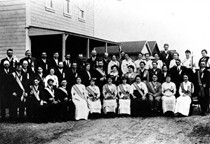 |
| Monterey Grange, 1914 |
|
|