Notes from
President Betty
 |
| Sharon McRill | From my new office window, I see green shoots poking through the soil, buds swelling on their branches. For nature and for The Betty Brigade, this is a time of beginnings, a time of growth.
It doesn’t seem possible that nearly eight years have passed since I started the business. Much has changed. This year we moved to our new office, doubling our previous space. We now have a team of 15 in two cities, more clients than ever and plans to franchise nationwide!
One thing has not changed: our focus. Whether we’re clearing out an overstuffed three-story home or helping a busy Mom set up a filing system, our goal is to improve our clients’ lives. Knowing we’re making a positive difference is the energy that feeds The Betty Brigade.
Our method is our motto: Simplify! Take away what does not contribute to your best life. It’s as simple as that.
In this, our second issue of The Brigade Bulletin, we offer tips and inspiration for Spring de-cluttering, organizing, and home staging. And, for help in disposing of the mess, our feline advisor, Miss Olive, offers green advice.
We at The Betty Brigade wish you a lovely Spring, free of clutter and full of fresh air and Spring flowers!
Sharon McRill
President, The Betty Brigade
|
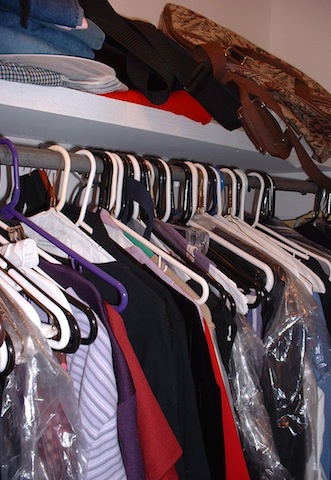
How does your closet make you feel? Happy and relaxed? If so, skip this section. But if you feel confused or anxious, read on. Most people’s closets are over-stuffed, but take control and make your closet a serene, uncluttered space.
Judy, Byline Betty: Purge items you never wear, that don’t fit or that don’t
look good on you. Be ruthless! When you re-hang things, make sure not to hang items that are better off folded, such as t-shirts, knits, and slinky fabrics. If your closet allows, hang slacks full-length, as it’s better for the pants, and they take up less room. Hang them by the cuff end in a clamp-type hanger. If you don’t have the vertical space, hang slacks over a wooden dowel hanger with a metal u-hook to keep them from slipping off. Kathleen, Organizer Betty: A good way to organize hanging items in a closet is by sectioning things by color, darkest to lightest (or vice versa), so when you’re looking for a clothing item you know in which color section it will be. This works well for organizing shirts and other items in dresser drawers, too.
Amber, Administrative Betty: When I'm getting out my "summer" clothes, it gives me a chance to go through them and get rid of anything I don't need. A general rule I like to follow is - if I didn't wear it last summer, get rid of it. This is also a great time to go through my winter sweaters and follow the same rule - if I didn't wear it this winter, then get rid of it.
Linda, Organizer Betty: Many people keep too many worn out pairs of shoes for yard work. When going through shoes, remember, you only need ONE pair of garden shoes!
More Tips:
- Are you making the best use of the space in your closet? Could the rod be hung higher to give more space below? Are your shoes a jumbled heap on the floor? Go to some online sites for organization ideas, such as IKEA, California Closets, and Easy Closets.
- If space allows, consider adding a shelf to your upper closet area. Many people have extra vertical space there that could be better used.
- If you have unused, hidden under-bed space, consider purchasing flat plastic bins. They’re great for out of season storage, extra shoes, wrapping paper, etc. Just keep bins organized and clearly labeled.
- Clothes don’t last forever. Check collars and cuffs for fraying and fading. Take a good look at dresses and suits. Hopelessly out of style? Be brave, and subtract them from your closet.
- As you look at each item, ask yourself: Do I love it? Does it fit me? Does it look good on me? Keep only what honors the person you are now. Exception: if you’re trying to lose or gain weight, and you have clothing in other sizes, pack it in under-bed storage bins, labeled by size. As you change sizes, get rid of what no longer fits and replace it with current sizes.
|
Basement
First, get rid of trash/recyclables. Next, relocate anything from the basement that belongs elsewhere in your home. Finall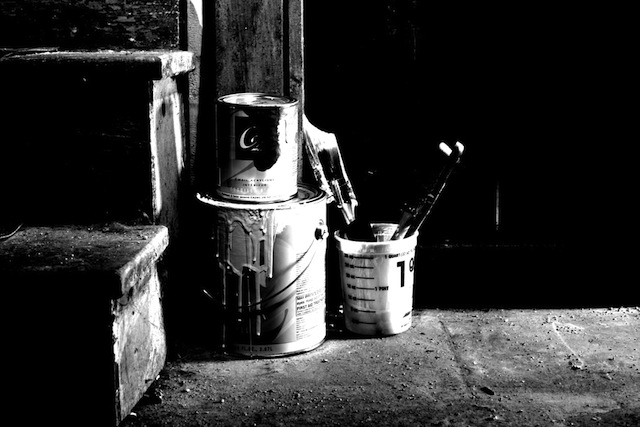 y, start sorting! Have several boxes: keep; donate; sell; recycle (or trash). y, start sorting! Have several boxes: keep; donate; sell; recycle (or trash).
If you store things in cardboard boxes, consider swapping those with plastic bins which will keep items drier, cleaner, and safer from insects or rodents. Keep like with like: baby clothes, Christmas decorations, out-of-season sports items, for example. See-through bins save time when searching for items, but labels on the sides help, too. Labeling the top is less efficient, as it’s harder to see and you might stack bins. If yours is a multi-use basement, think about dividing it into zones – play area; adult area; laundry area. This will help you organize furniture and items in the basement. If you don’t have adequate storage but have enough space, consider having a closet installed where bins can be stored out of sight. The change of seasons or an upcoming holiday is a good time to sort through items again, as you unpack and re-pack for storage. |
 Car Car
Michaela, One Busy Betty: Keep a laundry basket in your car, and then, every time you drive, throw things you would normally leave in the car into the basket, then take it out at the end of the week and empty it, putting everything away.
Other Tips:
- Empty the car of everything and give it a deep clean and vacuum. Then sort everything into categories.
- Keep drivers’ items together in the glove compartment: maps, owner’s manual, insurance and registration.
- If kids’ items tend to get out of control, purchase over-the-seat organizing pockets for books and toys, but don’t overload them.
- Create an emergency kit and keep it in the trunk: jumper cables; tire guage; flares; some basic tools; first aid kit; an old towel or some rags; a jug of water and motor oil.
|
Overall De-Cluttering
A place for everything,
everything in its place.
~Benjamin Franklin
It’s become a cliché, but with good reason. Franklin’s advice is simple, easy to remember and profoundly helpful. Many items turn into clutter because they have no real place to go. When de-cluttering, as you pick up each item, ask yourself, “Where does this belong?” If the answer is, “I have no clue,” then THAT’S a clue to your problem. Once your belongings have a place they belong, putting them away is the easy part.
Keep horizontal surfaces as clear as possible. It’s challenging, but don’t use surfaces for storage. Otherwise, you’ll eventually find you have no place to work, prepare food, wrap gifts, do your bills, clip coupons, etc. Think of horizontal surfaces as sacred, and keep them clear! Bernie, One Busy Betty: Avoid zigzag organizing. Scattering your efforts  over multiple rooms prevents you from seeing progress. For visible, dramatic results, work one room at a time, one section at a time, completing each area before you move on to the next. Bernie also suggests: For fun, make clutter-busting a family game. Write tasks on Ping-Pong balls (or slips of paper). Each person chooses a ball, completes the task, then chooses another one. After 30 minutes, whoever has the most balls gets a prize-- like a no-chores day or control of the TV remote. over multiple rooms prevents you from seeing progress. For visible, dramatic results, work one room at a time, one section at a time, completing each area before you move on to the next. Bernie also suggests: For fun, make clutter-busting a family game. Write tasks on Ping-Pong balls (or slips of paper). Each person chooses a ball, completes the task, then chooses another one. After 30 minutes, whoever has the most balls gets a prize-- like a no-chores day or control of the TV remote. |
But I Might Need it Someday...
This is the number one argument for keeping clutter in our homes, and admittedly, it has some merit. If you stay on top of clutter and regularly purge items, there will likely come a time you’ll regret having disposed of something. Our contention is twofold: It happens, but rarely, and it’s the cost of being organized.
On the flip side, the cost of keeping too much, just in case you might need it someday, is much higher. That cost includes lack of space, stress, embarrassment to have guests, and, ironically, difficulty in finding items if you ever do need them.
|
The Green Scene
with Miss Olive
 |
| Miss Olive |
I own very little, Dearies, and am quite content! Humans have so many belongings, sometimes it seems that nothing is special to them. When you make more space, you make the things you keep more special. Purrrfect!
But what to do with all the stuff that’s leaving the house??!My Betties make me purrroud, because when they clear out homes and help clients organize, they find ways to recycle everything they can! In fact, our new office is decorated almost exclusively with recycled furrrniture!
So, before something goes to the landfill, see if it can go somewhere else:
- Old towels, sheets and blankets can be donated to animal shelters and vet hospitals.
- Many dry cleaners appreciate getting wire hangers returned.
- Have sensitive documents shredded, or shred them yourself, and recycle the paper.
- Recycle paper, plastic and aluminum on your garbage day (in most communities).
- Check with your community offices on proper disposal of toxics. In Ann Arbor, the Home Toxics Reduction Program takes toxics (with a donation) three Saturdays a month this time of year.
- In Ann Arbor, donate to the Reuse Center, Salvation Army, or other charitable organizations.
- Best Buy recycles most electronics for free. They charge $10 to recycle certain items, such as TVs 32" and under, CRTs and monitors in some areas, but this is offset by a $10.00 Best Buy gift card.
- Properly dispose of expired or unused medicines. Visit the FDA website for instructions.
- You can also visit the EPA in Michigan site for more information.
As you clear out closets, what to do with old furrr coats? This one is close to my heart, Dears, as it helps animals! The Humane Society of the United States (HSUS) has a “Coats for Cubs” program whereby you can mail coats, stoles, fur collars or other pieces to their headquarters.The furs are then shipped to wildlife rehabilitators where they comfort injured or sick animals. Sometimes they turn fur sleeves inside out so burrowing animals can sleep inside. That sounds lovely to me-owwwww…. Alright, Dearies, I’ll accept one more possession! |
Have nothing in your houses that you do not know to be useful or believe to be beautiful.
~William Morris
| |
The ability to simplify means to eliminate the unnecessary so that the necessary may speak.
~Hans Hofmann, Introduction to the Bootstrap, 1993
|
|
Kitchen and Pantry
Sharon, President Betty: Rotate the food in the cupboards, especially if you have deep cupboards like me. It helps you remember all the stuff t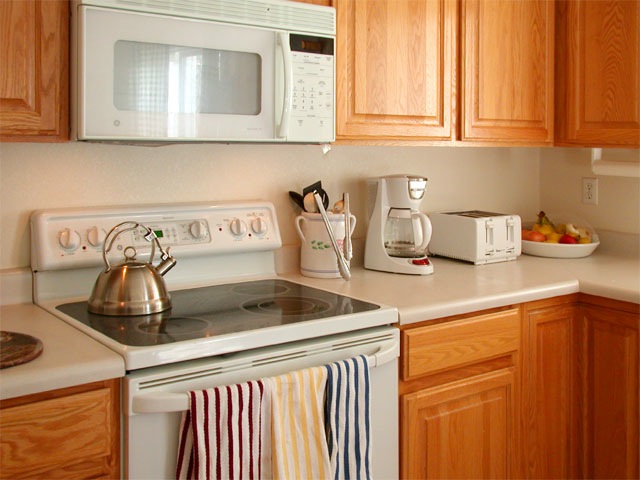 hat gets pushed to the back at each use. Toss anything that’s expired. hat gets pushed to the back at each use. Toss anything that’s expired.
Let your fridge get really empty every couple months. This makes it a lot easier to take everything out and clean the inside. Be sure to get rid of the old stuff and even wipe down the insides of the door. The night before garbage pick-up, check again for foods past their prime.
More Tips:
- Pantry cabinets: Throw away all expired goods, and move nearly expired items to the front, so you’ll be more likely to use them up.
- One at a time, empty each cabinet, clean the inside and put back only what you really use and need. If it’s broken, chuck it. If it’s a duplicate, donate it. Same goes for items you never use. (Are you honestly ever going to use that lemon squeezer?!)
- Take stock. How many lidded plastic storage containers do you really need and use? And the ones with no lids? Recycle!
- Most people don’t have enough storage in their kitchens for large occasional items, such as punch bowl, ice buckets and holiday dishware. Pack them up, clearly label them and store them in your garage or basement.
- Check stores for organizers that might solve space problems for you. Rubbermaid, for example, makes a pull-out shelf for aluminum foil and plastic wrap that installs beneath upper cabinets.
- Think about how you might better use the space you have. Roll-out shelves can be installed under sinks to better access cleaning products. A broom closet could be transformed into a pantry.
|
|
BATHROOMS
No matter how small your bathroom, it can be your personal oasis – a place where you feel calm and serene. Keep colors calm and soothing, especially if the bathroom is small. Think white and pale green; low contrast; clean, uncluttered surfaces; shiny fixtures.
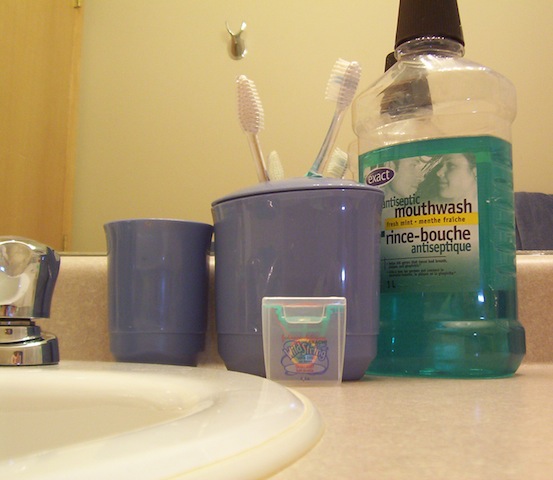
- Go through prescription and over-the-counter medicines, and get rid of anything expired. See Miss Olive’s section for tips on proper disposal of expired medicines.
- Go through your toiletries and discard old shampoo, conditioner, and other hair products.
- Makeup: CBS Beauty and Wellness Contributor Dayle Haddon offers tips as to when to discard various cosmetics: CBSNews.com.
- Perfume has a shelf-life of three to five years, if kept properly (cool, dry place away from sunlight). According to Scenitments.com, a perfume is past its prime when the scent is no longer appealing and the liquid looks darker in the bottle. Same goes for cologne. If you’re not sure, spray it on before you take a shower and determine if the scent is still pleasant. If not, take your shower and toss the fragrance!
- Many people tend to keep items they use daily on the bathroom counter. This causes “visual noise,” aka clutter. Find a place for your makeup, toothpaste, toothbrush, deodorant other than the counter. That way when you’re done, the surface is clear again.
- If you don’t have a cabinet or linen closet for behind-the-door storage, purchase several matching baskets with vertical sides. Keeping like with like, store makeup, hair items, dental care items, etc.
- Towels have an almost uncanny ability to last forever. They never really wear completely out, but they do get to a point when they’re no longer pleasant to the skin. When you pull your towels out of the dryer and there’s little or no lint in the dryer trap, it’s time to say, “Ta ta, towels!” Also, toss any with frayed edges. Treat yourself and your family to a set of thick, thirsty towels. These can be purchased inexpensively at many homegoods stores.
|
Office
The primary clutter culprit in offices is paper. Sort your paper into keep, recycle, and shred. Make sure you shred anything with your name and address, and certainly anything with account numbers or sensitive information.
File away the papers you want or need to keep. For most home offices, a two-drawer file cabinet is sufficient. Some people may only need an accordion-style folder for bills. Josh, Moderately Brawny Betty: Tax documents and back-up documentation can take up lots of space, but did you know you do not necessarily need to keep your receipts for tax purposes? You can scan your receipts and keep them organized on your computer and off of your desk. This helps to de-clutter your desk and keeps receipts and other important tax documents from fading due to cheap printer inks or sun-damage. This is allowable under IRS Revenue Procedure 97-22 (www.irs.gov). Note: these records must be organized such that you can produce them (print them out) if needed. Also, the taxpayer is responsible for the safety of the information. |
Garage
Garages tend to fill up easily – not surprisingly. It’s a big room where we stash things that are in our way. But when was the last time you parked your car(s) in there? Hmm?
‘Nuff said. When you tackle decluttering your
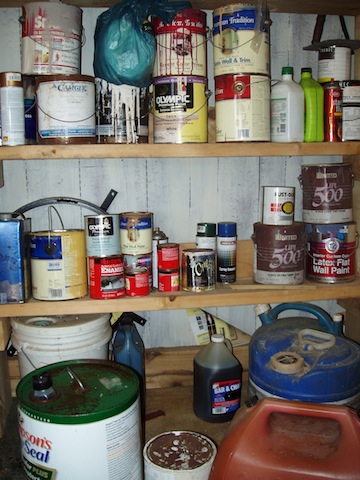
garage, give yourself enough time. If you don’t think one weekend is enough, schedule two, but aim for having half of it done the first weekend. In general, the most effective way to de-clutter a garage is to empty it out, clean it, then put back ONLY what you really need in there. First pass: get rid of all trash/garbage/unusable toxics (paint cans, oil cans, etc.), then sweep out the garage. Take a look at what’s left and sort into categories: large tools (summer and winter); garden tools; lawn equipment; sports equipment; workshop tools; hoses. If you don’t already have organizers in the garage, take a trip to Lowe’s or Home Depot, or view their websites, and check out solutions that might work for you, such as shelving, cabinets, pegboards and hooks. Come back home and re-envision your space. Where would a shelving unit work? Do you need more than one? Remember, keep like with like. Take necessary measurements and return to the home store for your purchases. Arrange the garage so you can easily park a car (or two) in there! |
The sculptor produces the beautiful statue by chipping away such parts of the marble block as are not needed--It is a process of elimination.
~Elbert Hubbard
|
But It was Grandma's!
This subject deserves its own little section. Many of 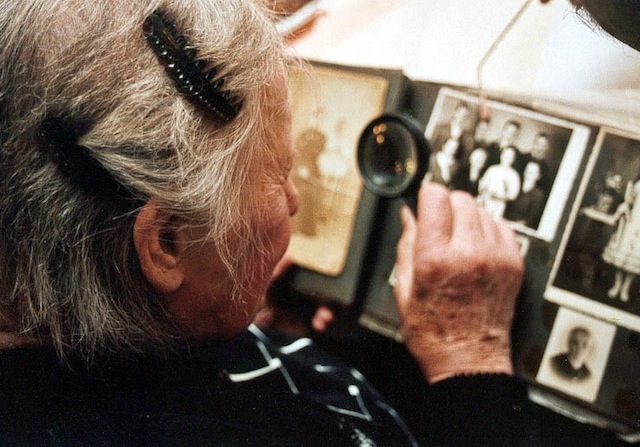 us have been given or have inherited items that have tremendous sentimental importance, but which otherwise serve no purpose in our lives or in our homes. Small items, such as rings, letters, photos or a book, take up little room and pose no real problem. Then there are large items, such as Grandma’s huge Victorian sofa. She cherished it; you have fond memories of it, but it doesn’t fit in your living room. It’s been sitting in the basement for seven years because it’s too big, the wrong style, the wrong color, you can’t use it… but you can’t bear to part with it. Then there’s the over-sized popcorn popper you got as a wedding gift. Your kitchen is tiny; there’s no room for it, but what if Bob and Jane come visit sometime…? You know the story us have been given or have inherited items that have tremendous sentimental importance, but which otherwise serve no purpose in our lives or in our homes. Small items, such as rings, letters, photos or a book, take up little room and pose no real problem. Then there are large items, such as Grandma’s huge Victorian sofa. She cherished it; you have fond memories of it, but it doesn’t fit in your living room. It’s been sitting in the basement for seven years because it’s too big, the wrong style, the wrong color, you can’t use it… but you can’t bear to part with it. Then there’s the over-sized popcorn popper you got as a wedding gift. Your kitchen is tiny; there’s no room for it, but what if Bob and Jane come visit sometime…? You know the story. Many of us confuse the item itself with our love for the person who gave it to us. But those are two very separate and distinct things. If you don’t want it, try to admit it without feeling any guilt. As for Grandma’s sofa, take a picture of it as a keepsake. Now think. Is there someone else in your family who might love having it in their home? A friend? If not, consider selling it. Perhaps you can use the money to honor the person in some way. If it can’t be sold, donate it, knowing that someone else will enjoy it. If it can’t be donated, let’s face facts. If the donation center won’t take it, it’s time to retire it. Put it out on the curb. Maybe give it a final chance by listing it as “Free” on craigslist.org. Otherwise, kiss it good-bye and let it go.
For those gifts given with love and good intentions, but which you can’t use, have no room for or just plain hate... If the person who gave it to you will never visit, out it goes. If the person is likely to visit, try to find a place for it. Box it up and put it in the garage, the basement, in the back of the linen closet – somewhere out of the way but accessible should the person visit you. Another option: give it away or donate it, and if the person visits and asks about it, be honest but kind. “We simply didn’t have room for it; our home is so small.” Or, “We realized we just never used it, so we gave it to a friend who loves it.” In most cases, people who give gifts really want to please you and would feel terrible to know their gift was a burden. But if you suspect less than altruistic motives, then The Betty Brigade condones a white lie, such as, “I’m so sorry – the dog knocked it over, and it broke.” |
TO MARKET, TO MARKET
Our Stager Betty, Nadine, offers tips on getting your home ready to place on the market.
Spring is typically the busiest season for residential real estate, but in this buyer’s market, it’s more important than ever to help your home stand out among the competition. Buyers are looking for location and condition. You can't change the location, but you can change the condition! CURB APPEAL Buyers have a long list homes to see, and if they don’t like yours from the outside, they’ll never come in to see your wonderful rooms inside. Spruce up the exterior: paint or powerwash siding, seal the driveway, trim bushes, mulch planting beds! Buy a new welcome mat (make sure it’s large enough). Make all entrance doors inviting – painting them, if needed, and polishing hardware. Make sure your address is easily visible from the street. Cut back any shrubbery or plant life that blocks windows, doors or makes navigating walkways difficult. INDOOR STAGING
- Clean like you’ve never cleaned before, going beyond just dusting and vacuuming. Wash walls and windows, remove bugs from light fixtures, and fingerprints from switch plates. Clean light fixtures with hot water and ammonia; dust and clean overhead fan blades. Steam the carpet, scrub the pantry and fridge, polish faucets and bleach bathroom grout. If you don’t have time to do this yourself, hire professional home cleaners to do a deep clean.
- Fix all the “little things.” Buyers will notice them, and wonder about the big things they can’t see. So replace the screen with holes in it; finish installing the shoe molding; fix the doorbell.
- De-clutter your fridge. Take down all kids’ artwork, photos and phone numbers.
- Buyers want to feel like there's more than enough space for their stuff. Have enough furniture to define each room, but not much more. When in doubt, leave it out. Pack away knick knacks, small appliances, and personal collections. Organize what’s left to make a stellar first impression.
- Show that your home has enough storage, built-in. Buyers will interpret crammed shelves as meaning there's not enough storage in the house. It's best to remove bookcases, shelving units, etc., if they won't be sold with the home. If you need to leave them while showing your home, try to keep them 50% empty.
- Install closet organizer systems (they are often on sale in the Spring).
- Install pull-out shelves or baskets in kitchen and bathroom cupboards and pantry.
|
Less is More.
~Ludwig Miles van der Rohe
| |