Siege Marketing and Business Development Siege Marketing and Business Development
Our purpose here is to suggest steps to undertake to penetrate a prospect as described above. Take for example a recent case where upon visitation a salesman learned that $400,000+ of components were purchased annually, shared between three vendors one with a 60% share, followed by the other two with 20% shares respectfully. No problems existed between the vendors fulfilling obligations at acceptable pricing levels. What options exist to crack this nut?
First of all, without immediate needs for a new vendor, it will be a long-term business development initiative. The first phone contact did produce all that was described above and a pleasant thank you for calling from the buyer. Siege marketing says, now begin to lay the foundation for penetration.
The salesperson wrote a nice letter to reopen the conversation at a later date. Efforts were immediately taken to locate engineers / product designers about new product offerings yet to be developed. Conversations continued to share success stories with same to identify pain points in product functionality. A database of buyer specification personnel was being prepared where newsletters follow to build brand awareness. The thought process begins with an objective to offer a proposal and first generate a face-to-face encounter.
Vendor trade shows were identified where attendance would enable face-to-face selling to begin. Relationships then could be forged to patiently wait for a supplier to “drop the ball” and offer an opening. The original no interest from the buyer was then turning into “not today” but “perhaps tomorrow” if needed. Siege marketing was working!
Over time, it was learned that the 60% share vendor was solid. Therefore, the objective, attack the weakest 20% vendor with technical expertise, value engineering, cost reduction discussions with component redesign. At the time of writing, this process continues. Siege marketing assumes that time is on their side and that patience is required by the seller. We believe that eventually the siege will produce energy, determined-ness, and focus that will result in an open door. In this example, continued interest should demonstrate a spirit of "give us a chance to propose." In closing, we urge you to identify a handful of prospects where you can lay a siege for tomorrows’ business. We encourage your business development team not to ignore the immediate, but also think longer term.
For more pointers on business development, visit our
newly refreshed website at www.crossroadsdgltd.com for past newsletters and
more about Crossroads Development Group.
|
 An Example from History - An Example from History -
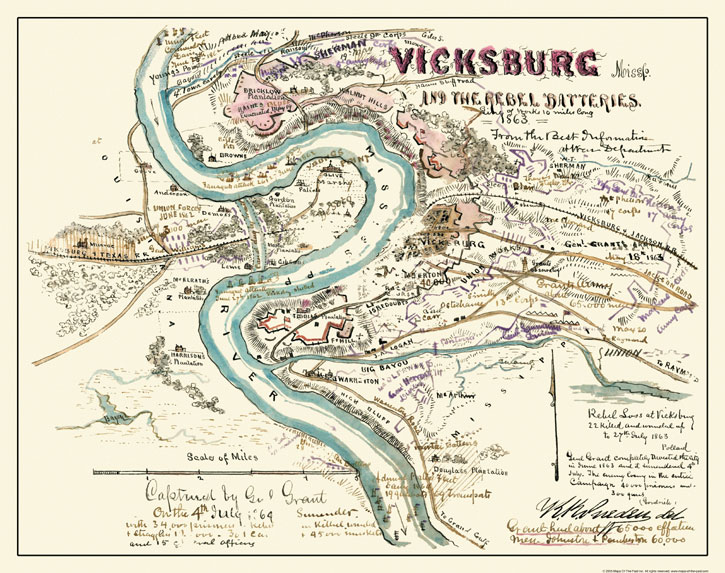
The Siege of Vicksburg
A siege usually conveys the image of holding entrenched positions. However, General Grant’s siege of Vicksburg started with two conventional attacks. A siege then followed.
The Union Army possessed superior knowledge of terrain and pressed every advantage. Although, outnumbered, they always had superior numbers at the point of contact, i.e. “Critical Mass!”
Employing captured cannons to increase his advantage, Grant moved quickly across northern Mississippi and Louisiana during the spring of 1863 from the unexpected west! After two stalemates near Vicksburg, Grant changed tactics. He ordered the Navy to blockade the Mississippi River and positioned artillery on the bluffs. Smithsonian historian Edwin Cole Bearrs describes it as “surrounding Vicksburg with bayonets.”
On July 4, 1863, Vicksburg surrendered. Grant effectively split the Confederacy in two. Grant’s success hinged on these principles:
- “Do not take council of your fears.”
- “If they beat us today, we will beat them tomorrow.”
- Have greater numbers at point of contact.
- Maneuver using superior tactical knowledge.
- Change strategy when the situation changes.
- Always press the advantage.
There is much application to siege marketing and business development here! Persistence, tempered with versatility, concentration, and wisdom will pay off.
|
|
|