In our last newsletter we introduced the concept of tuning your new product development process.We detailed the advantages of a new product
development advocate and a standing committee.Stated differently, for an effective new product development process, a
business needs a single person to drive the process as champion, mentor and
coach, but remain accountable to a group of peers representing the various
disciplines in the organization.
Now in Part Two of this newsletter, we will continue to
advance through the new product development process.Again we will use our experience working with Bacharach, Inc and
its VP of New Product Development, Doug Keesport.
In our previous newsletter we wrote about the Phase-Gate new product development (NPD) process as
practiced by General Electric.For the
purposes of this newsletter, we will focus on tactically tuning your NPD
process, not re-inventing it.For
more information about the Phase-Gate process, click here (Wikipedia link), or contact us by email or
phone.
Pre-Gate
Filters
All ideas are acceptable in a brain storming session.However this is not the case in new product
development.If every new product idea
moved forward, the organization would close down.
In Phase I, Market Research, a product/market need is an
identified, confirmed and a detailed report prepared to document the
opportunity. It then moves to Phase II, Concept Design.However, in “the heat of battle” the phone
rings and the sales department suggests yet another winner to work on
immediately!The marketing department
replies with an email blast saying “get in line, take a number!”The sales department hits “reply all” and
states, “You do not understand the incredible opportunity we have to move into
this new product application, please reconsider!”Instituting a pre-gate filter with strict criteria before Phase I
can help prevent churn.Market research
is conducted to help justify the opportunity, and place it in perspective.In our work we have witnessed pre-gate lists
of as many as 100 product ideas, some great, some foolish.The challenge, of course, is to select a
manageable number and investigate them first.Pre-established criteria and rationale must justify the choices in order
to focus development.
Here it is critical that the new product steering committee
applies the already established criteria.Product guidelines for line extensions are in place.Three year sales volume level requirements
are in place, as are pricing guidelines and ROI requirements. The pre-gate
filter allows new product development to continue and not be interrupted. Doug told us that
before the Bacharach pre-gate filter was working well, hallway conversations,
personal connections, and a decentralized approach interfered with the task of
maintaining a disciplined focus. We expect this is true of most businesses,
especially those without the organizational DNA mentioned earlier.Properly done, these concepts make the
process of developing new products less complex and more focused on the total
value instead of fulfilling the agenda of any single customer or constituency
in the organization.
Simplification
Hiring freezes and staff reductions to support sales efforts
have strained engineering departments’ ability to develop new products.Heavy meeting attendance requirements,
increased email volume, and the “I need it tomorrow” mindset, often rule a
business culture.Couple this with the
urgency for new product speed to market introductions and intensified customer
expectations on service requests, and you have stress and tension within the
process.What answer can be offered to
reduce stress and tactically tune your NPD process?Simplify!
For example, we no longer recommend a seven-phase process.
Shorten it to five steps. Place greater emphasis on doing a few things well,
instead of managing a portfolio of new product development projects that have
not been prioritized.Simplification
also includes making more non-critical assumptions about the concept to reduce
actual product development time because speed to market is so critical.
Electronic
NPD Process Monitoring
All NPD tracking for everything from updates, to meeting
notes, to schedules, and next steps, should be electronic, existing in your
company’s intranet, extranet or wiki.Building on the principle of simplification, Bacharach’s model ties
directly with their ISO procedures.It
is a seamless system that is also paperless.
Electronic streamlining your monitoring process also enables
standard templates to be used for each phase of your process.This standardization conditions your
development team and new product steering committee to ask the same questions
with each new product opportunity.Your
process will have transparency and will become predictable.Finally, with product accountability, introduction
plans, and status reports all readily accessible, it now makes sense and
provides the necessary focus.
Our thanks to Bacharach for their contribution to help
develop these Five Tactical Tuning ideas.We trust that some of these principles are useful and can be shared with
your NPD team.
For more pointers on new product development, visit our
newly refreshed website at www.crossroadsdgltd.com for past newsletters and
more about Crossroads Development Group.
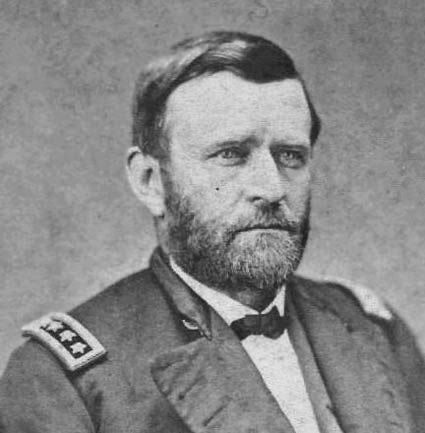
Historic Navigators— Ulysses S. Grant
...and the siege of Vicksburg
The siege of Vicksburg was a singularly focused activity
that enabled the Union Army to concentrate a critical mass against a
well-entrenched enemy force.The
surrender terms, often referred to as unconditional, delivered to the union
Vicksburg, its garrison, and ordinance stores.The successful battles fought in reaching that prize provided new spirit
to the loyal people in the North and new hope for the final success of the
Union’s cause.Now the Mississippi
River was entirely in Union control!
How does this relate to New Product Development, Pre-Gate
Filters and Simplification, you ask?General Grant had much on his mind and many options available to ponder
and evaluate.A siege was a fixed
permanent commitment to accomplish a singularly focused objective; require
Confederate General Pemberton to surrender unconditionally.General Grant had to withstand all the
pressures from his advisors on alternative options.
With the pressures of the recession and challenges you face,
stay focused regarding New Product Development.