How Fact Based Selling Provides Focus How Fact Based Selling Provides Focus
Definition -
Fact Based Selling is defined as using market data to support sales and merchandising initiatives. In today’s data drenched business climate, effective selling has evolved from glib assertions and glad handing to Fact Based Selling. Business managers demand facts not only to make decisions but to also support the business case and formulate exacting solutions.
Scott Knauss Vice President of Office Superstore Sales for Whalen Furniture enthusiastically practices Fact Based Selling. He adds, “the intent is to move decision making from the subjective to the objective.” Knauss points to the added credibility Fact Based Selling affords his presentations. “The message to the customer or prospect is that we do the research to say you can trust us to know the best course of action and then prove it.”
But, according to Knauss, in the 1990s and early 2000s there were perhaps too many facts and not enough interpretation. At that time Category Management was the primary business development and model, especially in consumer packaged goods. “Everyone came to meetings with reams of data, just to say they had done the work,” adds Knauss. “But it was too much to make sense.”
Best Practices -
To be most effective at Fact Based Selling, more data is not always better. Better is better. Proper interpretation and analysis is better. Knauss recommends a dedicated data analyst to add continuity. However, that person should contribute to, but not fully determine the overall strategic direction. Knauss believes the person most responsible for the customer must exhibit fact based leadership. He also suggests making the final strategic decisions via a collaborative strategy implementation where both parties have ownership in not only the business case, but the solution and the outcome as well.
In the next newsletter we will examine how Fact Based Selling contributes to developing effective solutions.
|
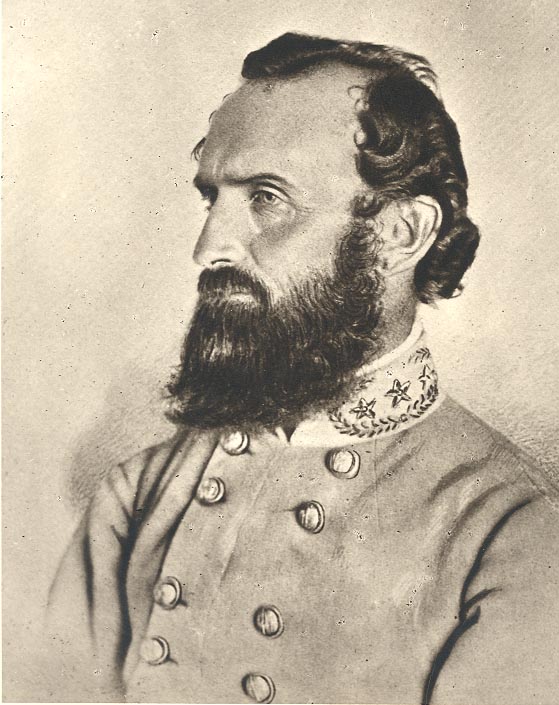
Historic Navigators – Jackson’s Valley Campaign
While General Thomas “Stonewall” Jackson earned his nickname for his courage at the first Battle of Bull Run it was his performance during the Shenandoah Valley campaign in the spring of 1862 that made him a legend. Jackson used the advantages of a fact-based strategy to defeat a much larger Union army sent to take control of the valley.
After Confederate victories in Northern Virginia during the spring of 1861, the Union forces were divided between defending the Union capital of Washington, DC and taking the offensive to attempt to march on Richmond, the Confederate capital. Jackson’s objective was to preoccupy the Union troops through feinted attacks in the Shenandoah Valley in northwestern Virginia 60 miles west of Washington. Jackson’s Valley Campaign as it is now known, diverted Union forces to the Shenandoah Valley, away from attacking Richmond.
With a superior knowledge of the terrain and countryside, Jackson was able to move his troops to counter numerically superior Union forces. Using maneuver and surprise his 17,000 troops kept 52,000 Union soldiers occupied in the Shenandoah Valley and away from Richmond.
Advantage -
Jackson possessed two distinct advantages. First he used accurate maps of almost all of northwestern Virginia to move his army quickly, dividing his forces to take parallel roads then converge on the enemy just in time. He also knew the exact location of the mountain passes to move troops quickly without a tiring long march around the mountain.
Secondly, Jackson used intelligence from key locations such as Signal Knob. With its commanding view of the entrance to the valley, scouts there and nearby could see for miles and thereby give Jackson almost a full day’s warning on Union troop movements off in the distance.
Initiative -
Knowing the facts was important, but not everything for Stonewall Jackson. He used facts as tools to seize the initiative and accomplish his objectives. At Crossroads Development Group our business model enables us to provide you the facts you need to win.
|
|
|