13 Must-Ask Questions That Protect Home Buyers
1. "Will this suit our living style in 5, 10, or 15 years?"
If the current 4 and 7-year-olds are going to be teenagers in the home, try to picture exactly what that will look like.
Are their rooms big enough, and is there some "away space" where they can spend time with their friends without needing to be front and center in the rooms you use all the time?
2. "How loud is it when someone is upstairs?"
This is an especially important consideration when buying a condo, although it applies to multi-level homes as well. Try to view the home at a time when someone is moving around upstairs so you can assess how good the noise barrier is and whether your enjoyment of the home might be affected.
3. "How light is the interior on a dark day?"
When you're touring homes on a sunny day, it can be easy to forget that you're seeing things at their brightest. Try to imagine how much interior light a home will receive on a dreary day and look for opportunities to increase natural light by adding windows or skylights.
4. "Do the neighbors control a desirable feature?"
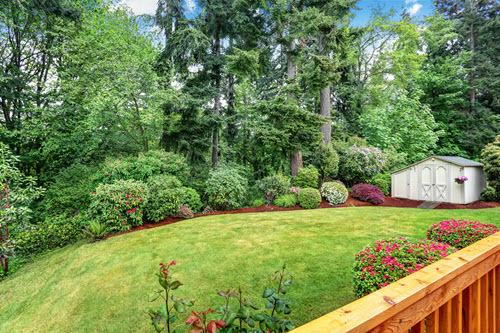
Do you love the trees surrounding the yard, or is there some other aspect of the setting that creates a lot of value for you? If so, note who has control over any desirable feature that could be removed. For example, if the trees are on the neighbor's property, they're the ones who get to choose whether they stay or go.
5. "What will change during normal working hours?"
If you're viewing properties on the weekend, think about whether or not anything would be different during the week. For example, a house might be near a school that gets heavy traffic on school days, or within earshot of a business that creates noise during daytime working hours.
6. "Is the greenbelt really protected?"
The word "greenbelt" implies that a natural area is protected, but the term is often used somewhat optimistically in real estate listings. Never just assume that a natural area can't be turned into something else. Instead, determine who owns it and check with the local planning department.
7. "What does Google Earth say?"
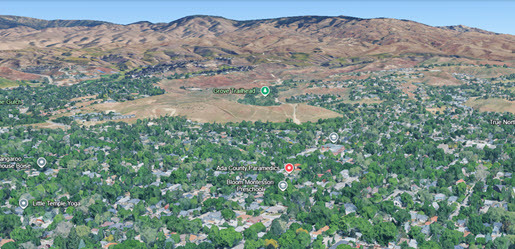 Example of a neighborhood viewed with Google Earth. Example of a neighborhood viewed with Google Earth.
Google Earth is an amazing free tool that lets you check out a property's surroundings in high quality 3D. You can use it to find out if there's anything visible from an aerial view that might cause you to have second thoughts.
8. "Are there restrictions on what we can do?"
If you're buying in a community that has a Homeowner Association, make sure there's nothing that will prevent you from doing things that are important to you.
For example, some condominium associations don't allow hardwood flooring because of noise issues, or they may have restrictions on pets. A community of houses might not allow RVs or boats to be parked on the premises.
9. "Is it close to different zoning that might expand?"
Business zones tend to expand, not contract. Freeways usually require more lanes and access ramps over time, not fewer. Be certain you're OK with the potentially expanded version of anything that could affect the property.
10. "Is the view protected?"
If a gorgeous view is part of a home's appeal, look closely to see if there's anything that might restrict or block that view in the future. Examples include trees growing taller, or a property in the view corridor where someone could build a higher structure.
11. "How long will a commute take during busy times?"
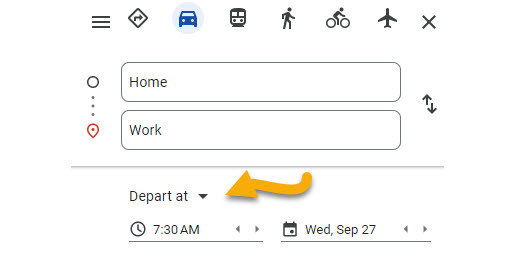
If you're new to an area or primarily viewing homes on weekends, it can be hard to get a feel for common traffic patterns. Fortunately, Google Maps allows you to customize your time of departure when planning a route.
Click on the "Leave Now" menu option and change the timing so you can find out how long the trip is likely to take on the day and time of your choice.
12. "Can nearby lots change drastically?"
Just because a neighboring lot has been vacant for 50 years doesn't mean it won't turn into a new subdivision or storage facility next week. Investigate any land that, if it were developed, would affect how much you enjoy your home.
13. "Does it pass the 'Rainy Day, Broken Leg' Test?"
On a beautiful day it can be easy to overlook access issues such as a long flight of stairs or a steep driveway. To be sure that you're OK with all scenarios, picture a rainy day with your leg in a cast and your hands full of grocery bags. Would the access create an insurmountable problem, or is it still acceptable?
Everyone understands that no home is perfect, and every choice involves some kind of trade-off. The goal of these questions is to set the stage for well-informed decisions that lead to happy results and no surprises down the road.
|