Flower and Garden Tips for May
There's Still Time to Plant Summer-Blooming Bulbs
Spring is the time to plant bulbs that will bloom in the summer, such as Anemones, Calla Lilies, and Dahlias. (These flowers do best when there's no longer a risk of frost.)
Prepare Houseplants for Spring and Summer
Houseplants put out new growth when the days grow longer, so now is a good time to pinch back leaves to ensure that foliage thickens. Experts recommend fertilizing with a diluted solution of plant food during the spring.
Tip: Here's a good article from The Garden Helper website about how to grow and care for a houseplant.
Prune Shrubs Based on Their Flowering Season
The general rule is to prune summer-flowering shrubs in the spring, and spring-flowering bulbs in the summer.
The pruning time for hydrangeas varies, seeing as not all varieties flower at the same time.
Paniculate Hydrangeas Are Good for Pollinators
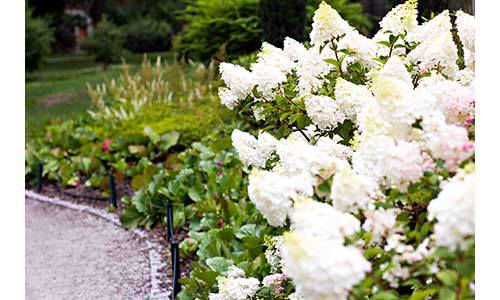
Did you know that many hydrangea "flowers" are actually modified leaves, not blossoms? A notable exception is the Panicle variety, sometimes known as the PeeGee hydrangea.
Panicle hydrangeas produce beautiful conical flowers that attract bees and butterflies. They're also extremely cold-hardy - even down to Zone 3 (minus 40 degrees Fahrenheit).
What Kinds of Flowers Do Pollinators Like?
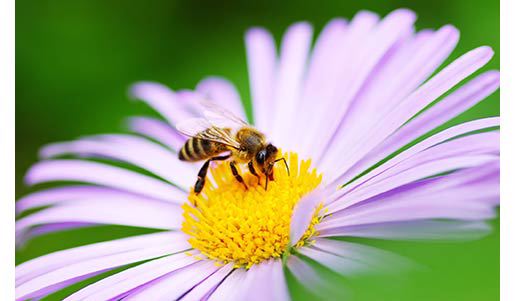
Bees are attracted to purple, violet, blue, white and yellow flowers. They apparently can't see red but are sometimes attracted to the ultra-violet colors present in the petals of some red flowers.
Simple, single-headed flowers make it easy for bees to reach pollen and nectar. They struggle on multi-headed flower tops, and some highly ornamental flowers contain little or no pollinator food.
Butterflies tend to favor red flowers, along with yellow, orange, pink and purple.
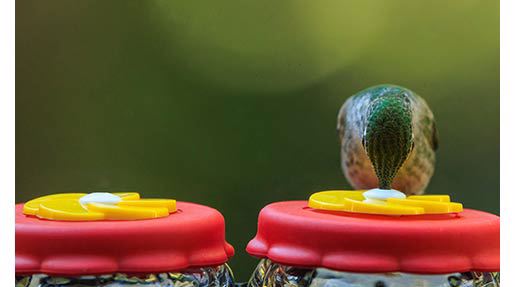
Hummingbirds are very attracted to red, especially when the bloom has a short tubular shape. They also like bright colors such as orange, pink and yellow.
Healthy Hummingbird Feeder Care
Feeders need to be cleaned out frequently to prevent Hummer's Candidiasis, a fatal fungal infection that causes the hummingbird's tongue to swell up. Experts recommend cleaning feeders every two days in hot weather, and at least once a week in cool weather.
As counterintuitive as it might sound, the feeding solution should be made with regular white sugar (and without red dye). Honey, raw sugar, brown sugar and molasses are actually dangerous to hummingbirds.
The Scarlet Runner Bean Provides Decor and Food
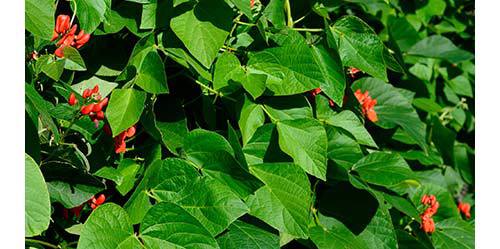
Are you familiar with the scarlet runner bean? It's a climbing vine that produces beautiful red flowers and large beans throughout the summer.
Because it's a climbing bean that's easy to grow on a trellis, the scarlet runner bean is a great option for balconies and small patios that have more vertical than horizontal space.
The beans can become tough when they're too large, but picking them earlier keeps them tender and stimulates flower production.
Russian Sage Is a Winner with Bees
Russian Sage is a low maintenance, drought-tolerant shrub whose small blue flowers are extremely attractive to bees. Formerly named
Petrovskia atroplicifolia, it has been reclassified and is now sold as
Salvia yangii.
Small Garden Spaces Play Big Roles
Whether it's as a hobby or for peace of mind and relaxation, a small garden space can make a world of difference when it comes to maximizing both personal enjoyment and home value.
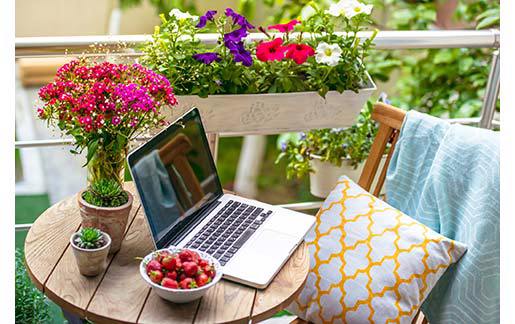
Small gardens can also be surprisingly beneficial to wildlife. For example, some bees have very small home ranges and can live their entire life in a 10 by 20-foot enclave. For species like these, a simple container garden of pollinator-friendly plants can be a life-sustaining haven.
|