News Updates from the VI Region
August 23, 2022
Greetings respected Vancouver Island First Nations Leadership;
Welcome to our VI Regional e-newsletter. This newsletter will highlight updates for the Vancouver Island region from the FNHA, Island Health, Government of BC, Government of Canada, alongside many other partners.
|
|
|---|
|
|
In today's edition you will find:
|
|
|---|
|
|
|
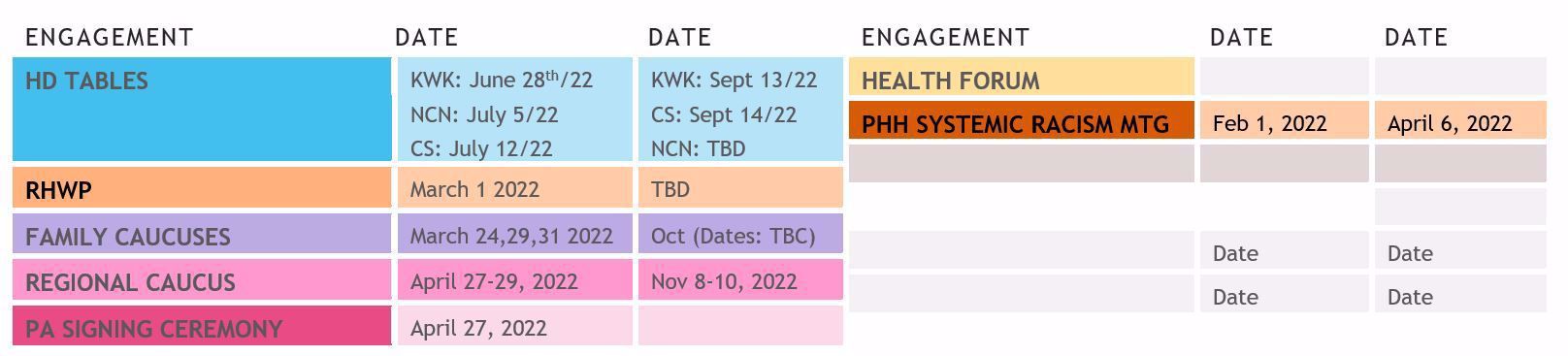
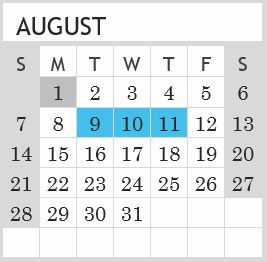
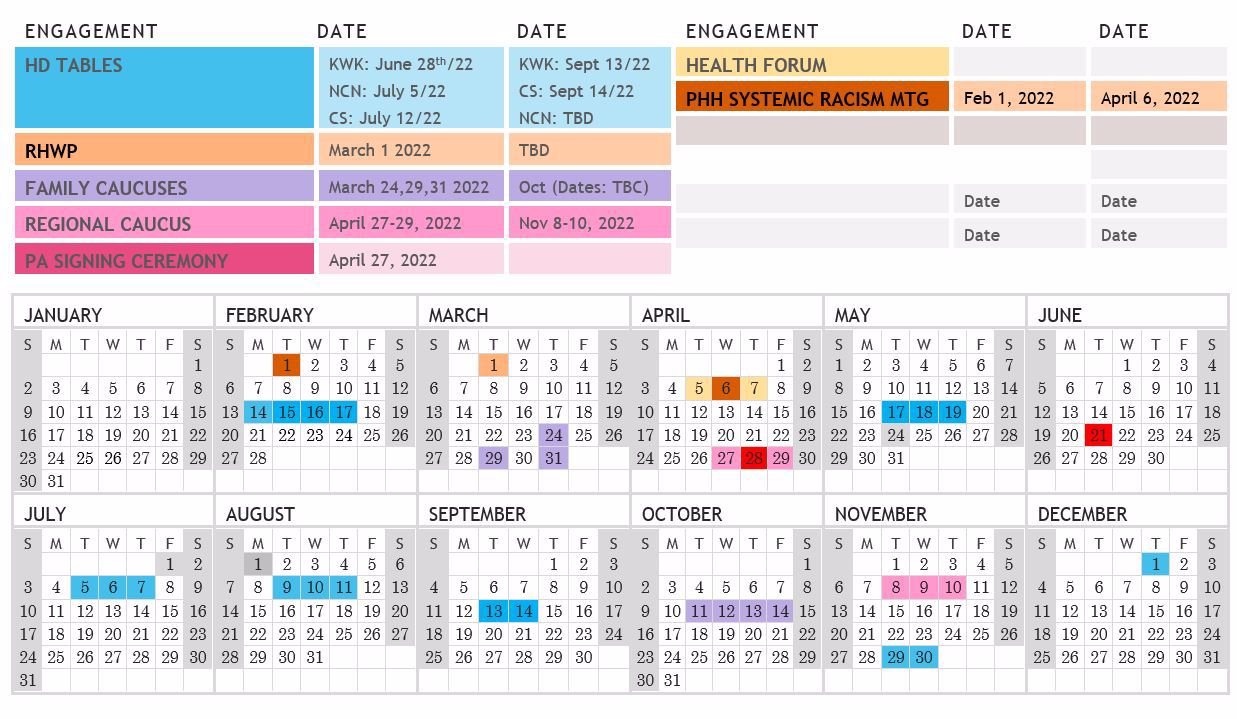
VI REGIONAL ENGAGEMENT CALENDAR
AUGUST 2022
|
|
|---|
|
SafeTALK Training for Trainers (T4T) 2 Day
|
|
|---|
|
The safeTALK T4T is a two-day course that prepares local resource persons to be trainers of the safeTALK workshop. New trainers will join a network of over 4200 active trainers around the world. Applicants must have ASIST training in the last two years. Discount available for FNHA-referred participants.
The T4T course is the first step toward becoming a registered safeTALK trainer. In the course, attendees learn the content and process of safeTALK and the skills needed to conduct it. The process of becoming a registered safeTALK trainer requires a significant commitment from trainer candidates. The opportunity to provide life-saving suicide alertness skills is well worth the effort.
To find out more and to register for the training, please see here.
|
|
|---|
|
Province Launches E-transfer for Evacuees
|
|
|---|
|
The Province is launching upgrades to Emergency Support Services (ESS), including direct payment for evacuees to help meet their basic needs, including food and clothing.
E-transfer is now available in many communities for people receiving ESS after being evacuated and registering with the online Evacuee Registration and Assistance (ERA) tool. To be eligible for an e-transfer, people must log in to ERA online with their BC Services Card app and register. The BC Services Card app is available to download from the Apple and Google app stores.
.
For more information on how to register, see here.
|
|
|---|
|
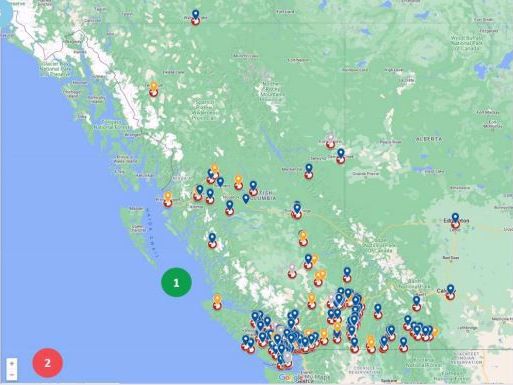
FNHA Mental Health Providers Map
|
|
|---|
|
A new map has replaced the previous Health Benefits Mental Health Provider List. Click here to access the new map.
Instructions to explain how to navigate the FNHA Mental Health (MH) Provider map can be found here. All MH providers included in this map have been registered through an FNHA-approved professional body to practice in British Columbia.
|
|
|---|
|
First Nations Health Authority
|
|
|---|
|
|
FIRST NATIONS HEALTH AUTHORITY CONTACTS
|
|
|
|---|
|
FNHA COVID-19 Inquiries
If you have general FNHA COVID-19 questions, please email COVID19@fnha.ca
For any requests relating to COVID-19 please email: COVID19needs@fnha.ca |
|
|
Vice President, Vancouver Island
Director, Regional Community Health and Wellness
Director, Regional Engagement
(Interim) Manager, Community Engagement
Community Engagement Coordinators
|
|
|---|
|
|
|
|
Nursing Manager
Community Practice Consultants:
Nurse Navigators:
|
|
|---|
|
|
|
|
Community Relations Representative, Health Benefits
Registered Dental Therapists
- Kim Trottier, Kim.Trottier@fnha.ca (Communities: Stz’uminus, Penelakut, Dzawada’enuxw)
- Janeen Campbell, Janeen.Campbell@fnha.ca (Communities: Cowichan Tribes)
- Melanie Braker, Melanie.Braker@fnha.ca (Communities: Ka;’yu:’k’t’h’/Che;k’tles7et’h’, Mowachaht/Muchalaht, Yuułuʔiłʔatḥ, Ahousaht, Ditidaht, Huu-ay-aht, Hupacasath)
|
|
|---|
|
|
|
|
Regional Manager, Health Emergency Management
|
|
|---|
|
Mental Health, Wellness & Traditional Wellness Support
|
|
|
Regional Manager, Mental Health and Wellness
|
|
|---|
|
|
|
|
Regional Manager, Maternal Child and Family Health,
|
|
|---|
|
|
|
|
Regional Manager, Primary Care
|
|
|---|
|
|
|
|
Primary Care Project Manager
Traditional Wellnes Specialist
|
|
|---|
|
|
|
|
South Island Director, Indigenous Health
Central & North Island Director, Indigenous Health
Medical Director, Indigenous Health
Medical Health Officers
Indigenous Health Managers
|
|
|---|
|
This story contains details of abuse in Canada’s residential “school” system. Survivors and their families can reach support any time by calling the Indian Residential School Survivors Society’s crisis line at 1-800-721-0066.
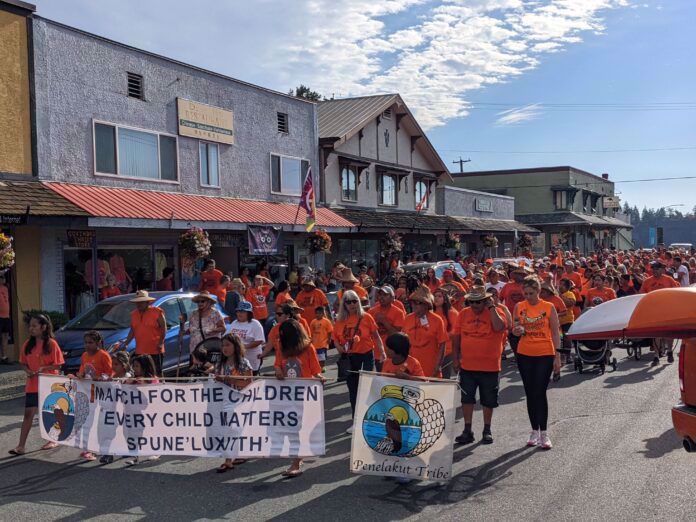
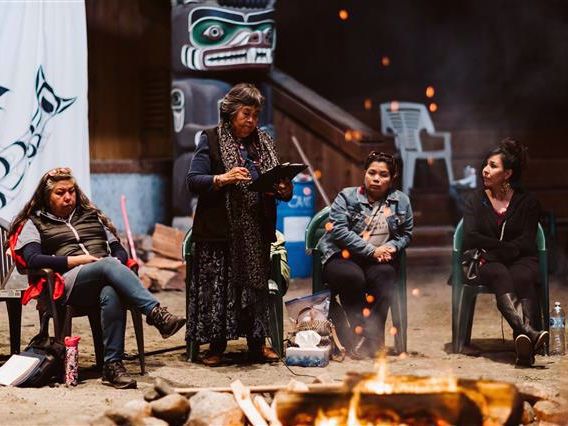
Hundreds of people gathered on Monday, Aug. 1 at the village of Sunuwnets (currently known as Chemainus) to walk and listen in remembrance of the children who attended Kuper Island Residential School.
This marked the second time the community of Spune’luxutth (Penelakut) has hosted the March For The Children on its territory. (The Stz’uminus First Nation, formerly the Chemainus First Nation, is a separate nation. Chemainus is within both nations’ traditional territory.)
Read full-story written by "The Discourse" West Shore here.
|
|
|---|
|
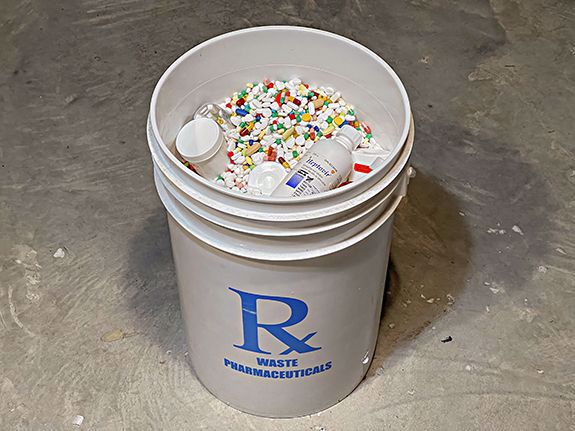
The FNHA provides funding to support First Nations communities in BC that want to organize a "Medication Return Event" for returning medications safely in their communities. These events make it easy for community members to dispose of unwanted medication and reduce the risk of forgotten or expired medications ending up in the hands of children, youth or vulnerable adults.
Grants of $500 are available to communities to help offset the cost of hosting an event. Organizers can also use the funds to host a community meal to bring volunteers and community members together to raise awareness before the event.
|
|
|---|
|
Indigenous Climate Health Action Program
|
|
|---|
|
FNHA’s Indigenous Climate Health Action Program (ICHAP) is now accepting expressions of interest (EOIs) for projects beginning spring 2023! ICHAP supports community-driven projects that strengthen the resilience of First Nations people to the health impacts of climate change. EOIs (template provided via email below) will be reviewed in the order they are received until available funding has been allocated. Successful EOIs will be invited to develop full proposals.
Please note:
• Given limited funding available, EOIs will be reviewed with preference given to communities that have not received ICHAP funding in the previous year.
• Successful EOIs will be invited to submit a full proposal that builds on EOI to include a project work plan, team, budget, and letters of support.
• We will respond to all inquiries and requests for copies of the EOI template. If you don’t hear back from us within 3 business days please follow up to confirm we received your email.
Read more about the program and application process here.
|
|
|---|
|
Stay Updated on COVID-19 Information
|
|
|---|
|
As we move through this pandemic journey, we are having to shift into a new approach to our response and we will continue to update these sites below to have the most up to date information from our website.
Listed below are the following links: COVID-19 for Community Leaders, COVID-19 Support Guide and FNHA Meal Support program, including eligibility and processes.
|
|
|---|
|
Updates to the Temporary Increase to Medical Transportation Mileage Rates
|
|
|---|
|
First Nations Health Benefits and Services (FNHBS) is changing the temporary mileage reimbursement rate for the Medical Transportation (MT) benefit to remain responsive to fluctuating gas prices.
Effective Sept. 16, 2022, the MT mileage rate will change from $0.32 to $0.29. This change will be in effect until Nov. 30, 2022. The change will also apply to the special mileage rate applicable to certain remote communities.
The MT benefit provides supplemental coverage of transportation, accommodation and meals to assist clients who need to access medically-necessary health services unavailable in their communities of residence. Learn more about MT and other health benefits.
For additional information or support, please contact FNHBS at 1.855.550.5454 or benefits@fnha.ca.
|
|
|---|
|
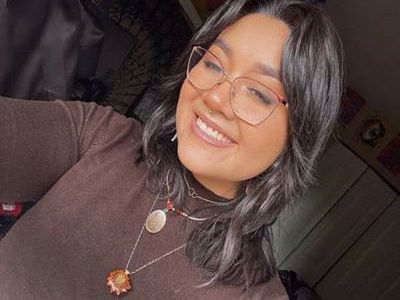
Hello, my name is Marjorie Pelkey. My traditional name is SLIXUMOT and I am from Tsawout First Nation. I just recently graduated from Vancouver Island University with my Bachelors in Visual Arts, and I am hoping to go into art therapy in the future focusing my efforts in Indigenous communities.
I am a very creative person to my core being a visual artist (painting & drawing), a photographer with my own photography business, as well as an online creative with streaming videogames on Twitch in my spare time. I grew up in my home community Tsawout surrounded by my family and my culture, I am looking forward to continue working within my community.
|
|
|---|
|
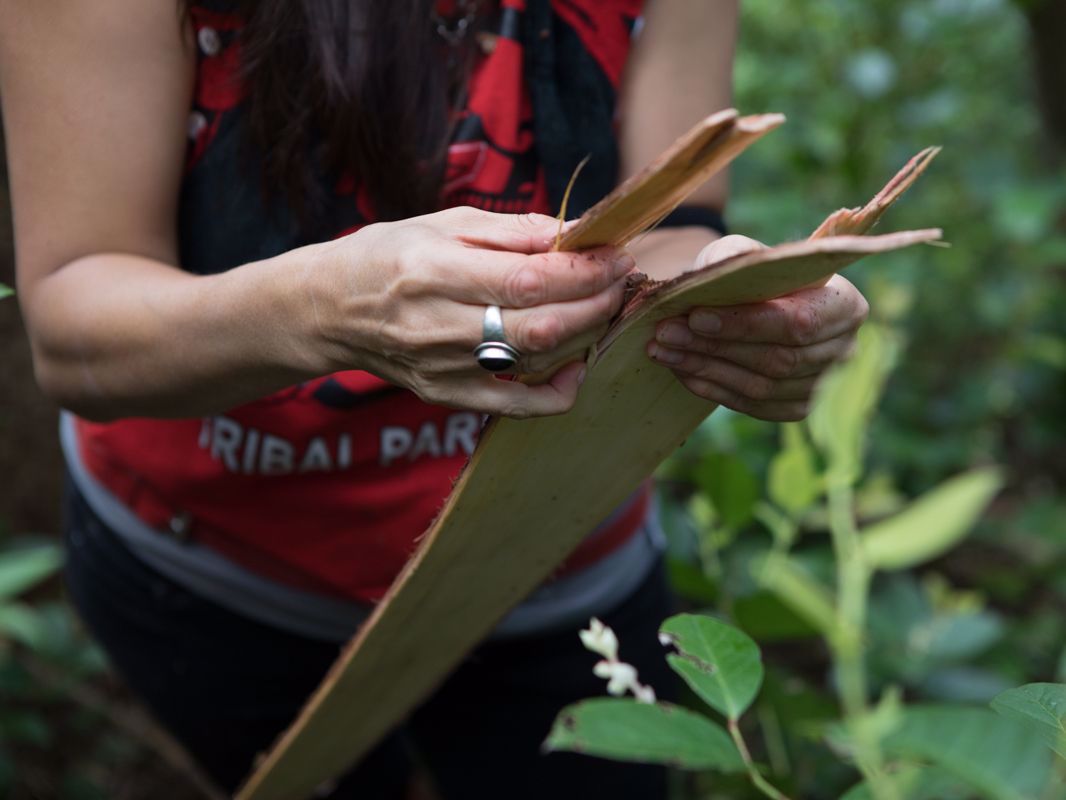
The Protecting Our Medicines gathering was held on March 14-17, 2022 at the Tsa-Kwa-Luten Lodge in Cape Mudge on Ligwilda'xw territory. The gathering provided an opportunity to uplift Kwakwaka’wakw plant knowledge and to connect and nurture relationships among mentees and Nuu Chah Nulth plant knowledge keepers. Intergenerational transmission of Kwakwaka’wakw values and teachings were shared between youth, adult, and elders. This gathering facilitated dialogue for knowledge keepers to identify meaningful ways of sharing knowledge and practices, such as mentorship strategies. Participants were able to articulate how communities, organizations, and FNHA can collaborate to protect plant medicine knowledge and harvesting areas.
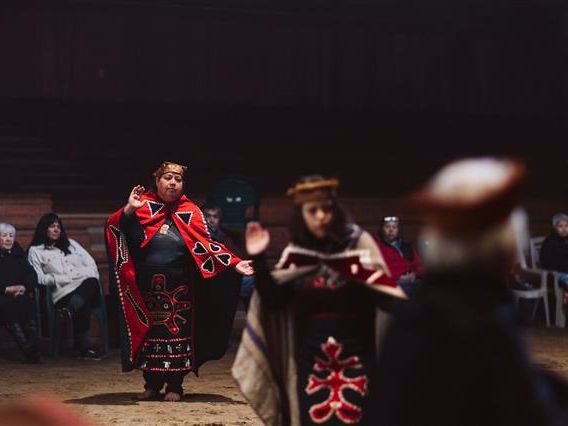
The Kwakwaka’wakw Traditional Wellness Advisory Circle was held on May 10th 2022, at the ‘Namgis Big House. This gathering provided space for Kwakwaka’wakw Knowledge Keepers, health professionals, community organizers, and FNHA to discuss the purpose of the Vancouver Island Traditional Wellness Advisory Circle (TWAC) and the development of the Sacred Knowledge Keeper Network. The gathering was an opportunity to share information and exchange knowledge in a culturally- rooted way by uplifting and integrating traditional ceremonies throughout. This gathering also provided space for a historic overview of women’s traditional role in governance and how to effectively create inclusive spaces for women’s voices in decision making processes and governance moving forward.
|
|
|---|
|
The Uplifting our Babies, Uplifting our Birth Workers gathering took place on May 11 & 12 2022, in Port Hardy. The gathering was an opportunity to celebrate 60 families and their babies recently born in the North Island, as well as the birth workers (doulas, midwives) working with Kwakwaka’wakw families. The gathering provided space to connect communities to traditional birthing education and resources. Knowledge Keepers (singers, Elders, speakers) and Hereditary Chiefs from tri-bands were welcomed in participation.
The Tsow-Tun Le Lum Tech-Training Workshop took place on June 7th & 8th 2022, in Nanaimo. The workshop was designed to support technology skill building for cultural support workers. This professional development training aimed to reduce technology and connectivity barriers while enhancing opportunities for Sacred Knowledge Keepers to explore the use of virtual ceremonies for traditional wellness and healing supports amidst the COVID-19 pandemic. This initiative has provided pre-programmed tablets, headsets, tablet stands, and zoom accounts for TTLL team members and as well as introductory zoom and technology training sessions. The TTLL administrative team, IMIT, FNHA Virtual Services, and FNHA Vancouver Island team supported the implementation of these training sessions.
|
|
|---|
|
The We Are Indigenous: Big Worries/Fears, Parent/Caregiver Support Program is a free resource to support First Nations, Métis and Inuit families across BC, whose children aged 3–12 years are struggling with the experience of the Big Worries/Fears, or what the Western worldview calls anxiety.
You’ll learn Indigenous-centered wellness practices and strategies to help your child increase their skills and Strong-Spiritedness, in order to push back against the Big Worries/Fears. Through a series of short online videos, supported by 7 weekly or bi-weekly coaching sessions by phone, you’ll discuss what you are already doing that helps, new program practices, and how to use them with your children to work through the challenges of the Big Worries/Fears together.
For more details, please see here.
|
|
|---|
|
Conect with programs and service providers who can help families on their journey to support each child or young person in their lives. Families can access support like therapy, respite, equipment and guidance.
The CYSN currently has a survey online about the Children and Youth with Support Needs Framework Engagement. The survey on Engagement was posted in April and closes September 9th, 2022. The Ministry is inviting families, service providers, and sector partners to participate in an online survey to share their input. Feedback will be considered to refine and support the provincial rollout of the service approach. For more information and to take the survey, see link here.
Find support for specific needs here.
|
|
|---|
|
The objective of the Path Forward Community Funds is to increase community safety planning and capacity building to ensure the self-determination of Indigenous communities in addressing Indigenous-specific systemic causes of gender-based violence and safety planning.
The distribution of medium-sized grants will be guided by diverse Indigenous people(s) who will serve on the adjudication committee that reflect the various regions, on-and off-reserve, disabled community members, 2SLGBTQQIA+ communities, and Elders and youth, First Nations, Inuit, Métis, and non-status communities. The Path Forward Community Fund will be accessible to First Nations communities, urban / off-reserve communities, Métis and 2SLGBTQQIA+ communities.
For more information on how to apply, please see link here.
Deadline: 12 PM PST on August 19, 2022
|
|
|---|
|
FPCC Grant funding supports our communities to revitalize their Indigenous languages, arts and cultural heritage in B.C.
The FPCC are here to ensure that the funding application process is as easy as possible and offer a convenient online portal so applicants can more easily apply for programs and submit reports. Current funding opportunities listed here and submission deadlines.
If you need any assistance or have any questions about applying please contact program staff.
|
|
|---|
|
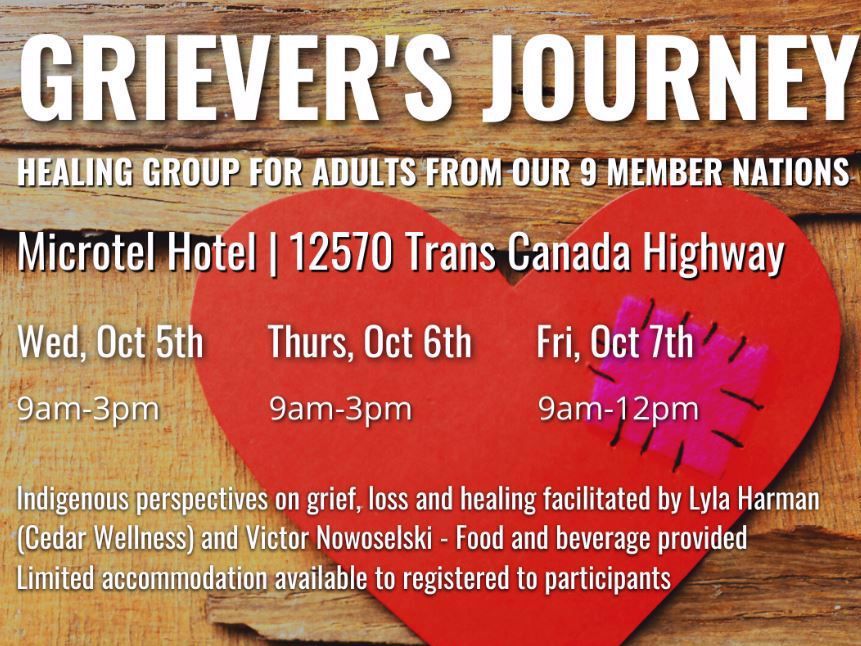
Available to memberships from Halalt, Lyackson, Malahat, Penelakut, Qualicum, Snaw-Naw-As, Snuneymuxw, Stz’uminus and Ts’uu baa-asatx.
Members from our 9 Nations are welcome to join the Griever's Journey healing group, facilitated by Lyla Harman and Victor Nowoselski. Limited accommodation available to registered participants.
For more information or to register contact:
|
|
|---|
|
International Overdose Awareness Day, is a global event held on August 31st each year and aims to raise awareness of overdose and reduce the stigma of drug-related death.
In BC, we have been responding to the overdose crisis for over six years. Tragically, our loved ones continue to die in growing numbers due to toxic drugs. Tainted and unpredictable drugs have been flooding the illicit drug market. People from all walks of life are dying – our sisters, fathers, aunties, uncles, mothers, cousins, brothers and friends. Every day we are losing more people that we love.
August 31 is International Overdose Awareness Day, the world’s largest annual campaign to end overdose. It is a day dedicated to remembering without stigma the people who have died, and to acknowledge the grief of the family and friends left behind. It is a time to remember and a time to act.
|
|
|---|
|
|
|  |
|
|
|
|