News Updates from the VI Region
July 18th, 2023
Greetings respected Vancouver Island First Nations Leadership;
Welcome to our VI Regional e-newsletter. This newsletter will highlight updates for the Vancouver Island region from the FNHA, Island Health, Government of BC, Government of Canada, alongside many other partners.
|
|
|---|
|
|
In today's edition you will find:
|
|
|---|
|
|
|
Saanich Peninsula — Due to limited staffing availability and to ensure Saanich Peninsula residents have access to the health-care services they need during daytime and early evening hours when the Saanich Peninsula Hospital (SPH) emergency department is busiest, Island Health is implementing a temporary overnight closure of the emergency department.
The SPH emergency department will be temporarily closed overnight from 10:00 p.m. to 7:00 a.m. starting July 7 to September 4. The emergency department will be open each day from 7:00 a.m. to 10:00 p.m.
This reduction in overnight service hours will ensure physician, nursing, laboratory technicians and medical imaging staff are available during the hours of highest patient demand.
“We acknowledge this is not an ideal situation for the community and we sincerely apologize for this temporary service reduction,” said Marko Peljhan, Island Health vice president of Clinical Services Central/South Island and Provincial Programs. “We are thankful and appreciative to the emergency department physicians, and all care providers, on the Saanich Peninsula and across the Island Health region for their tireless commitment to providing the best care possible to patients.”
Click here to read full news release.
|
|
|---|
|
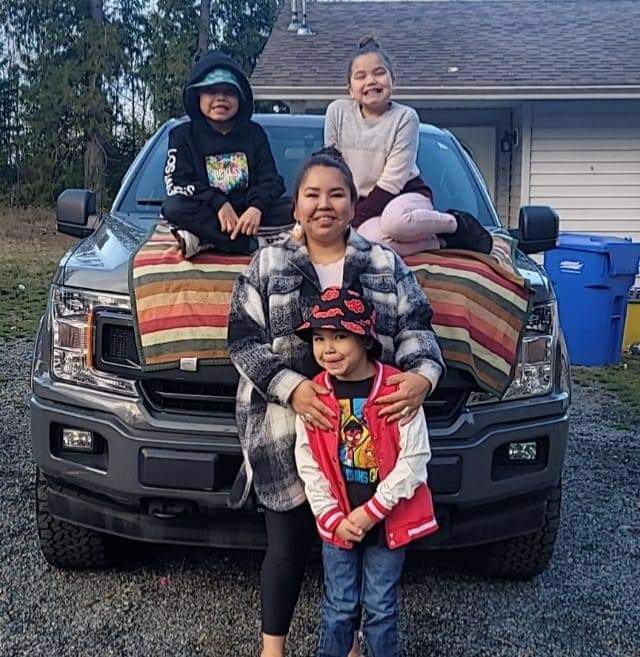
Uy’ Skweyul Mustimuxw (Good Day Everyone),
I would like to take this time to introduce myself to those staff I have may not
have met yet. My traditional name is Q’wu’ch’ilt’naat. I come from the Stz’uminus
First Nation Community, and have the privilege to work, live and raise my 3 beautiful
Children in our home community. I have my oldest daughter Chelsea, who is approach
-ing 12, my middle child Randall who just turned 9, and my youngest baby Edwin, who
will be turning 8 very soon. My children are my biggest motivation for all my hard
work and they are all my number 1 supporters.
I have been with FNHA as the Regional Admin, for 10 months now, and have been
able to learn so much the organization has done in each department, and how much
it grows with all the amazing work each employee does. I feel much honored to be
here and to meet such wonderful, kind people, and to be able to do something I love doing, and that is helping and supporting staff daily, and the opportunity to work with each team and witnessing their wonderful work they offer to First Nation Communities within Vancouver Island.
I am very excited and pleased to accept the position of Senior Administrative Coordinator. I look forward for this transition and cannot wait to work and lead the Admin team with supporting the VI Region, the best we can.
Please do not hesitate to reach out to me, and I look forward to this positive change, myself and my family are very proud and happy about this opportunity.
Huy’tseep’q'u (Thank you all)
|
|
|---|
|
Hello! My name is Samantha Dovell. I go by Sam or Samantha. I am 28 years old and live in Victoria, BC (Lək̓ʷəŋən Territory). While I grew up on the Island, I have always had the travel bug. I love to visit new places that challenge me. My favourite experiences have been backpacking in India and moving to Australia after finishing my Athletic and Exercise Therapy degree. During my degree, I thrived in emergency subjects in the classroom and the field during placement hours. I like to be challenged and think on my feet! I am participating in the Indigenous Youth Internship Program and completing my Indigenous organization placement with the Health Emergency Management team at FNHA. In my free time, I have a variety of activities that I enjoy. I spend most of my free time training aerial hammock and Lyra at a local circus school, paddle boarding, hiking, or walking with my dog Nessa.
|
|
|---|
|
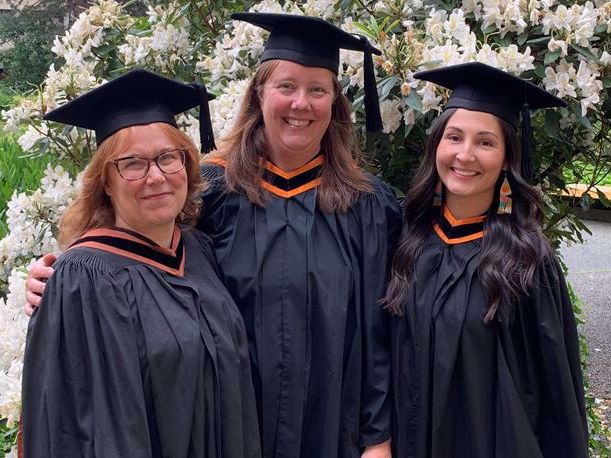
(From left to right: Hanna Scrivens, Manager of Maternal Child and Family Health; Jenny Peters, Nursing Practice Consultant, Substance Use; and Ashley Simpson, Research Analyst, Health and Wellness)
Please join us in celebrating Ashley Simpson and Jenny Peters for graduating with their Masters of Public Health (MPH) degrees and Hanna Scrivens for graduating with her Masters of Public Administration degree at the University of Victoria.
A deep appreciation for the contributions they have made to their FNHA departments and those they will continue to make to the health and wellness of Indigenous people in BC.
|
|
|---|
|
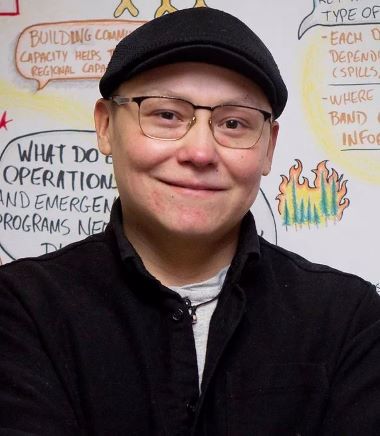
Mo Dawson is an indigenous graphic recorder based out of the beautiful unceded territory of the Lekwungen Peoples. He is Dzawada'enuxw from Gwa'yi (Kingcome Inlet, BC), and Gitxsan with roots to Gitanyow and Gitsegukla BC.
Ever since he was a boy, Mo showed a burning passion for illustration and creativity. For the better part of two decades, he has directed his passion towards professional cooking, working alongside some of the best chefs in the country. He attended graphic recording training with Shift-It Coach Christina Merkley, and has been mentored by Kelly Foxcroft-Poirier of White Raven Consulting. His Experience includes working with a diverse range of public agencies, non-profit organizations, governments and post-secondary institutions. Visual Communication has been an essential part of his peoples’ way of living for generations. With his artistic eye, indigenous values, and a mind as sharp as his chef knives, He aims to provide his clients with a unique graphic recording experience.
|
|
|---|
|
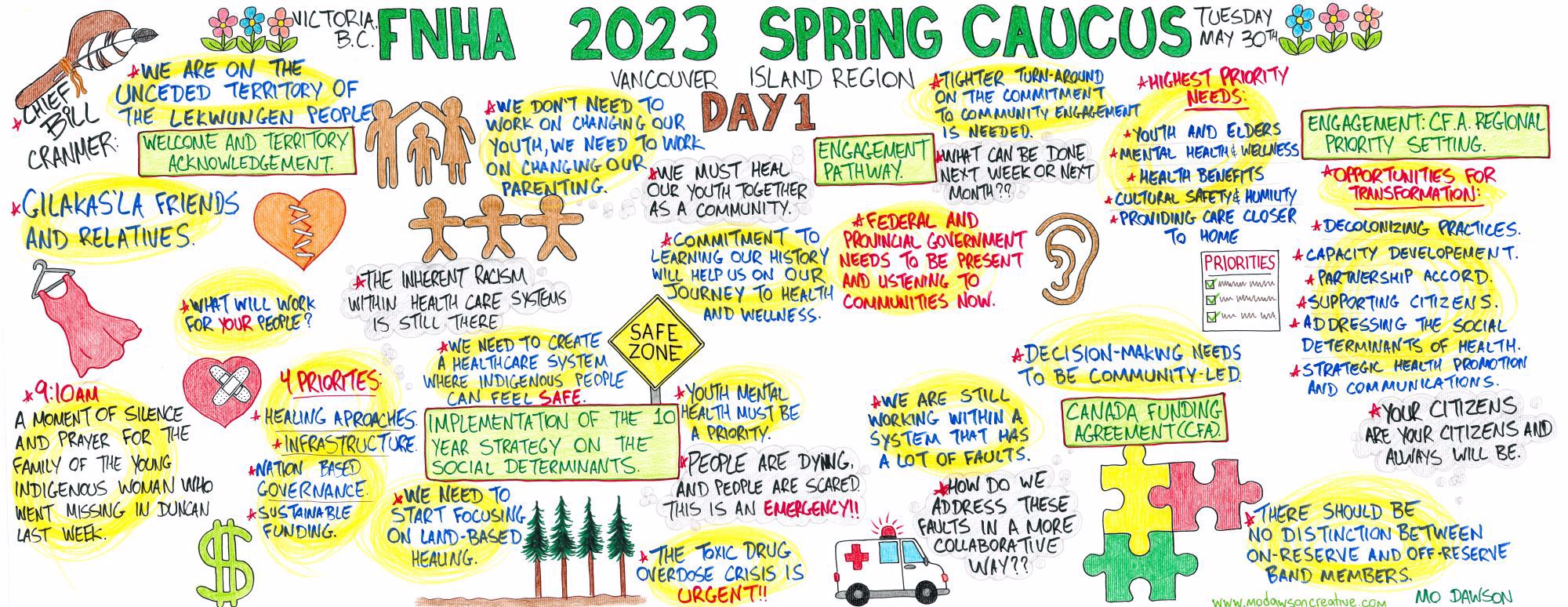
Governance was the discussion topic on day one, with the objective to inform community leaders on the next steps on the implementation of the Ten-Year Strategy on the Social Determinants of Health. Next on the agenda was to receive input on the new Canada Funding Agreement and sharing the First Nations Health Councils new Engagement Plan. |
|
|---|
|
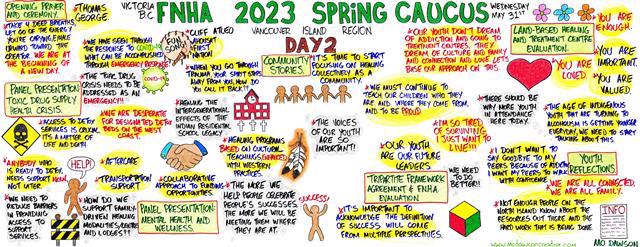
Day two of the Vancouver Island Regional Spring Caucus covered Mental Health and Wellness and the Toxic Drug Supply Health Crisis.
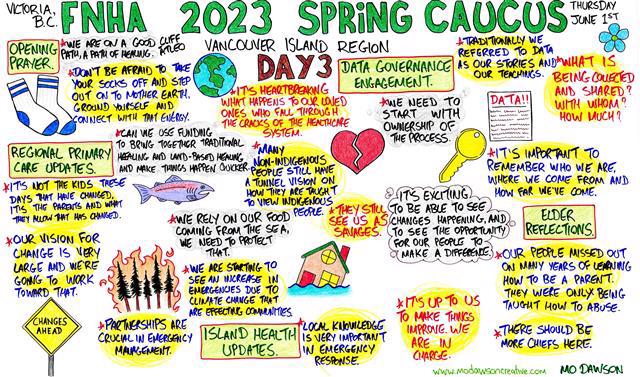
Regional Business topics were discussed on the final day of Regional Caucus including, Primary Care and Island Health updates and Data Governance Engagement. |
|
|---|
|
Graphic Recording is a visual form of note-taking. More specifically, listening, synthesizing, and translating the spoken word into a drawing created in real-time so people can visualize words, thoughts, and ideas being shared in conversation. Graphic recording (also known as visual recording) can play a significant role in the efficiency, productivity, and effectiveness of business meetings, seminars, conferences, and many other types of discussion. This unique style of recording increases peoples engagement, participation, and retention of information which in turn helps people make effective decisions quicker.
For indigenous people, Graphic Recording is a form of witnessing and storytelling which are ancestral practices of documenting and sharing knowledge since time immemorial.
FNHA Contact: Joely.Fulcher@fnha.ca
|
|
|---|
|
Ensuring Quality Care and Safety in BC Health Care Services
First Nations and Indigenous people have a right to access a health care system that is free of racism and discrimination and to feel safe when accessing health care. This means individuals, families and communities are able to voice their perspectives, ask questions and be respected by health care professionals on their beliefs, behaviours and values.
Clients and families have the right to raise concerns and receive a timely response to their concerns, without fear of retribution or an impact on their health services and care. We will do our best to support your cultural and psychological safety throughout the process. Clients and families may also choose to remain anonymous.
Click here to review the compliments and complaints resource.
FNHA Contact: Desiree.Holmes@fnha.ca
|
|
|---|
|
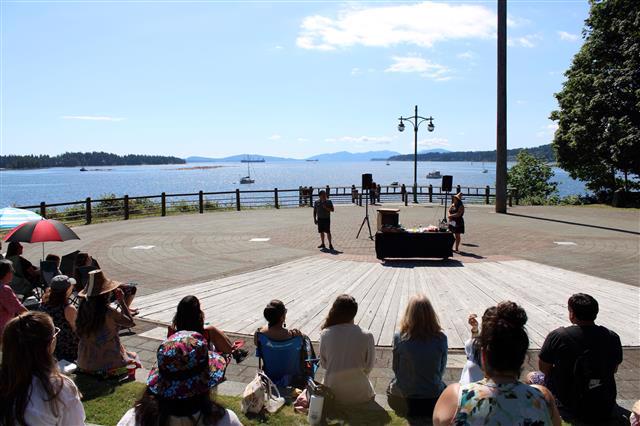
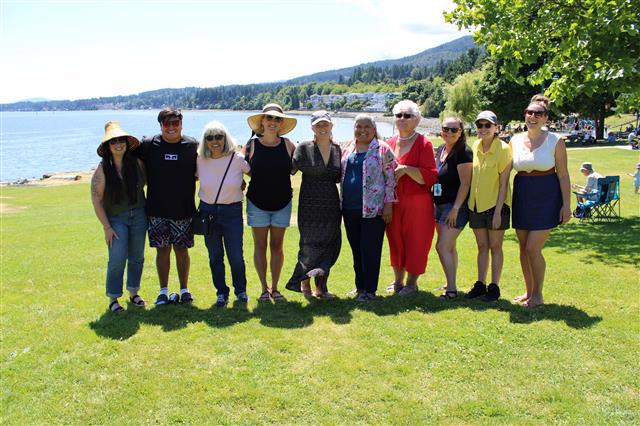
Chief John Elliott welcomed the FNHA Vancouver Island team to the Stz’uminus Territory on June 30th, 2023. It was a beautiful day at Transfer Beach in Ladysmith, where we gathered to celebrate our wellness, learn about Traditional Foods, participate in fun activities, and enjoy a crab feast together!
|
|
|---|
|
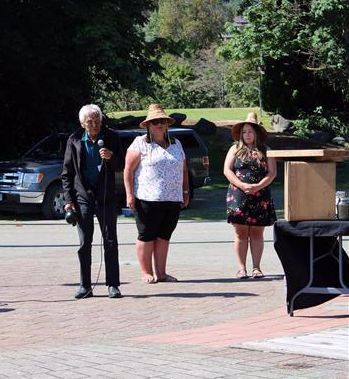
Bill Cranmer offered opening remarks and a prayer to start the day in a good way. To ground us in our work and acknowledge and honour those we serve while also taking care of our wellness.
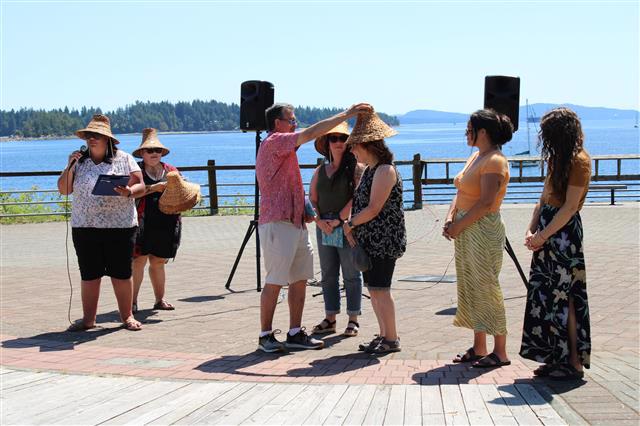
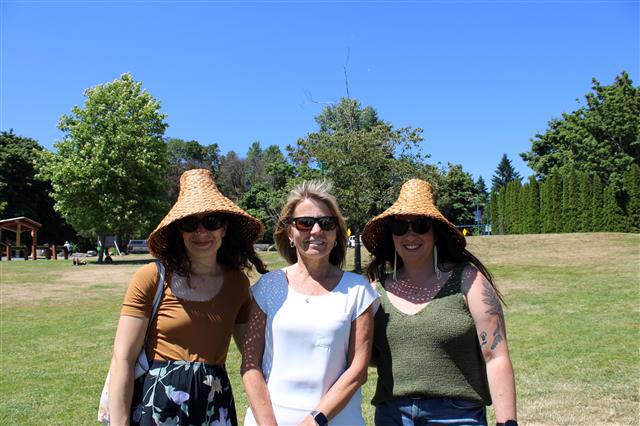
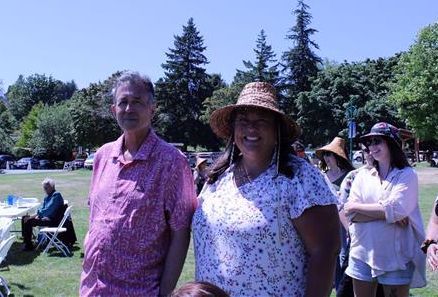
Richard Jock, FNHA CEO, also joined the regional team at Transfer Beach to meet some of our new staff and to stand with Brennan MacDonald, VP of Regional Operations, to recognize and uphold our team members who have recently completed another level of their education towards bettering the health of First Nations in BC.
They were gifted cedar hats to acknowledge their hard work and dedication.
|
|
|---|
|
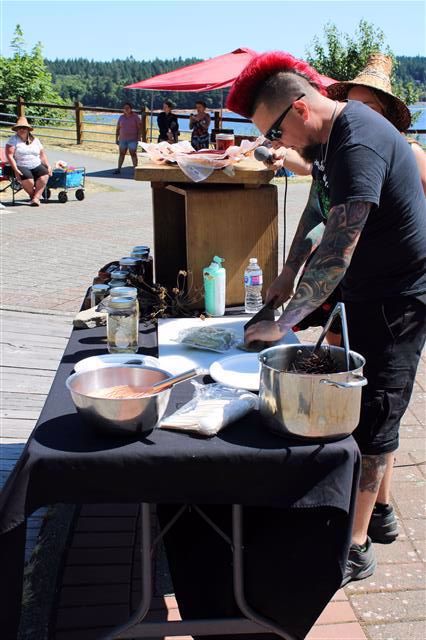
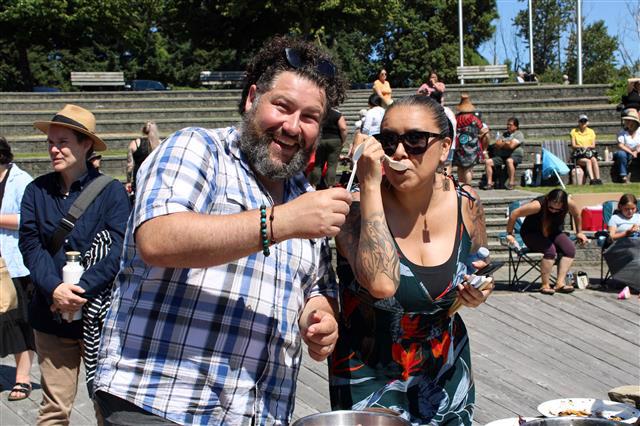
During the Traditional Foods presentation, provided by Jared Qwustenuxun Williams, staff had the opportunity to try some sea urchins, indian ice cream and Ts'umush, fresh out of the ocean!
Our staff were excited about this as you can see!
|
|
|---|
|
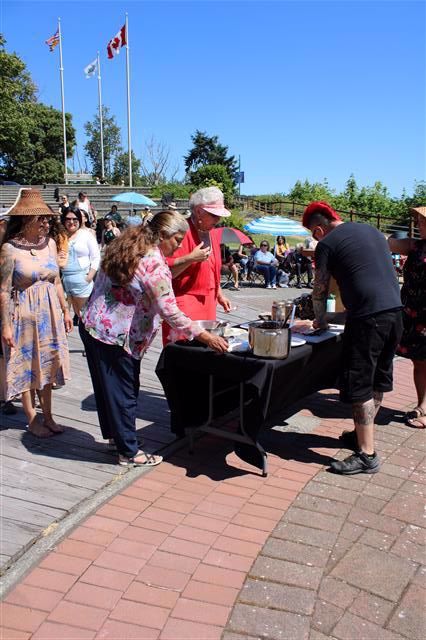
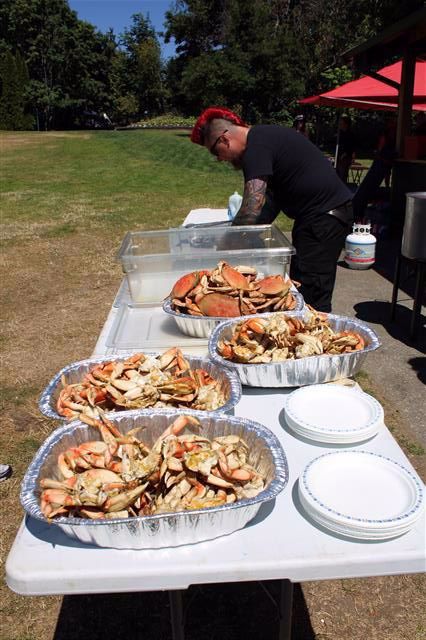
For lunch, we gathered on the beach to feast on crab and salmon made by local communities! It was delicious and enjoyed by all!
|
|
|---|
|
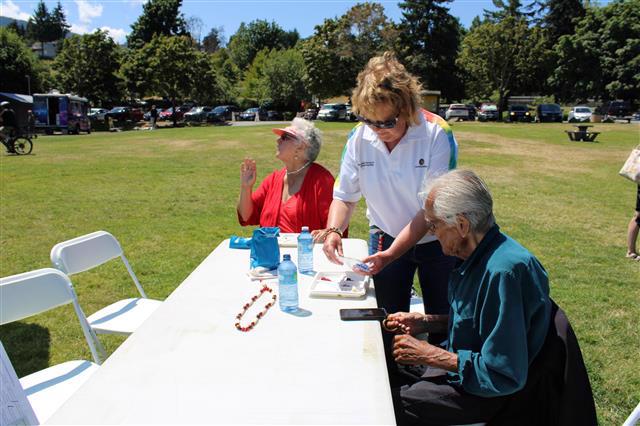
After lunch, the team participated in a Devil’s Club Necklace Workshop! Seeing everyone get creative and design their necklaces was really cool. Lots of laughter and smiles throughout the activity!
|
|
|---|
|
This day was a nice reminder to connect with our colleagues outside of our work. To spend time on the land and connect in a more personal space. To share food and laugh because it's medicine for each of us personally.
|
|
|---|
|
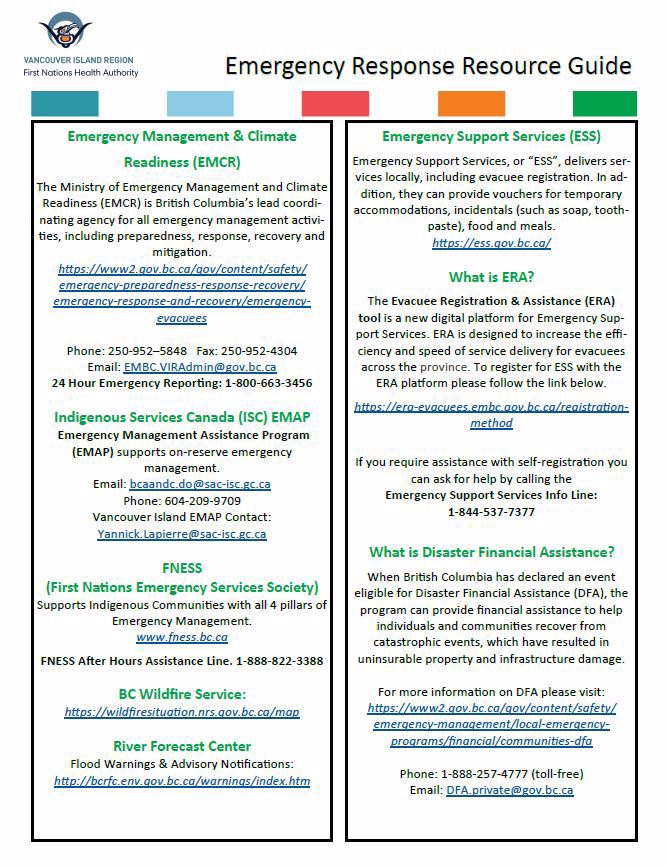
The Vancouver Island Emergency Response Support Guide is not yet published on our website however, please click link here to access the full document.
If you have any questions or comments, please reach out to our communications representative at Joely.Fulcher@fnha.ca and you will be connected to the appropriate department for a response.
FNHA Contact: Melissa.Aird@fnha.ca
|
|
|---|
|
FNHA Regional Postings
If you need additional support to submit your resume, please email Nathan Sam, HR Generalist at Nathan.Sam@fnha.ca
|
|
|---|
|
|
FIRST NATIONS HEALTH AUTHORITY CONTACTS
|
|
|
|---|
|
FNHA COVID-19 Inquiries
If you have general FNHA COVID-19 questions, please email COVID19@fnha.ca
For any requests relating to COVID-19 please email: COVID19needs@fnha.ca |
|
|
Vice President, Vancouver Island
Regional Executive Director, Engagement
Sr. Director, Regional Community Health and Wellness
Manager, Regional Operations
Manager, Community Engagement
Community Engagement Coordinators
- Coast Salish: VACANT
- Nuu-chah-nulth:
- Kwakwaka'wakw:
Urban and Away from Home Coordinator
|
|
|---|
|
|
|
|
Nursing Manager
Community Practice Consultants:
Nurse Navigators:
|
|
|---|
|
|
|
|
Community Relations Representative, Health Benefits
Registered Dental Therapists
- Kim Trottier, Kim.Trottier@fnha.ca (Communities: Stz’uminus, Penelakut, Dzawada’enuxw)
- Janeen Campbell, Janeen.Campbell@fnha.ca (Communities: Cowichan Tribes)
- Melanie Braker, Melanie.Braker@fnha.ca (Communities: Ka;’yu:’k’t’h’/Che;k’tles7et’h’, Mowachaht/Muchalaht, Yuułuʔiłʔatḥ, Ahousaht, Ditidaht, Huu-ay-aht, Hupacasath)
|
|
|---|
|
|
|
|
Regional Manager, Health Emergency Management
|
|
|---|
|
Mental Health, Wellness & Traditional Wellness Support
|
|
|
Regional Manager, Mental Health and Wellness
Quality and Safety Analyst
|
|
|---|
|
|
|
|
Regional Manager, Maternal Child and Family Health,
|
|
|---|
|
|
|
|
Regional Manager, Primary Care
|
|
|---|
|
|
|
|
Primary Care Project Manager
Traditional Wellnes Specialist
|
|
|---|
|
|
|
|
South Island Director, Indigenous Health
Central & North Island Director, Indigenous Health
Cultural Safety & Humility Director, Indigenous Health
Medical Director, Indigenous Health
Partnerships, Strategy & Engagement Director, Indigenous Health
Medical Health Officers, Indigenous Health
Indigenous Health Managers
- South Island, Meghan Corder, Meghan.Corder@islandhealth.ca
- Centre Island, Jennifer Jones, Jennifer.Jones6@islandhealth.ca
- Comox Valley/Stratchona, Michelle McClain, Irene.McClain@islandhealth.ca
- Mount Waddington, Dean Wilson, Dean.Wilson@islandhealth.ca
- Indigenous Health South Island Community Services, Alena Peters, Alena.Peters@islandhealth.ca
- Partnerships & Community Engagement, Trevor Day, Trevor.Day@islandhealth.ca
|
|
|---|
|
Improving MHSU Services in Primary Care
|
|
|---|
|
The Interdivisional Strategic Council (ISC), a partnership between First Nations Health Authority, Island Health and Divisions of Family Practice, has established a Primary Care Mental Health & Substance Use Taskforce. The Taskforce aims to improve mental health and substance use care in primary care settings through two priority projects:
1. Create a point-in-time mental health and substance use service inventory and conduct a gap analysis to improve primary care providers’ ability to navigate MHSU services.
2. Develop a model of care for implementing peer support and allied health in primary care settings to better meet the needs of patients with MHSU challenges and their families.
The Taskforce hopes to inform their work by engaging family physicians, nurse practitioners, psychiatrists, allied health providers, MHSU service providers, and people with lived experience. Opportunities to participate include a brief online survey, virtual or in-person focus groups, or 1:1 interviews over July.
If you are interested in participating or would like to learn more about this work, please contact Shannon.Vogels@outlook.com or Alexis@invictusclinicalcounselling.com
FNHA Contact: Joely.Fulcher@fnha.ca
|
|
|---|
|
Applications for International Overdose Awareness Day Grants Now Open
|
|
|---|
|
In 2016, the Province of British Columbia (BC) declared a public health emergency in response to the Opioid Crisis, or what is now being called the Toxic Drug Supply Emergency. Toxic and unpredictable supplies of drugs have flooded the unregulated drug market and we have seen an unprecedented amount of drug poisoning events and deaths, especially among First Nations people. People from all walks of life are dying.
These are our mothers, fathers, sisters, brothers, children and friends. And every day we are losing more people.
Aug. 31, 2023 is International Overdose Awareness Day (IOAD), the world's largest annual campaign to end overdose, remember without stigma those who have died and acknowledge the grief of the family and friends left behind. It is a time to remember and a time to act.
The FNHA is offering community-based grants of $2,000 for First Nations communities and First Nations Health Service Organizations that provide wellness and harm reduction services to Indigenous people in BC to hold an event, gathering or ceremony on or around Aug. 31, 2023.
For more information and how to apply, click here.
FNHA Contact: Joely.Fulcher@fnha.ca
|
|
|---|
|
The FNHA supports community gatherings like National Indigenous Peoples Day (June 21) that demonstrate culture, resilience and wholistic wellness. If you would like to share how your community has celebrated this day or would like to share what National Indigenous Peoples Day means to you, please send your photos and stories to Wellness@fnha.ca and be entered to win a VISA gift card. We look forward to hearing from you!
|
|
|---|
|
Culture as Healing: Corrina Chase
|
|
|---|
|
Corrina Chase is manager of the First Nations Addictions Care Partnership with the FNHA and the BC Centre on Substance Use. In this story, she speaks about growing up without knowing about her Métis culture or heritage, and her journey of discovering it during her recovery from substance use.
Read more here.
FNHA Contact: Joely.Fulcher@fnha.ca
|
|
|---|
|
Join the FNHA Indigenous Student Program
|
|
|---|
|
This innovative Indigenous-centered (First Nations, Inuit and Métis) program provides students and new grads with valuable work experience at the FNHA. You will be matched to the various needs of the FNHA and First Nations based on your education, skills and career goals. Locations are based throughout British Columbia. To find out more, click the link below.
How to apply (pdf)
FNHA Contact: Joely.Fulcher@fnha.ca
|
|
|---|
|
2024 Tripartite Framework Agreement &
2024 FNHA Evaluations
|
|
|---|
|
2024 Tripartite Framework Agreement & 2024 FNHA Evaluations:
About the TFA and FNHA evaluations:
- These evaluations are part of the overarching evaluations of the First Nations Health Governance Structure.
- The FNHA and TFA evaluations are legally required to be completed every 5 years by independent consultants. The previous evaluation reports as well as management response and action plans are available on our website. The next evaluation cycle closes in 2024.
Engagement Opportunities this summer:
- Personalized or Nation-based engagement available – contact us at evaluation@fnha.ca
- Written submissions (see workbook here)
- There will be additional engagement this Fall during knowledge gathering for these evaluations
About the Land-Based Healing Fund evaluation and FNHA-Funded Treatment Centres evaluation:
- The Land-Based Healing Fund evaluation is examining the implementation of this fund between 2018 – 2023.
- The FNHA-funded Treatment Centres evaluation is examining Treatment Centre services funded by the FNHA between 2018 - 2023.
Engagement opportunities this summer:
Personalized engagement available – contact Carly Welham , Senior Evaluation Consultant at Ference & Company Consulting at carly.welham@ferenceandco.com for:
- Land-based practitioners/supports/staff through a conversation or community visit.
- Confidential conversation with individuals not currently engaged with any treatment services
FNHA Contact: Evaluation@fnha.ca
|
|
|---|
|
Medications: Questions to Ask
|
|
|---|
|
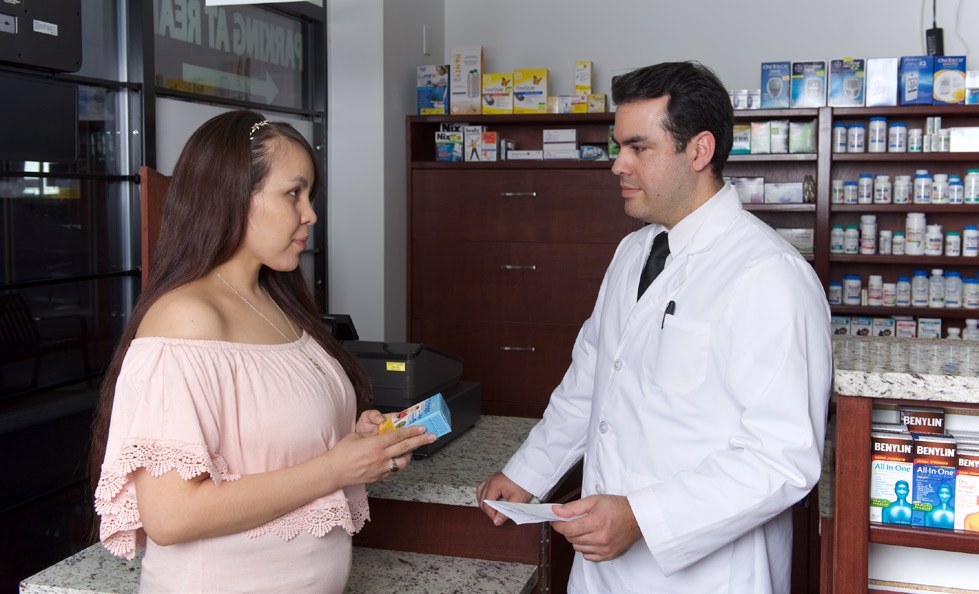
Medicines are safest and most effective when used as intended. Asking your health care team these questions will help you understand the medications you’re taking and will support healthy medication use.
Keep a list of medications in your purse or wallet. Review the list regularly with your prescriber or pharmacist. Include any drug allergies and traditional medicines along with any prescription and non-prescription products, vitamins, minerals, or other herbal or natural products you’re taking.
Click this link to review questions to consider asking your prescriber or pharmacist when starting a new medication or reviewing your medication list.
|
|
|---|
|
The FNHA’s Medication Return Event: supporting safe disposal of medications
|
|
|---|
|
The First Nation's Health Authority (FNHA) launched the Medication Return Event (MRE) grant program in 2018. This funding supports eligible First Nations communities within British Columbia (BC), by providing $500 to use towards hosting an event to dispose of expired or unused medication.
Candy-Lea Chickite, Project Analyst at the FNHA, works directly with communities to organize and deliver MRE funding for the safe disposal of medications. Over the past two years, the FNHA has funded over 60 events across BC. K'omoks, Ktunaxa, N'Quatqua, Seabird Island, and Squiala First Nations, are amongst the communities that have used the funding to hold their own MRE. One of the community partners is Tami Compton, Health Manager at K'omoks First Nation. In a conversation about the most recent MRE, Compton stated that, “Removing expired or unused medication is very important- especially if you have young children, teenagers and elderly with dementia- it helps keep your home safe."
Click to read the whole story here.
|
|
|---|
|
Walking in two worlds: Celebrating National Indigenous History Month
|
|
|---|
|
A personal reflection by Courtney (Ti’yuqtunat) Defriend, Director of Research and Knowledge Exchange
Ever since I can remember, I have been learning to walk in two worlds. I am of mixed First Nations and European ancestry. My father's family is primarily Scottish, whereas my mother is of mixed Coast Salish First Nation and European ancestry.
After my parents separated, when I was five years old, I was raised by my mom about 10 minutes away from Stz'uminus First Nations reserve. From my mother and mother's family, I learned about First Nations culture and teachings. I was raised by my Indigenous mom, who was raised by her Indigenous mom, and there are a lot of teachings in our local territory around the matriarchs.
I'm primarily European by blood quantum*. There is this colonial, violent perspective on blood quantum and appearance, and being native enough, and status and legislation. So that's really been positioned in my life.
Growing up, I experienced a constant tension where people wanted me to identify with one part of my heritage versus another. When I started at public school, my mother checked that box that said “Indigenous". My father was really reluctant to have us raised in the culture and said that we weren't First Nations.
In the 90s, I was identified as Indigenous at school and when I was disruptive in class, I was immediately sent to the special needs room which was actually all Indigenous kids. When they realized I was too smart for the classroom, they put me a grade ahead.
I found myself trying to navigate these two identities separately, walking in one world at a time. There is a constant reinforcement of being wrong in both settings. I got to a point where I didn't want to continue to feel wrong all the time.
I began to embrace my mixed heritage and found a way to walk in both worlds by using my unique perspective to be of service to my community. I think that I have had a lot of protection with my fair skin around first-hand trauma, which can be experienced with racist encounters.
I see this as a huge gift and obligation to leverage that privilege in order to advocate with that inherent cultural and traditional knowledge that I've been raised with, at tables that don't often accept First Nations people.
I've really applied myself seriously to take advantage of all of the opportunities I can to sit at a white or colonial table and insert within their way, how we do things. I recently completed my doctorate, where I used entirely Indigenous methodologies and teachings. My work was recognized by one of Canada's oldest and most prestigious awards, the Governor General's Gold Medal.
Five years ago, I received my traditional name, Ti'yuqtunat from my grandmother. The gift of a traditional name has been such a healing journey around identity and belonging. My traditional name, given to me by my grandmother, was her great-great grandmother's traditional name.
I remember getting to a point in my life where I was tired of worrying about how people were going to challenge whether I belong or didn't belong and I just felt like this was between me and my ancestors.
I'm just going to move in the direction that I feel that I need to go and the universe will provide where I'm supposed to be.
* Blood quantum is a term used to describe what percentage of First Nations blood a person has. Historically, blood quantum was used to determine Indian status as per the Indian Act.
FNHA Contact: Joely.Fulcher@fnha.ca
|
|
|---|
|
New roles added to provide person-centred support for Indigenous patients at BC Cancer
|
|
|---|
|
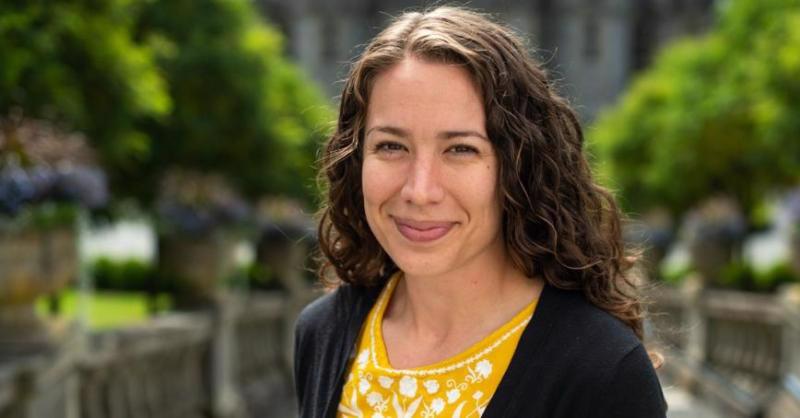
Lynn Seabrook has joined the BC Cancer’s Indigenous Control Team as the Indigenous Health Promotion Specialist. Prior to joining the Indigenous Cancer Control team, Lynn was a Health Director for several years in the Fraser Region.
Lynn’s role is to support Indigenous communities and community partners to provide culturally safe screening and prevention cancer information. Lynn travels to Indigenous communities across the province where she shares information and engages community members to understand barriers to accessing BC Cancer's services.
Lynn is available to collaborate to create and organize community health fairs, coordinate cultural supports, campaigns and action plans that promote healthy living.
Letse’mot (Everyone Working Together)
Lynn Seabrook's contact info:
Indigenous Health Promotion Specialist
Indigenous Cancer Control
BC Cancer Agency
8th Floor – 686 West Broadway
Vancouver, BC V5Z 1G1
Cell: 1-778-689-4175
lynn.seabrook@bccancer.bc.ca
FNHA Contact: Joely.Fulcher@fnha.ca
|
|
|---|
|
BC Government Wants Help Tackling Racism
|
|
|---|
|
The province is seeking public input in crafting legislation to tackle systemic racism in its programs and services. To that end, the public is being asked to fill out an online questionnaire that asks respondents to answer questions about their experiences with racism and what priorities they would like to see for anti-racism services.
Read more here.
FNHA Contact: Joely.Fulcher@fnha.ca
|
|
|---|
|
2023 Age-friendly Grants open on June 1
|
|
|---|
|
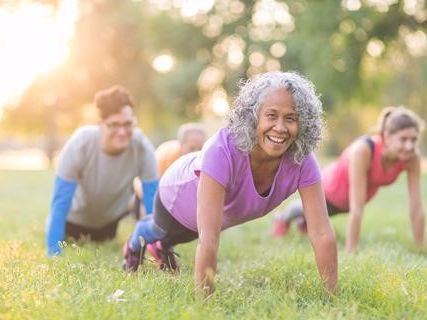
On June 1, 2023, British Columbia communities can apply for funding aimed at helping seniors lead independent, active lives.
Local and Indigenous governments and communities can submit applications for 2023 grants to BCHC starting June 1, 2023, and closing July 28, 2023. These governments may apply for a Stream 1 grant for as much as $25,000 for age-friendly assessments and action plans or a Stream 2 grant for as much as $15,000 for age-friendly projects.
|
|
|---|
|
|
|  |
|
|
|
|