News Updates
December 16th, 2024 |
|
|
|
|
Greetings respected Vancouver Island First Nations Leadership;
Welcome to our VI Regional e-newsletter. This newsletter will highlight updates for the Vancouver Island region from the FNHA, Island Health, Government of BC, Government of Canada, alongside many other partners.
In today's edition you will find:
|
|
|---|
|
|
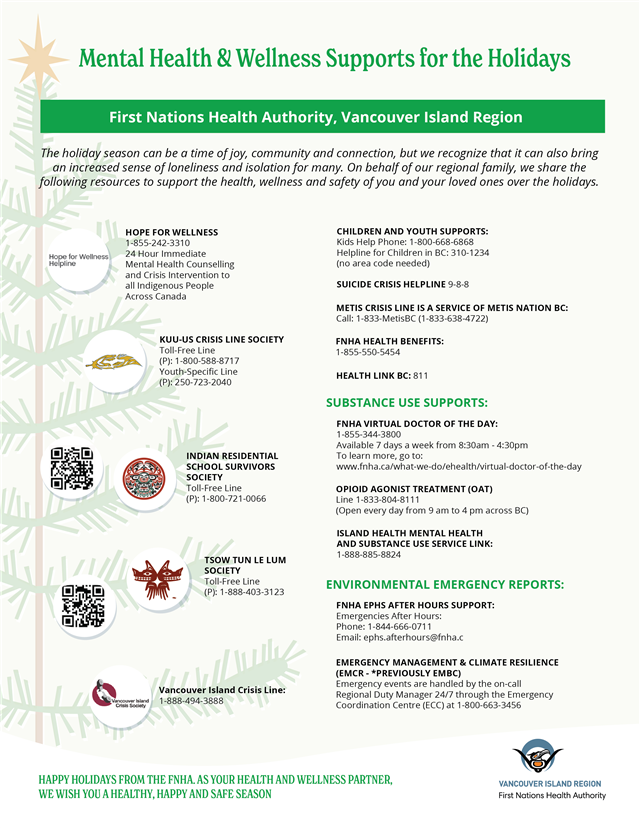
Celebrate the holidays in good health |
|
A message from Dr. Kamran Golmohammadi, Acting Chief Medical Officer, FNHA Office of the Chief Medical Officer
With Christmas and New Year celebrations approaching, many First Nations people across BC are looking forward to gathering in the spirit of community that has been a cornerstone of First Nations health and wellness for generations.
The holiday season often provides families, relatives, friends, and neighbours with more opportunities to connect. These are not simply social events, but ceremonies that strengthen our families and communities, and nourish our spirits.
|
|
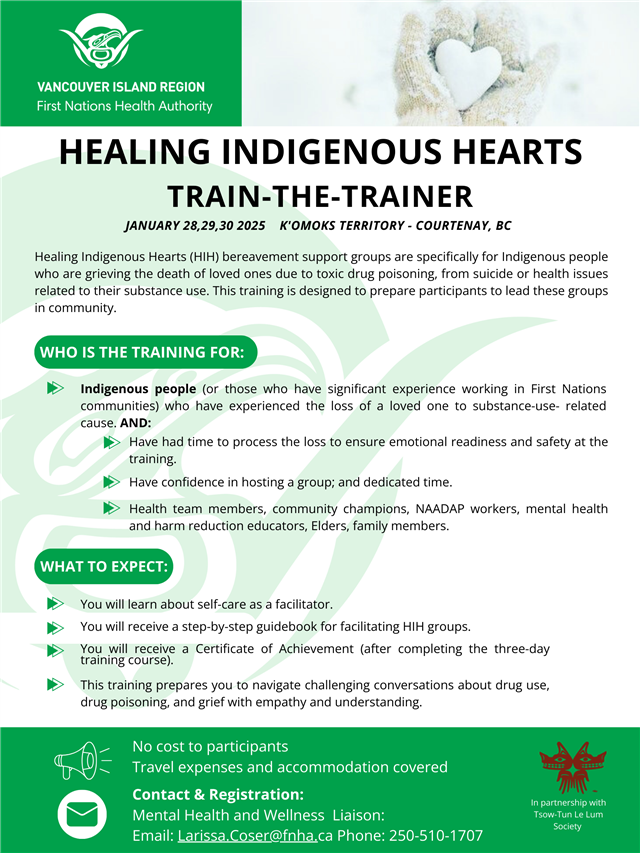
Healing Indigenous Hearts: Train-the-Trainer |
|
Please note another training is scheduled in Cowichan Territory on February 25, 26,27 2025- More info to come!
|
|
Cyber Incident Grant and Webinar support info |
|
The First Nations Health Authority (FNHA) is offering one time funding to First Nation communities to hire casual staff to support members to register for free Equifax credit and identity theft monitoring.
Email is the only way that Equifax can alert people if there is unusual activity on their accounts. Grants can be used to hire students or other temporary workers to reach out to community members or host sessions to help Elders and others aged 18 years or older who may need assistance to create email accounts and/or complete the registration process.
The deadline to register for 24 months of free Equifax monitoring is February 28, 2025. The Community grant amounts are:
- $3,000 - total population up to 500 members
- $5,000 - total population of 501 members or more
Please provide:
- the name of your community
- your name, title, email address and telephone number
|
|
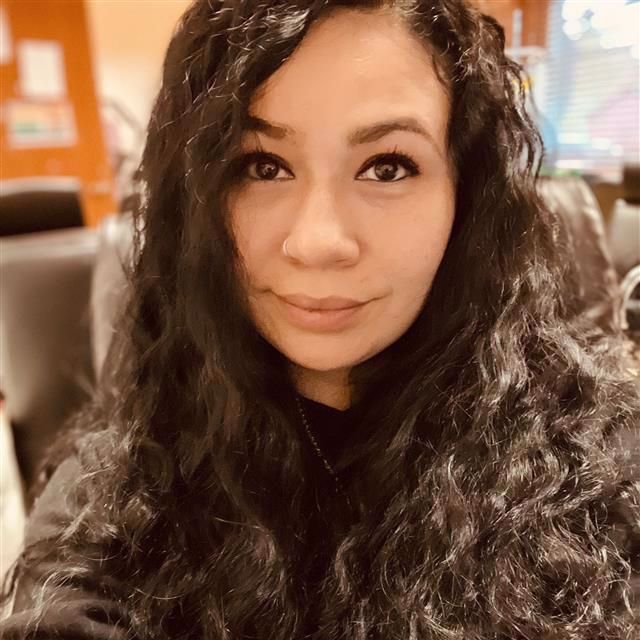
Introducing Ketisha Hacket as FNHA’s New Administrative Assistant at the Quinsam Office |
|
Ketisha is a member of Homalco First Nation, she was working with Homalco as the Language Department assistant before joining our FNHA family.
She has two children who are the “light of her life” and she enjoys spending time with her family, and her pets, exercising, and eating healthy
As she continues on her healing journey. She is learning more about her culture, heritage, and Language. Ketisha is continuing her business education and working towards attaining her MBA and looks forward to applying her knowledge and skills to support our region in her new role and to working alongside our FNHA family.
FNHA Contact: Ketisha.Hackett@fnha.ca
|
|
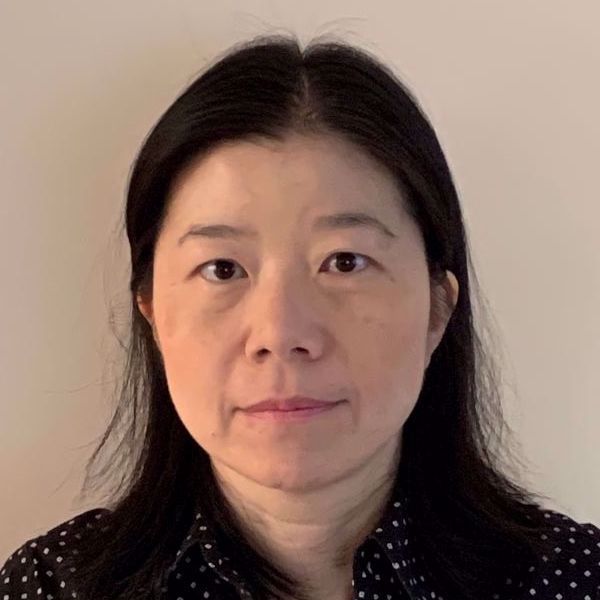
A Warm Welcome to Yvonne Liang as FNHA’s New Environmental Public Health Officer on Vancouver Island |
|
Before joining the FNHA family, Yvonne worked as a Public Health Inspector II with Alberta Health Services (AHS) in the North Zone, based in High Level. Her previous experience includes roles as an Environmental Health Officer (EHO) with Northern Health in Fort St. John and Prince George, as well as with Haldimand-Norfolk and Lambton Public Health in southern Ontario.
In her free time, Yvonne enjoys creating artwork, painting, cooking, and traveling.
To better serve vulnerable populations such as children and elders, she completed the JIBC Community Care Licensing program and earned an Advanced Specialty Certificate in 2022.
Yvonne is excited to apply her knowledge and skills in her new role with FNHA, supporting the Vancouver Island Region and its communities while working alongside the FNHA family.
FNHA Contact: Yvonne.Liang@fnha.ca
|
|
Vancouver Island Health Champion Recognition |
|
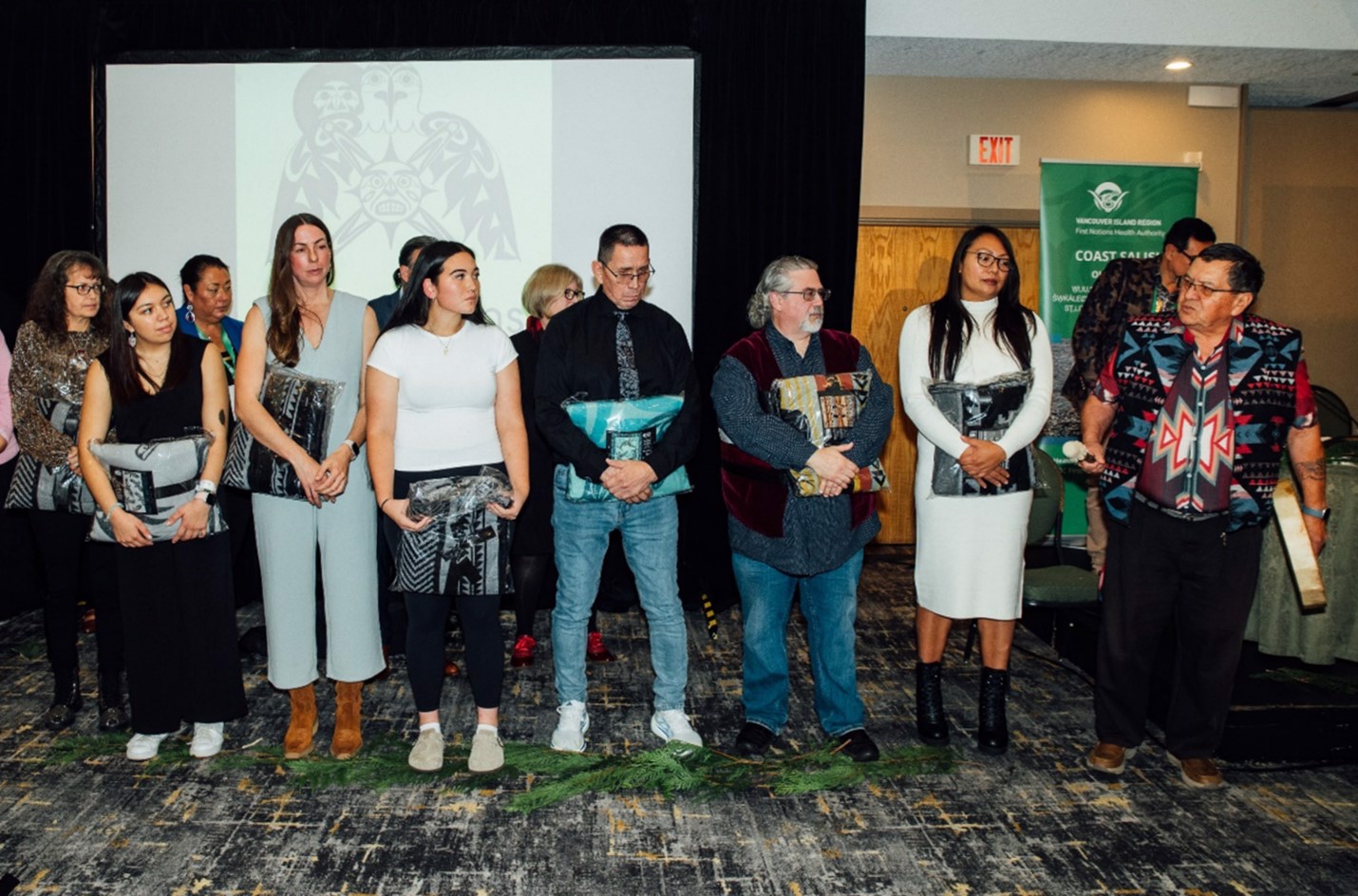
Left-to-right: Recipients (Vanessa Charlong, Olivia Peters, Bonnie Smith, Hayleigh Watts, John Sampson, Dean Wilson, Vanessa Sharkey); Drummer/Knowledge-Keeper TELAXTEN (Paul Sam).
On November 13th 2024, leaders from FNHA, Island Health, and the 50 First Nation communities on Vancouver Island gathered in Snaw-naw-as and Qualicum Territory at the Tigh-Na-Mara Resort (Parksville) for the Partnership Accord Dinner with Vancouver Island Governance and Health Leadership.
This annual meeting is part of the Fall Regional Caucus and provides an opportunity for FNHA and Island Health to meet with First Nations health leadership and share progress on collaborated efforts advancing First Nations Health and wellness.
During this year’s meeting, Health Champions were presented with a First Nations designed blanket in acknowledgment of their dedication and commitment to health and wellness. Recipients from across the region were selected through an open nomination process and partnered selection committee. Eight Health Champions were selected across three categories: Youth, Community, and Health Leader/Service Provider. Health Champions, including both First Nations members and allies, were selected for their exceptional contributions in actively supporting and advocating for First Nations health and wellness initiatives in their community and/or region.
TELAXTEN (Paul Sam) shared a drum song as award recipients were presented with their gifts before First Nations Governance & Health Leadership, and health system partners attending the dinner.
Recipients included:
Health Leader / Service Provider Health Champion
- Vanessa Charlong, Hupcasath First Nation Health Director
- Keetah Levac, Island Health Indigenous Patient Navigator
- Bonnie Smith, Nuchatlaht Tribe Community Services Manager
- John Sampson, Tsawout First Nation
Community Health Champion
- Dean Wilson, Island Health Indigenous Health North Island Manager
- Vanessa Sharkey, Ally/Community Resident, Wei Wai Kum Nation
Youth Health Champion
- Olivia Peters, Huu-ay-aht First Nation
- Hayleigh Watts, Tseshaht First Nation
The Partnership Accord Steering Committee extends their congratulations once again to the 2024 Health Champions and thank them for their leadership and dedication to advancing First Nations health and wellness across Vancouver Island.
For any questions about this event, please contact IndigenousHealth@islandhealth.ca
|
|
Supporting National Addictions Awareness Week: Forging Connections |
|
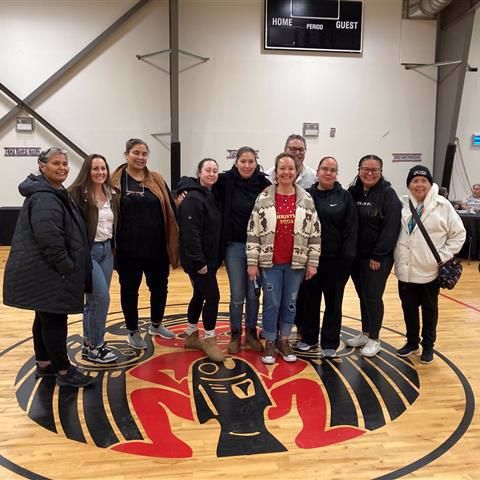
The First Nations Health Authority proudly participated in the Huli’tun Health Society’s National Addictions Awareness Week event on November 28, 2024, held at the Halalt First Nations Gym. This annual event, part of the broader initiative led by the Canadian Centre on Substance Use and Addiction, focuses on addressing the harms caused by substance use, highlighting prevention, harm reduction, treatment, and recovery solutions.
This year’s theme, “Forging Connections,” emphasized the importance of support, understanding, and community for those affected by substance use. For many in First Nations communities, addiction is intertwined with the trauma of colonialism, often leading individuals to hide their struggles out of fear of judgment. The event encouraged a message of hope and solidarity, showcasing personal stories of recovery and resilience.
Community members shared their journeys of creating wellness and healing without substances, reinforcing the idea that the opposite of addiction is connection. Their courage to speak out inspired others to seek support, knowing they are not alone in their struggles.
This event was a powerful reminder that through connection, we can support each other and forge paths toward recovery and well-being.
FNHA Contact: Della.Shade@fnha.ca
|
|
Holiday season is also flu season |
|
Vaccines can complement your traditional wellness plan
There are many things we can do to stay well during the winter season even though this time of year brings increased risk of respiratory illnesses (e.g., cold, flu, COVID-19) because people are indoors together more often.
The best offence against respiratory illness is a good defence. This means taking measures long before we feel sick. Simple but powerful ways to protect ourselves and others include:
- Washing our hands regularly.
- Covering our mouth when sneezing or coughing.
- Wearing a mask, especially in crowded indoor spaces such as public transit.
- Getting all recommended seasonal vaccines.
|
|
|
- Primary Care Registered Nurse - Tseycum (North Saanich), Snuneymuxw (Nanaimo), and Esquimalt (Victoria, BC)
- Clinical Counsellor - Mental Health & Wellness Outreach, (Vancouver Island, BC)
- Community Coordinator, Child and Youth Care, Kwakwaka’wakw - (Quinsam or Port Hardy, BC)
- Community Coordinator, Crisis Response, Coast Salish - (Vancouver Island, BC)
- Community Engagement Coordinator, Nuu-Chah-Nulth (Vancouver Island, BC)
- Community Engagement Coordinator, Quatsino - Port Hardy (Vancouver Island, BC)
- Medical Office Assistant, Snuneymuxw (Nanaimo, BC)
- Regional Coordinator, Urban Away from Home - Coast Salish, Kwakwaka'wakw, and Nuu-chah-nulth (Vancouver Island, BC)
|
|
- Manager of Nursing Services, Nuu-Chah-Nulth Tribal Council (Port Alberni, BC)
- RN and CHN, Huli’tun Health Society - (Chemainus, BC)
- Quu’asa Wellness Worker, Nuu-Chah-Nulth Tribal Council (Port Alberni, BC)
- Quu’asa Wellness Worker, Nuu-Chah-Nulth Tribal Council (Tofino, BC)
- Human Resources Coordinator, Indigenous Employee Experince (Remote, BC)
- First Nation Advocate Nurse - Part-time, Nuu-Chah-Nulth Tribal Council (Port Alberni, BC)
- First Nation Advocate Nurse - Casual, Nuu-Chah-Nulth Tribal Council (Port Alberni, BC)
|
|
First Nations Health Authority
Regional Contacts |
|
|
|
|
Vice President, Vancouver Island
Regional Executive Director, Engagement
Sr. Director, Regional Community Health and Wellness
Director, Regional Health Emergency Management
Manager, Regional Operations
Regional Manager, Planning and Development
Manager, Community Engagement:
Community Engagement Coordinators:
- Coast Salish:
- Nuu-chah-nulth:
- Kwakwaka'wakw:
Urban and Away from Home Coordinator
Regional Partnerships Coordinator
Regional Communication Generalist
|
|
|---|
|
|
|
|
|
Nursing Manager:
Communicable Disease Emergency Manager:
Community Practice Consultants:
Nurse Navigators:
|
|
|---|
|
|
|
|
|
Community Relations Representative,
Health Benefits:
Registered Dental Therapists:
- Kim Trottier, Kim.Trottier@fnha.ca (Communities: Stz’uminus, Penelakut, Dzawada’enuxw)
- Janeen Campbell, Janeen.Campbell@fnha.ca (Communities: Cowichan Tribes)
- Melanie Braker, Melanie.Braker@fnha.ca (Communities: Ka;’yu:’k’t’h’/Che;k’tles7et’h’, Mowachaht/Muchalaht, Yuułuʔiłʔatḥ, Ahousaht, Ditidaht, Huu-ay-aht, Hupacasath)
|
|
|---|
|
|
|
|
|
Regional Manager Environmental Public Health Services
|
|
|---|
|
|
|
|
|
Regional Director, Health Emergency Management
Regional Manager, Health Emergency Management
Community Coordinators, Crisis Response
Regional Manager, Toxic Drug Response
|
|
|---|
|
|
|
|
|
Regional Manager, Mental Health and Wellness
Team Lead, Mental Health and Wellness
Quality and Safety Analyst
Senior Advisor Cultural Safety and Humility
Clinical Counsellor
Social Worker
|
|
|---|
|
|
|
|
|
Regional Manager, Maternal Child and Family Health:
|
|
|---|
|
|
|
|
|
Regional Manager, Primary Care:
Primary Care Project Manager:
Traditional Wellness Specialist:
|
|
|---|
|
|
Island Health – Indigenous Health, Diversity, Equity & Inclusion Portfolio Contacts |
|
|
|
|
South Island
Central Island
North Island
Cultural Safety & Humility
Indigenous Recruitment & Retention
Strategy, Partnerships & Engagement
Diversity, Equity, & Inclusion
Medical Director
|
|
|---|
|
|
FNHA nurses in charge: more than just a job |
|
Nursing stations are the heart of health care for many rural and remote First Nations communities in BC. They often provide all-encompassing wrap around health care services. At the heart of the nursing stations are the people who work there, people like nurses. They bring valuable wholistc health care expertise to locations where adaptability is just as important as health care expertise.
The First Nation Health Authority's (FNHA) Northern Region is a vast region that stretches from the north coast to the border with Alberta and from BC's northern border with the Yukon and Northwest Territories to the geographic centre of the province in the Prince George area. Not surprisingly, the North Region also has the most nursing stations out of all of the FNHA's regions.
Christine Morton and Catherine Lake are both nurses in charge of their respective community's nursing stations. They both bring a wealth of experiences gained over decades of working in the health care profession. Christine's experience includes stints in the ICU and emergency at hospitals in the US and also at Royal Columbian in New Westminster. She worked as an agency nurse for the FNHA, having the opportunity to travel to six different communities before falling in love with Gitga'at, where she has called home for the last three and a half years.
|
|
ATTENTION: all hunters, gatherers, and game handlers |
|
Protect yourself from bird flu, aka avian influenza, which is currently a public health issue in BC
As health and wellness partners with First Nations people in BC, the First Nations Health Authority (FNHA) is advising hunters, gatherers, and anyone else who handles game, to safeguard themselves against avian influenza (aka bird flu or H5N1), which is currently a public health issue across Canada and the United States. According to the Canadian Food Inspection Agency, more than 12 million birds have been infected across Canada since the current cycle began in 2022, including more than six million in BC.
What is avian influenza?
Avian influenza is a virus that spreads quickly among wild birds, poultry, and some mammals such as skunks and foxes. It can live in bird feathers for weeks in moderate temperatures and longer in cool weather – as well as on surfaces for months. Since humans can also get sick from handling infected birds or animals, it is important to take precautions when dealing with birds or other game, and to avoid completely those with signs of illness that may be avian influenza.
|
|
Aboriginal Head Start On-Reserve celebrates 25-years of early childhood learning |
|
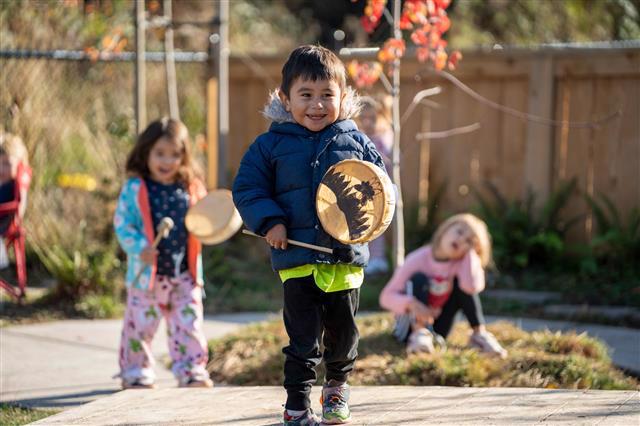
The First Nations Health Authority (FNHA) is celebrating the 25-year anniversary of the Aboriginal Head Start On-Reserve (AHSOR) program, reflecting on the impact and legacy of early childhood learning and development supported in over 150 First Nations across BC.
“This is truly an important milestone not only for the FNHA but for First Nations children, families and communities across the province," says Denise Lacerte, FNHA Manager, Healthy Children and Youth. “It's a moment to celebrate the achievements of the AHSOR program while sharing our vision for the future."
The FNHA has provided AHSOR program funding to over 70 percent of First Nations in BC, growing from 122 communities funded in 2018 to 151 in 2024.
Over 3,300 spaces for First Nations children have been funded. The FNHA's vision is to expand Head Start programs so that every First Nations community has equal access, and that every First Nations child can have a head start.
|
|
Movement is medicine in Mike Alexander's diabetes wellness journey |
|
A message from Kathy Riyazi, MD, Population Health Data & Reporting Manager, FNHA Office of the Chief Medical Officer; and Tessie Harris, Diabetes Educator, FNHA Office of the Chief Nursing Officer
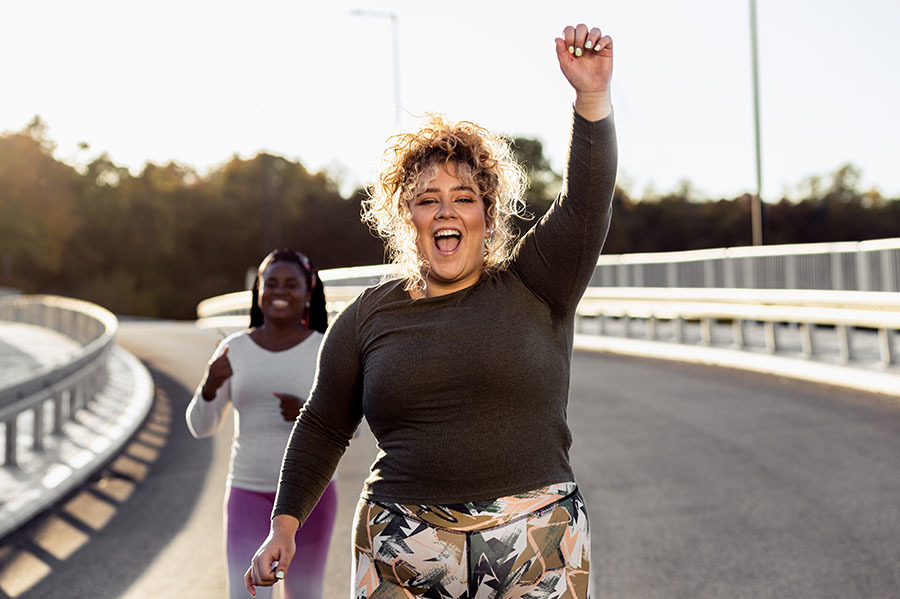
For this year's Diabetes Awareness Month, we are sharing the wisdom and advice of First Nations people who are living well with Type 2 diabetes. This week we are sharing Mike Alexander's story, who is from Swan Lake First Nation and now lives in Vancouver, BC.
We are grateful to them for being open and willing to share their experiences in order to help others. We trust that those of you who have diabetes will find something useful in their stories that will help you as you navigate living well with diabetes!
|
|
For family: the story of an Indigenous veteran |
|
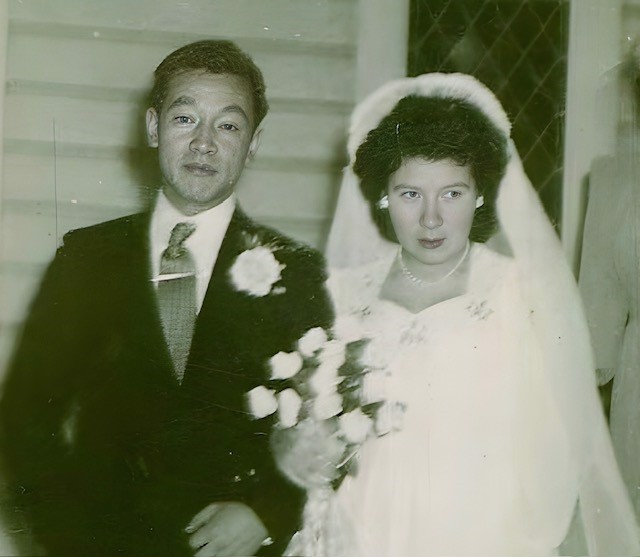
Philip and Rosy Morrison on their wedding day.
National Indigenous Veterans Day is on November 8. It's a day to commemorate the contributions of Indigenous veterans, particularly those who served in the First World War, the Second World War and the Korean War. On this day we recognize their contributions and sacrifices and acknowledge the unfair and unequal treatment they received from the government of Canada compared to non-Indigenous veterans. The First Nations Health Authority’s Jessica Mikolayczyk shares the story of her father, Philip “Smokey" Morrison (February 2 1923 – July 14 1981) from the Gitanmaax Band in Hazelton.
The pride in Jessica Mikolayczyk's voice is evident and comes across clearly when she talks about her father Philip Morrison. The words resilience and family aptly describe his life and how he lived, as well as the legacy and lessons he gave his children.
|
|
Finding balance: Lucy's Journey with Diabetes |
|
For this year's Diabetes Awareness Month (November), we are sharing stories from First Nations people with lived experience. Diabetes is one of the most common chronic conditions and yet, it is often misunderstood. When people share their experiences, we can learn from each other and increase support. This story highlights that getting information, connecting with others, and practicing culture are key parts of living well with diabetes.
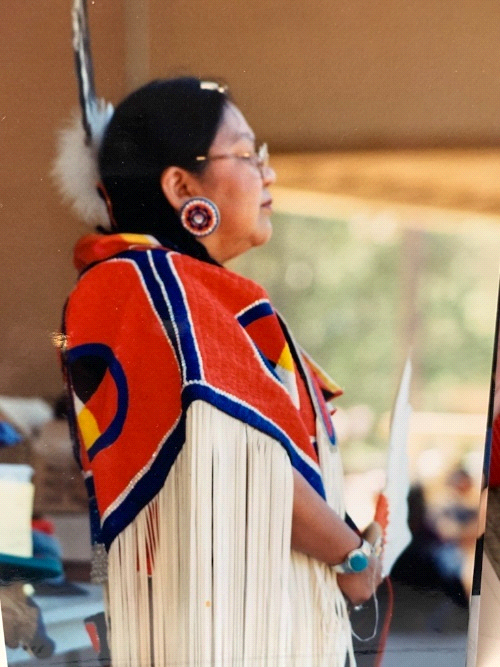
Lucy Barney, T'it'q'et Nation, is a grandmother, a retired nurse, and an avid crafter of beadwork, embroidery and sewing. She is also a person who has been living with type 2 diabetes for 10 years.
Prior to her own diagnosis, Lucy had dedicated her career as a nurse to improving diabetes care after watching her mother live with diabetes and eventually passing from complications.
“When I was a young girl, my mother developed type 2 diabetes and I didn't understand why because she walked miles every day to work," recalls Lucy.
|
|
Applications call for Youth Resilience Grants |
|
Island Health and the Pacific Public Health Foundation (PPHF) are excited to welcome grant applications from organizations to build youth mental well-being and resilience. Youth Resilience Grants, previously known as Resilience and Safety Grants, provide up to $50,000 each in one-time funding for new projects supporting youth up to age 19, from Indigenous-led organizations and communities, schools, school districts, parent advisory councils, youth-led groups, not-for-profit organizations, and local government organizations.
For more detailed information and to submit an application, please visit Youth Resilience Grants. The deadline to apply is December 20.
|
|
Island Health 2024 Chief Medical Health Officer Report |
|
The Island Health’s 2024 Chief Medical Health Officer (CMHO) report focuses on the health harms associated with the use of psychoactive substances, including alcohol, illegally manufactured opioids, tobacco, and cannabis. The report is intended to serve as an engagement tool to support dialogue among First Nation communities, public health staff, clinicians, local governments, and community organizations across Island Health to address the health and social challenges related to substance use in the Island Health region.
|
|
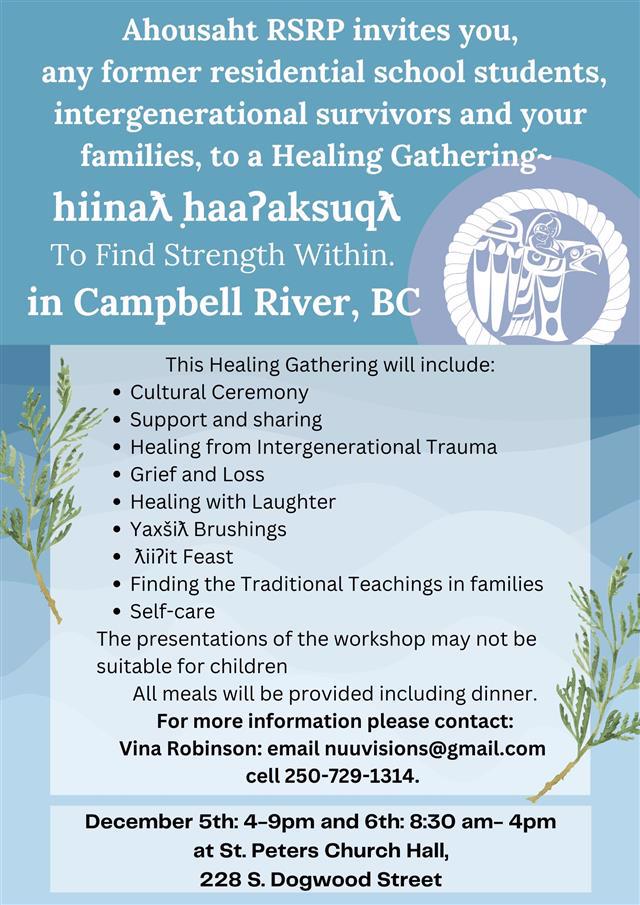
Ashousaht RSRP hosts a Healing Gathering in Campbell River |
|
Details are in the attached poster.
|
|
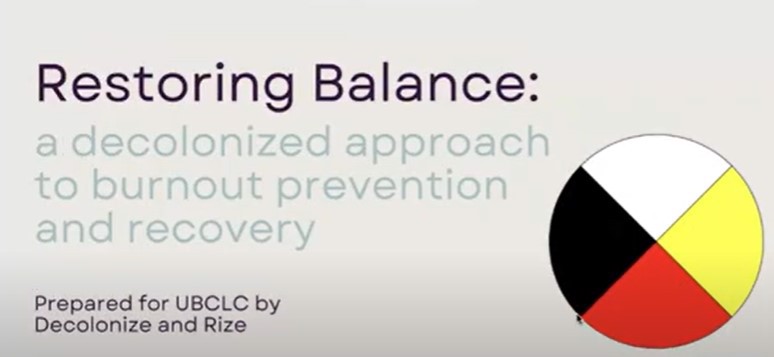
Restoring Balance: A decolonized approach to burnout prevention and recovery |
|
Burnout can have significant consequences for our physical, mental, emotional, and spiritual well-being. In this circle, we will explore the early signs of burnout and ways we can begin to mitigate its impacts. We look at burnout through both an individual and organizational lens, along with sharing practical tools, tips, and reflections team members can use to support themselves and their colleagues.
|
|
Family Violence Prevention Program: Call for proposals 2024 to 2025 |
|
The Family Violence Prevention Program (FVPP) provides vital services to Indigenous women, children, families and 2SLGBTQI+ people facing family violence and funds service delivery activities and key supports to help prevent family violence. FVPP funds Indigenous-led, culturally-appropriate and community-driven, service delivery family violence prevention activities across Canada.
This call for proposals supports family violence prevention and direct service delivery activities that focus on Inuit, Métis, Indigenous 2SLGBTQI+ people and urban populations. The primary focus of proposed activities must be on family violence prevention, and the client base must be predominantly Indigenous.
|
|
| |
|
 | |
|  |
|
|
|
|