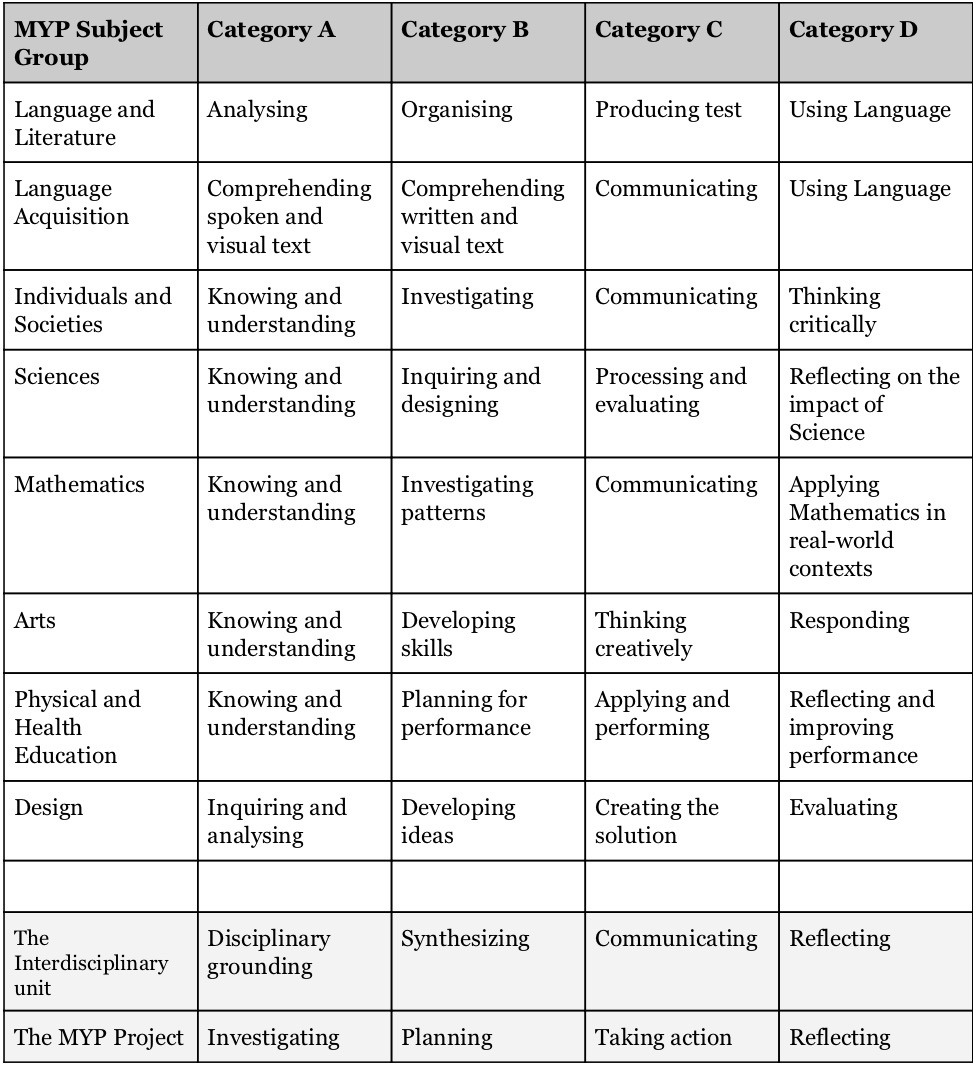
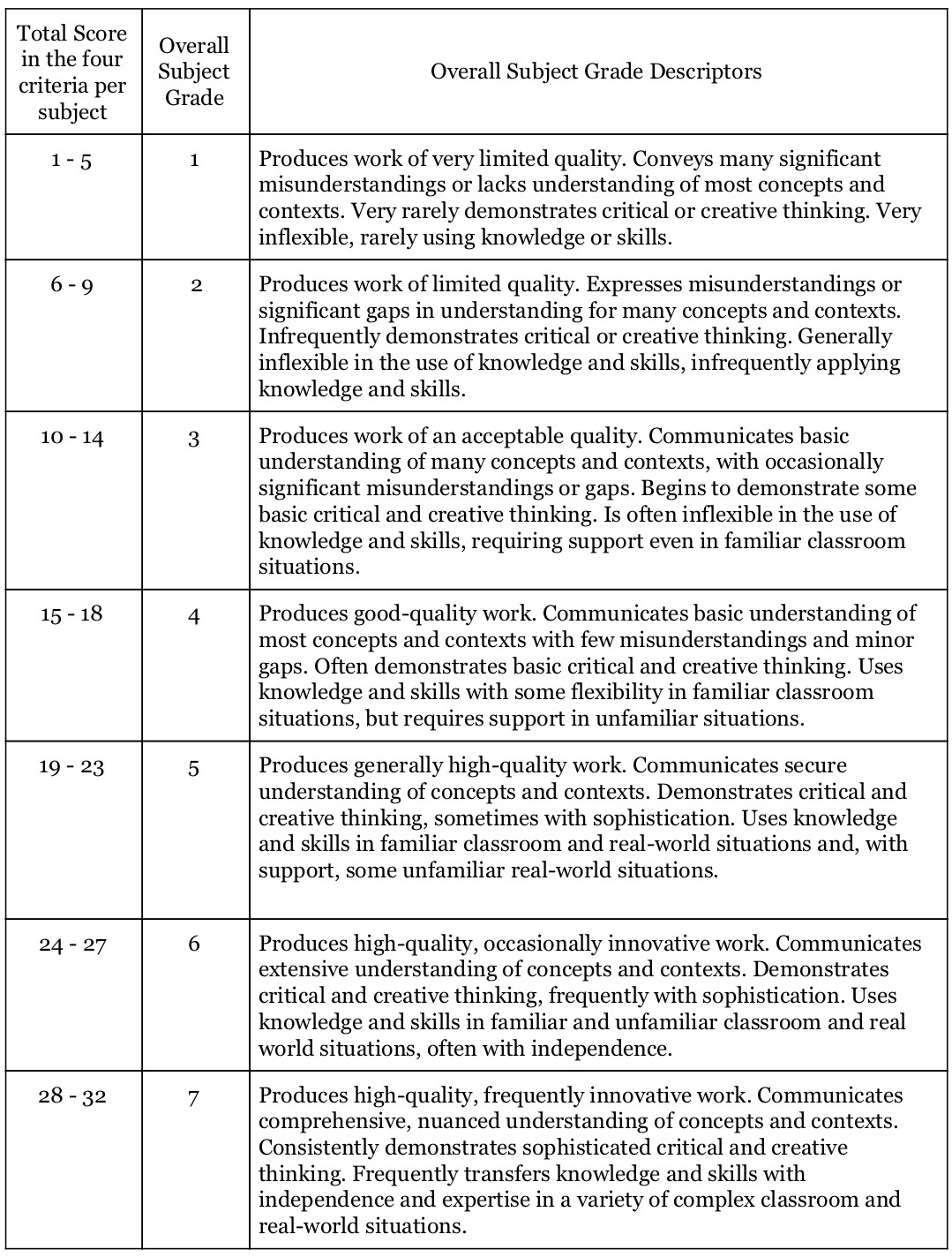
Approaches to Learning
Approaches to Learning (ATL) skills help students effectively manage and evaluate their own learning. ATL skills (Communication, Social, Self-management, Research and Thinking) are not always formally assessed; however, such skills are taught in each unit of study to emphasize the importance of reflection on learning how to learn.
MYP Projects
Students will also have the opportunity to engage in both a community project and a personal project. The community project and the personal project are known together as MYP projects. At IKNS, the Community Project is done in the third year of the program (G8) and the Personal Project in the fifth year of the MYP (G10).
MYP projects are student-centred and age-appropriate, and they enable students to engage in practical explorations through a cycle of inquiry, action and reflection. MYP projects help students to develop the attributes of the IB learner profile; provide students with an essential opportunity to demonstrate Approaches to Learning (ATL) skills developed through the MYP; and foster the development of independent, lifelong learners.
Second: Assessment
Purpose for Assessment
Assessment is a continuous process that allows teachers, parents and students to identify areas of strength and areas that need improvement.
MYP teachers aim to use their professional judgement, using IB prescribed criteria to make decisions about their students’ achievement. The MYP assessment process is precise, rigorous and transparent.
For the assessment process at IKNS to achieve its purposes, assessment practices must be clear to all those involved in the process. This includes, students, teachers, parents and administrators. They all must have a clear understanding of what is being assessed, the criteria for success and the method by which the assessment is designed.
Principles of Assessment:
-
Assessment practices are student centered.
-
Assessments provide clear criteria that is known and understood by the student.
-
Assessments provide opportunities for students to demonstrate higher order critical thinking skills through presentation and performances that match their learning styles.
-
Assessments are culturally sensitive to the diverse backgrounds of the students.
-
Assessments support student goal setting, decision making, and development in academics and the Student Profiles.
-
Assessments enable students to know their own abilities, needs, Students Profiles, and instructional possibilities.
-
Assessments provide evidence of student growth and progress that can be clearly evaluated and understood by all stakeholders.
-
Support and encourage student learning by providing feedback on the learning process.
-
Provide opportunity for students to exhibit transfer of skills across disciplines, such as in the personal and community projects and interdisciplinary unit assessments.
-
Promote positive student attitudes towards learning.
-
Promote a deep understanding of subject content by supporting students in their inquiries set in real- world contexts.
-
Reflect the international-mindedness of the programme by allowing assessments to be set in a variety of cultural and global contexts
-
Support the holistic nature of the programme by including in its model principles that take account of the development of the well-being of the learner.
Components of Assessment:
Assessing - How teachers identify what students have learned
Assessment is a key for understanding what was taught and what the student learned. The assessment process involves both formative and summative assessments, using different examples of student work and performance within a given unit of inquiry. In the context of IKNS, assessments are of the following types:
-
Formative Assessment (Assessment for Learning)
Formative Assessment is interwoven with daily learning and helps teachers and students find out what the learner already know, understand and can do in order to plan for further student learning and growth. Formative assessment occurs throughout a learning unit.
-
Summative Assessment (Assessment of Learning)
Summative Assessment takes place at the end of a learning unit or process. It is a chance for students, teachers and parents to evaluate progress and demonstrate what has been learned over the course of time. It is a formal ending point to a taught unit or of a process but not necessarily the end of student learning in the areas being assessed.
How teachers gather information and evidence about the learning of students
Teachers use a range of strategies to gather information about the learning of students.
The following list of strategies are drawn from the IB document, MYP: From principles into practice.
-
Observation
Teachers may choose to observe all students regularly and often, taking a wide-angle view (for example, focusing on the whole class) or a close-up view (for example, focusing on one student or one activity). Teachers can observe from the point of view of a non-participant (observing outside the task) or of a participant (observing when engaging in the task with the student). Observation will be particularly useful when assessing some behaviours and skills.
-
Anecdotal records
These are brief written notes based on observations of students. Records on the whole class, on smaller groups or on individual students can help the teacher identify areas of understanding or misunderstanding. Anecdotal records need to be systematically compiled, documented and organized, and teachers should consider various ways, including the use of information and communication technologies, to do so.
-
Continuums
Continuums provide visual representations of developmental stages of learning, and can be very useful for teachers and students when applied to skills development. They show a progression of achievement and can identify where a student has reached in relation to that learning process. When used in a similar way to anecdotal records, continuums identify the next stages of learning that can lead to mastery of skills. Continuums are particularly useful when used for ATL skills.
-
Selected response
Tests, quizzes and exams are the most familiar examples of this form of assessment. Selected responses allow the teacher to ask general or specific questions to elicit responses from students that will indicate understanding and, possibly, misunderstanding. This strategy is quick and straightforward to administer and can provide instant feedback for students and teachers.
-
Open-ended tasks
This strategy allows teachers to present students with a stimulus and ask them to communicate an original response. The response could take many forms, such as a presentation, an essay, a diagram or a solution to a problem. Open-ended tasks may be combined with other strategies, such as performance assessments.
-
Performance
The term “performance” is used in its widest sense to describe all forms of assessment where students are assessed on their ability to demonstrate predetermined learning objectives. Teacher-designed performances of understanding may take the form of a composition, a research report, a presentation or a proposed solution.
How students demonstrate their learning
Each subject area will determine appropriate formative, summative, and common assessments related to the IKNS standards as prescribed on the School’s Atlas Rubicon website, the IKNS promotion requirements, the Ministry of Education requirements and the MYP prescribed assessment criteria.
Assessments may include, but are not limited to:
-
Projects and Performances (both live and/or incorporating digital media)
-
Questionnaires
-
Essays, Compositions, Lab Reports
-
Portfolios/Developmental Workbooks/Process Journals/Writer’s Notebooks
-
Tests/Quizzes/Exams
-
Group or Panel Discussions, Online Forums, Socratic Seminars
-
Peer Assessments and Self-Assessment
-
Creation of solutions or products in response to problems
-
Investigations
-
Research papers
-
Presentations—verbal (oral or written), graphic (through various media)
-
Webquests
-
Interviews
-
Role-plays
Recording – How teachers assess the level of Achievement of their students
During the course of the MYP subject, teachers use a variety of techniques to assess the level of Achievement of their students. The different techniques aim to aid students on how to improve their level of achievement as well as to ensure consistency of marking.
These techniques may include, but are not limited to:
-
Checklists
These are lists of information, data, attributes or elements that should be present in a particular response by a student to a task. Checklists are useful when used formatively, as they could be applied by either the teacher or student. Checklists have the potential to be used in self-assessment and can support the development of ATL skills.
-
Mark schemes
Mark Schemes are mainly used by teachers to mark tests and exams. Their main purpose is to provide uniform bases for the marking process so that the individual teacher marks the task for the different students in the same manner. It also guides a group of teachers, who mark the same task, to follow exactly the same instructions and making the same judgements in so far as this is possible.
Reporting - How teachers communicate essential information to the parties involved in students’ learning
IKNS reports about students’ performance and progress in a variety of ways:
PowerSchool
IKNS uses PowerSchool as its students management system. The PowerSchool portal provides a channel of communication for students, parents, teachers and the school administration that is easily accessed via smartphone, tablet and computer.
Teachers use the PowerSchool online gradebook to record their students’ grades and attendance. They also use it to communicate information about the individual assessment tasks.
The PowerSchool gradebook provides students, parents as well as the school’s administration with timely access to the students’ progress. It shows the formative and summative assessment tasks for each MYP Unit, which allows for the ongoing monitoring of the progress of student’s learning over the course of the semester/year.
Scheduled Meetings
Parents and teachers have the option to set meetings at anytime. Appointments could be arranged via email through PowerSchool or through the Reception Desk.
The Open Day
Parents gain information about the school from Homeroom teachers regarding the curriculum and classroom routines.
The Open House is usually held between the end of September and the beginning of October.
Teacher-parent(s) conference:
Teachers give parents feedback about the students’ progress and needs. Teachers highlight the students’ strengths and challenges. They answer parents’ questions during such conferences and guide them on how to help in their children’s learning process.
This conference is held in the month of December.
Measure of Academic Progress (MAP) Tests
IKNS conducts the MAP tests two times a year in Grades 3 to 9 in English Reading, Mathematics and Science.
The MAP is a unique standardized test compared to other more traditional tests. It is given online and can adapt to the appropriate level of each student’s learning. It is untimed and adjusts in level according to the student’s answers. Teachers use the data that the MAP tests provides to improve the students’ mastery of the learning objectives of the MYP. The results of the MAP tests are reported to parents at the end of each semester.
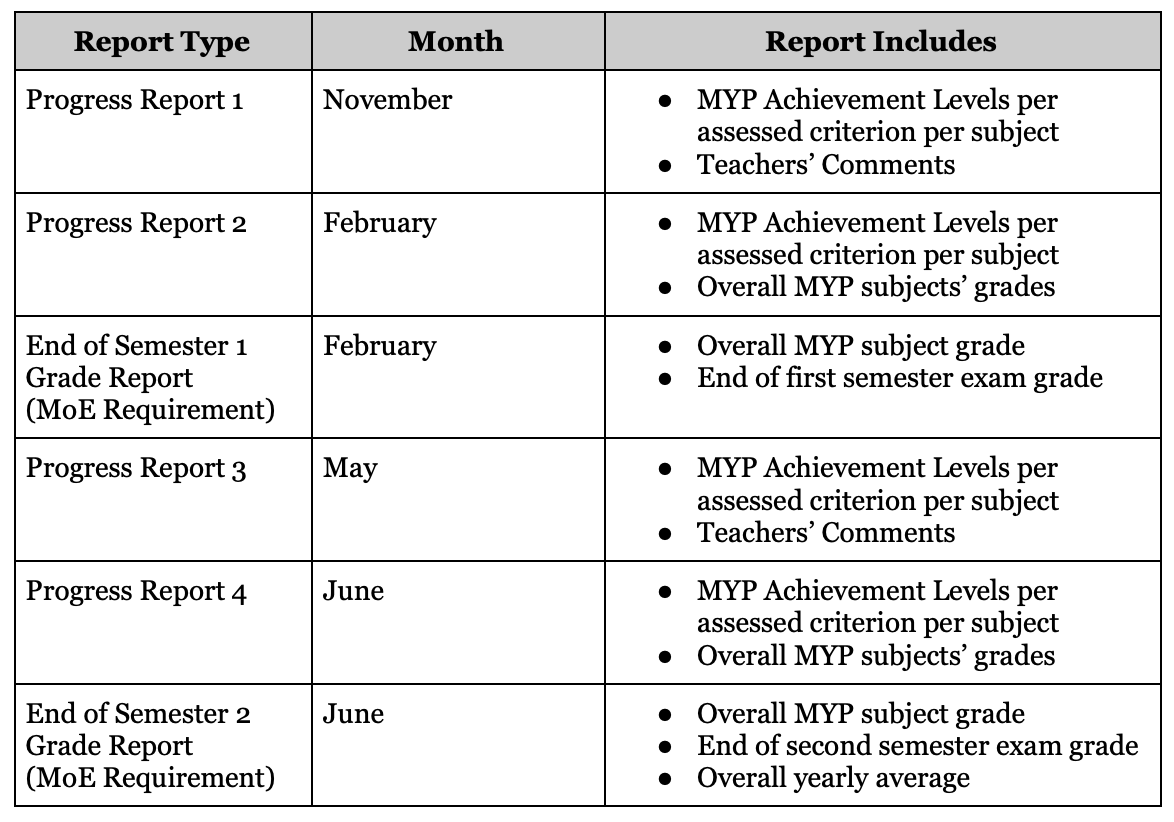
Written Report
Written reports will be issued according to the following schedule: