|
|
|
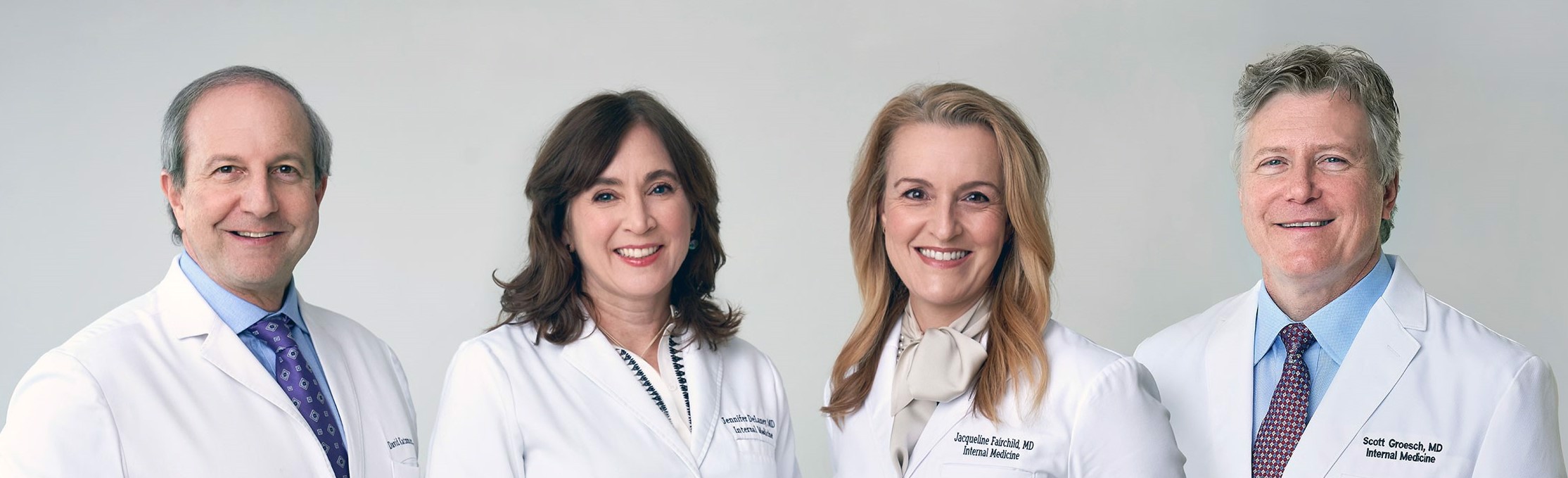
David Katzman, MD Jennifer DeLaney, MD Jacqueline Fairchild, MD Scott Groesch, MD
Internal Medicine Specialists |
|
|---|
|
Be Aware: Medical Scams On the Rise |
|
|---|
|
We want to inform our patients about a recent medical scam going around. A patient of ours was contacted by someone claiming to be from our office. The phone number was spoofed to even show up as our office number and the caller knew the patient's doctor, Medicare number, and home address. These were very tricky tactics. The patient was told his doctor wanted him to take a genetic swab test, and the test was even delivered to his house by UPS. In the end, this appears to be a scam to either get money from Medicare, or worse, to retrieve that patient's genetic data.
Please be aware that our office will not call you randomly to request medical information or request testing to be performed that has not been addressed recently either at an appointment or through MyChart communication. This is even more of a reason to communicate through MyChart when possible as it is a safe and secure platform. (See our last article in this newsletter if you still need to sign up!)
Medical fraud is on the rise. If you are ever in doubt about any type of communication from our office, please give our office a direct call to confirm.
|
|
|---|
|
Safer Choices Beyond Benadryl for Allergies and Sleep
David Katzman, MD |
|
|---|
|
Many people assume that over-the-counter (OTC) medications are inherently safe, but that’s not always the case—especially for older adults. Medications containing diphenhydramine, such as Benadryl, Tylenol PM, Advil PM, and Unisom, pose hidden dangers that are important to understand.
Benadryl (and many OTC sleep and cold remedies) contains diphenhydramine, a first‑generation antihistamine. It crosses the blood-brain barrier, which causes sedation—but also has effects on the nervous system and can cause dry mouth, urinary retention (which can lead to urinary tract infections), constipation, and blurred vision.
Older adults are especially at risk for side effects due to decreased clearance by the kidneys and liver with increasing age, medication interactions (including alcohol), and chronic illnesses.
Short-term use can cause confusion, memory loss or cognitive slowing, and drowsiness potentially contributing to falls and injuries. Long-term use is linked to a 54% higher risk for dementia.
Fortunately, the second-generation antihistamines (Zyrtec, Allegra, Claritin) which are available OTC do not carry these same risks and should be equally effective for allergies without the harmful side effects.
Having trouble sleeping? Follow these tips to improve your sleep hygiene. Melatonin is available OTC, and there are some safe prescription alternatives, if you need additional help for sleep.
Please feel free to reach out if you have any questions.
|
|
|---|
|
Sleep and Dementia: What's the Link?
Jennifer DeLaney, MD |
|
|---|
|
There has long been a known association between poor sleep and higher rates of dementia. One of the many possible mechanisms for this is that the brain cleans itself of waste predominantly during slow-wave sleep, or "deep" sleep as it is called. The waste that is removed includes amyloid Beta and Tau proteins which are the major components of amyloid plaque that build up in the brain of those with Alzheimer’s dementia.
Traditional sleeping pills called sedative hypnotics (like Ambien, temazepam, Valium, etc.) increase the total amount of sleep, but seem to decrease the slow-wave sleep needed for brain cleaning. This is associated with a decrease of 30-40% in the clearance of amyloid and tau proteins from the brain in some small studies. Use of these drugs has been associated with an increased risk of dementia, and this may be one of the reasons why.
There is a newer class of sleep aids called Dual Orexin Receptor Antagonists, such as Belsomra, which interfere with the brain hormone that contributes to wakefulness. These drugs have been shown to decrease brain atrophy and amyloid plaque formation in mice prone to dementia. In short-term studies on humans, this class of drugs has also been shown to increase the removal of amyloid and tau proteins from the brain.
The takeaway: Sedative hypnotics like Ambien increase your risk of dementia, but there is a safer alternative that might decrease your risk of dementia and still help you get a better night’s sleep. Interested in switching? Please contact your doctor for advice.
|
|
|---|
|
Meet Our New On-Call Doctor, Dr. Camilo Mejia |
|
|---|
|
We are pleased to inform you that Camilo Mejia, MD has joined Dr. Robert Saltman’s practice and will be rotating periodically in the weekend on-call schedule. Dr. Mejia is a board-certified internal medicine physician and earned his medical degree from the Mayo Clinic School of Medicine. He completed his internal medicine residency at Washington University in St. Louis and Barnes-Jewish Hospital.
Dr. Mejia brings excellent clinical skills as well as a diverse research background spanning cardiac diagnostics, ophthalmology, and placental disease. His work has been recognized by the Hispanic Scholarship Fund. With a deep appreciation for the humanities, he also published undergraduate research in literature and philosophy. He previously helped lead a community health clinic and worked as a Spanish medical interpreter.
He lives in St. Louis with his wife, Kimberly, a graphic designer. Outside of medicine, he enjoys soccer, gardening, cooking, and live music. Passionate about proactive and preventive medicine, Dr. Mejia emphasizes evidence-based strategies to promote long-term health and well-being. He is a wonderful asset to our weekend on-call team!
|
|
|---|
|
Ladue Vaccine Clinics Return |
|
|---|
|
We will be hosting our first Ladue Pharmacy Vaccine Clinic at our new location! It will be in the afternoon on Thursday, August 28.
Ladue will be offering RSV, Shingrix, Pneumonia, and MMR (measles), as well as most travel vaccines. PLEASE NOTE: Flu and Covid shots will not be available at this clinic.
The CDC recently updated some of its guidelines on routine vaccines for adults. Here are some of the applicable changes:
- RSV: This is a one-time vaccine. It is now recommended for all those 75 and older, or for those 50+ who are at high risk for RSV, if you have not received it yet.
- Pneumonia: The CDC relatively recently changed to recommending this vaccine to everyone 50 and older. Capvaxive 21 (PCV21) is the new pneumonia shot and what Ladue will be offering. If you have already received Prevnar 20 (PCV20), you do not need another vaccine at this time.
Please call our office or send a MyChart note if you are unsure of what vaccines you may need.
|
|
|---|
|
Still Need to Sign Up for MyChart? |
|
|---|
|
MyChart is a secure website that allows you and your permitted family members to access your personal medical information and communicate with your physician. You can view your clinical information such as appointments, medications, labs and test results, as well as contact your care team through a secure message.
Need to sign up? Follow these steps:
- Access the MyChart website: mypatientchart.org
- Look for a button to “Sign Up Now”
- Verify your identity by providing required information, such as your name, date of birth, and email address
- Create a username and password
- You can also download the MyChart app on your phone. When doing so, you’ll need to add BJC Healthcare as your organization.
Questions? Please call our office if you need assistance or more information.
|
|
|---|
|
| |
|
|
|  |
|
|
|
|