|
|
| |
David Katzman, MD Jennifer DeLaney, MD Jacqueline Fairchild, MD Scott Groesch, MD
Internal Medicine Specialists |
|
|---|
|
*Construction Update*
For the time being, the Craig Rd/West entrance to the parking lot is closed to traffic. Please enter from the Olde Cabin Rd/South entrance located directly across from the golf course. |
|
|---|
|
Cyclospora: What's Behind the Current GI Outbreak
David Katzman, MD |
|
|---|
|
You may have seen headlines about a growing multi-state outbreak of cyclosporiasis. As of mid-July, the CDC has confirmed hundreds of cases across roughly 30 states, with the true number likely much higher since many people recover without seeking care. Michigan has been hit hardest, with Ohio second. Several other states, including Missouri, are now reporting hundreds of cases. No source has been confirmed yet, and investigators note this may not be a single, connected outbreak. It is also possible there are multiple sources.
What It Is
Cyclosporiasis is caused by Cyclospora cayetanensis, a microscopic parasite. It spreads through food or water contaminated with feces and is not known to spread person-to-person. Past outbreaks have been linked to basil, cilantro, spinach, berries, and pre-washed lettuce blends — items commonly eaten raw.
Symptoms
- Watery diarrhea (can be prolonged, sometimes lasting weeks)
- Loss of appetite, weight loss
- Cramping, bloating, nausea, fatigue
- Fever is uncommon
Symptoms are latent, typically appearing around a week after exposure, which makes it hard to trace back to a specific meal.
Why It's Easy to Miss
Routine stool cultures and standard diarrhea panels often miss Cyclospora. If you have persistent watery diarrhea without a clear cause — especially lasting more than a few days — let us know so we can specifically order the right stool testing.
Treatment
Trimethoprim-sulfamethoxazole (Bactrim) remains the preferred treatment. Alternative regimens exist for those with sulfa allergies. Supportive care — hydration and electrolyte replacement — is essential regardless.
Prevention
- Wash all fresh produce thoroughly under running water, even if you plan to peel it
- Consider cooking high-risk produce (basil, cilantro, spinach, leafy greens) when possible — heating food to 158°F kills the parasite
- Buy whole heads of lettuce rather than pre-washed bagged mixes when possible
- Avoid swallowing water from pools, lakes, or untreated sources
When to Call Us
If you have diarrhea lasting more than a few days, signs of dehydration, or diarrhea alongside recent travel or high-risk produce consumption, contact the office. Most people recover fully with treatment, but early diagnosis shortens the course significantly.
|
|
|---|
|
Next Vaccine Clinic is Thursday, August 13 |
|
|---|
|
Ladue Pharmacy will return again on Thursday, August 13 for our vaccine clinic. If you are due for a dose of pneumonia, RSV, MMR, hepatits A or B, or shingles vaccine, please sign up below. If you are signing up for an RSV shot, please reach out to our office for a prescription.
Please note: Flu and COVID vaccines will not be available at this clinic.
To sign up, please click on the date below and enter all necessary information:
(Your appointment will be at our office, not at Ladue Pharmacy.)
In need of a vaccine but August 13th does not work with your schedule? Need to cancel or reschedule your vaccine clinic appointment? Interested in travel-related vaccines? Ladue Pharmacy can assist with these issues. Please reach out to their office at 314-993-4031. |
|
|---|
|
Tick Season in Missouri: What You Need to Know
David Katzman, MD |
|
|---|
|
Missouri sits in one of the highest-risk regions in the country for tick-borne illness.
With warm weather bringing more time outdoors, here's what to watch for and how to protect yourself.
Ticks and Diseases
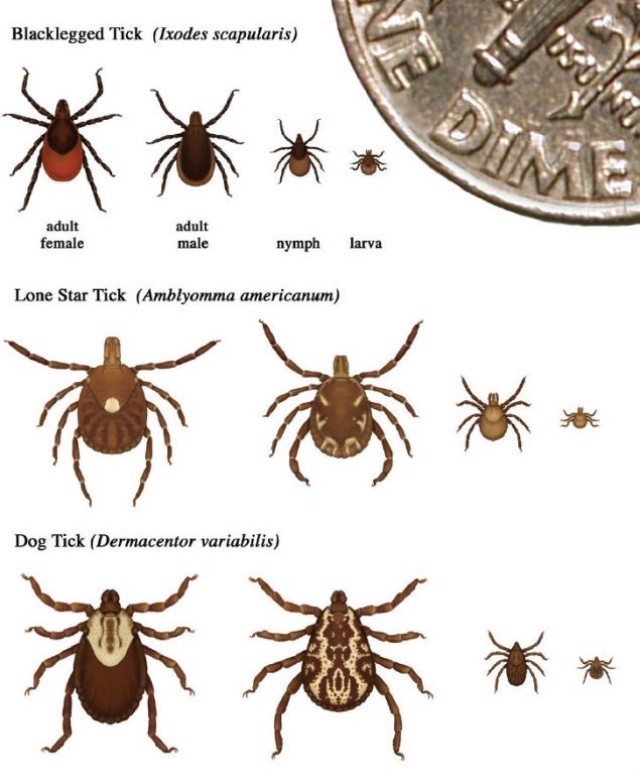
The main types of ticks include the lone star, American dog, and blacklegged (deer). The lone star tick is the most common in Missouri and the blacklegged, which carries Lyme disease, is the least common here. Common tick-borne illnesses in Missouri include Rocky Mountain Spotted Fever, Ehrlichiosis, and Tularemia. Depending on the type of illness, symptoms often start with fever, headache, muscle aches, swollen lymph nodes, and fatigue. A rash may develop, often at the bite site but may start on the wrists or ankles as well.
Alpha-Gal Syndrome
Another tick-related issue you may have heard of is alpha-gal syndrome, a red meat allergy triggered by the bite of the lone star tick. The lone star tick is common throughout the Ozarks and much of the state of Missouri, and it is identifiable by the single white dot on the back of the adult females and faint white streaks on the males (see pictures below). After a bite from a lone star, some people develop a delayed allergic reaction – hives, stomach upset, or even anaphylaxis – starting 3 to 6 hours after eating beef, pork, or other mammalian meat, which can make it tricky to connect the dots. If you notice unexplained allergic reactions several hours after a meal, especially following a tick bite, let us know so we can discuss testing.
Prevention
- Use insect repellent with DEET (20%+) or picaridin on skin; treat clothing/gear with permethrin
- Stick to the center of trails; avoid tall grass and brush
- Wear light-colored clothing to spot ticks easily; tuck pants into socks
- Do a full-body tick check after any outdoor time – ticks favor the scalp, behind ears, underarms, waistband, and groin
- Shower within 2 hours of coming indoors
- Toss clothes in the dryer on high heat for 10 minutes to kill any hitchhikers
What to Do When You Find an Attached Tick
Remove it promptly with fine-tipped tweezers, grasping close to the skin and pulling straight up. Don't twist or crush it. Clean the area with soap and water.
Call the office if, within 2-3 weeks of a bite, you develop: fever, rash, headache, or unusual fatigue. Most tick-borne illnesses in Missouri respond well to early treatment.
|
|
|---|
|
Please visit our website if you have missed any past newsletters. The newsletter archives can be found by hovering your mouse over "More" in the top menu and then clicking on the "Newsletters/Medical Resources" tab. |
|
|
|
|
|  |
|
|
|
|