メルマガ1月特集号
シリーズ「グローバルヒストリーの対話」
2021年1月13日
|
|
読者の皆さまへ
新年おめでとうございます。2021年が読者の皆様にとって素晴らしい年になることをお祈りします。
2019年2月に設立された東京カレッジにとっては、これが2回目の新年です。昨年の正月とは、二つの点でカレッジの環境が劇的に変化しました。
|
|
|
|
|
一つは、昨年3月以後、多くの方々に直接お会いできる公開の講演会やシンポジウムが開けなくなったということです。言うまでもなくCOVID-19のためです。かわりにオンラインのイベントを数多く催しており、それによって一味違う企画が実現できているとは思います。しかし、それらはどうしても一方通行になりがちです。例えば、このメイルマガジンをお読み下さっている皆様と直接お目にかかって親しくお話しする機会が得られないのはつらいところです。COVID-19が一日も早く収束し、再びオンサイトのイベントが開催できる日が来ることを願っています。
もう一つの変化は、この一年の間に多くの若い研究者がカレッジに赴任したということです。特任助教3人、ポスドク研究者5人、特任研究員4人の計12人が過去1年の間にカレッジにやってきました。カレッジでは、彼らが中心になって分野横断的な研究テーマについてのオンライン研究会が定期的に開かれています。それは私がこれまで体験したことのないような活気と刺激と親密さに満ちたとても興味深く意味深い集いです。その数は昨年4月からだけで50回近くに達しています。
若い研究者たちは柔軟な思考力と熱意溢れる行動力を兼ね備えています。読まずにはおけない面白いブログやこのメイルマガジン、それにカレッジの紹介動画などは、すべて彼らの発案で実現したことです。彼/彼女たちがカレッジでの経験を経て大きく成長し、将来の世界と日本の学術活動をリードしてゆく日が来ることを、私は大いに期待しています。
東京カレッジは、今年もこれまでの東京大学では実現できなかったような様々な新しい企画に積極的に挑戦してゆきます。皆様の一層のご理解とご支援を賜ることができれば幸いです。まだしばらく難しい時期が続きますが、お身体に十分注意して健康でお過ごしください。
―羽田 正
|
|
|
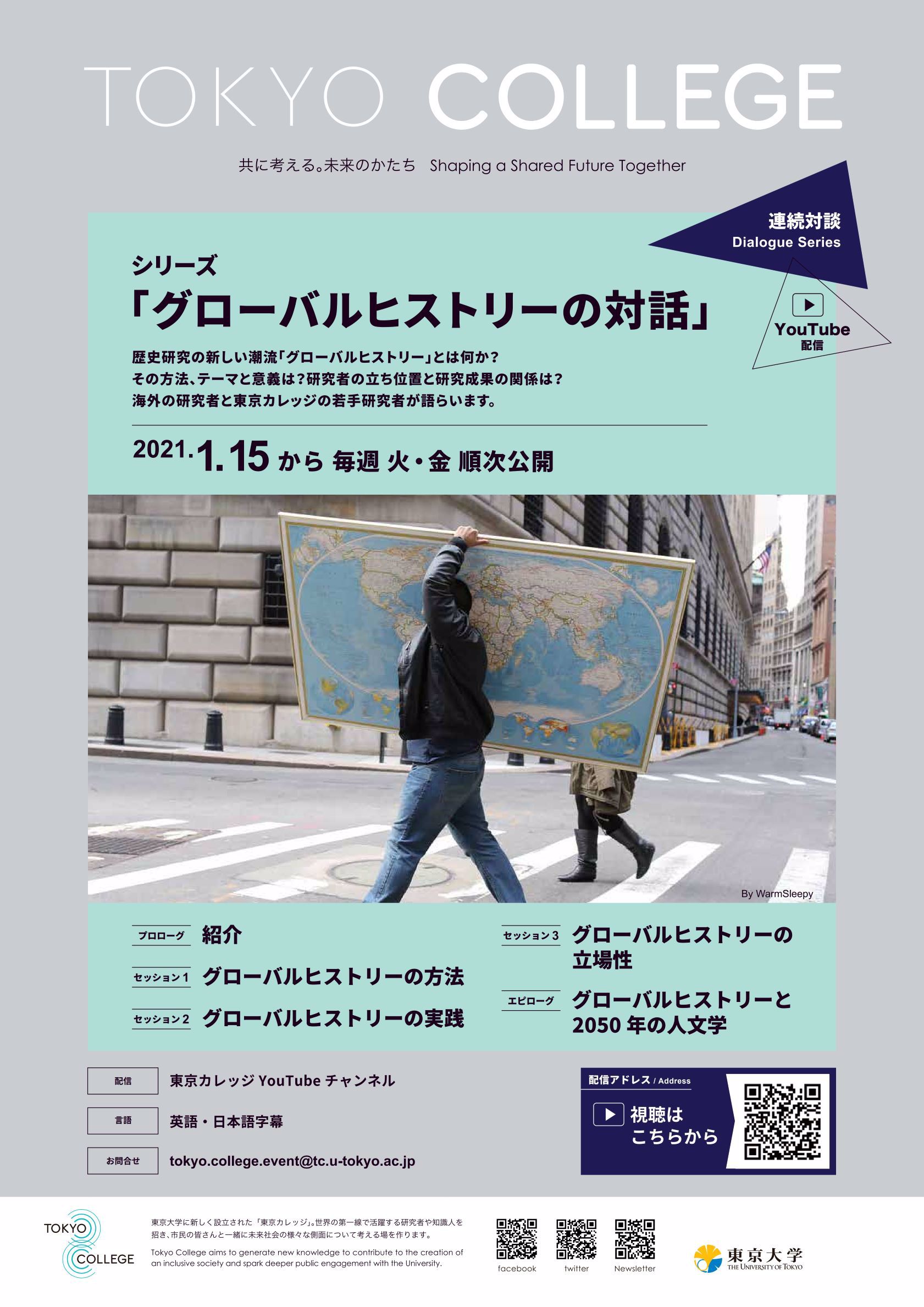
このたび、東京カレッジは「グローバルヒストリーの対話」と題するオンライン討論のシリーズを企画しました。「グローバルヒストリー」という、歴史研究の新しい潮流が、世界各地で展開されはじめたのは20年ほど前のことでした。この対話シリーズでは、世界の第一線で活躍するグローバルヒストリーの研究者10名が、東京カレッジの若手研究者と同分野の発展について語らいます。これまでの研究成果を振り返りつつ、これからのグローバルヒストリー研究を進める上での様々な課題について議論します。
世界的規模で感染症が流行し、内向きの政治が幅を利かせる現代社会において、グローバルな規模での理解は欠かせません。グローバルヒストリーの重要性はより一層高まっていると思われます。グローバルヒストリーの方法、テーマと意義は何か?研究者の立ち位置と研究成果とはどう関連しあのうか。ぜひこのシリーズの登壇者と一緒に考えましょう。 |
|
|
2021年1月15日から
毎週火・金
日本時間17:00より順次公開 |
|
2021年1月15日(金)
プロローグ:シリーズ紹介
羽田正(東京カレッジ)
|
|
|
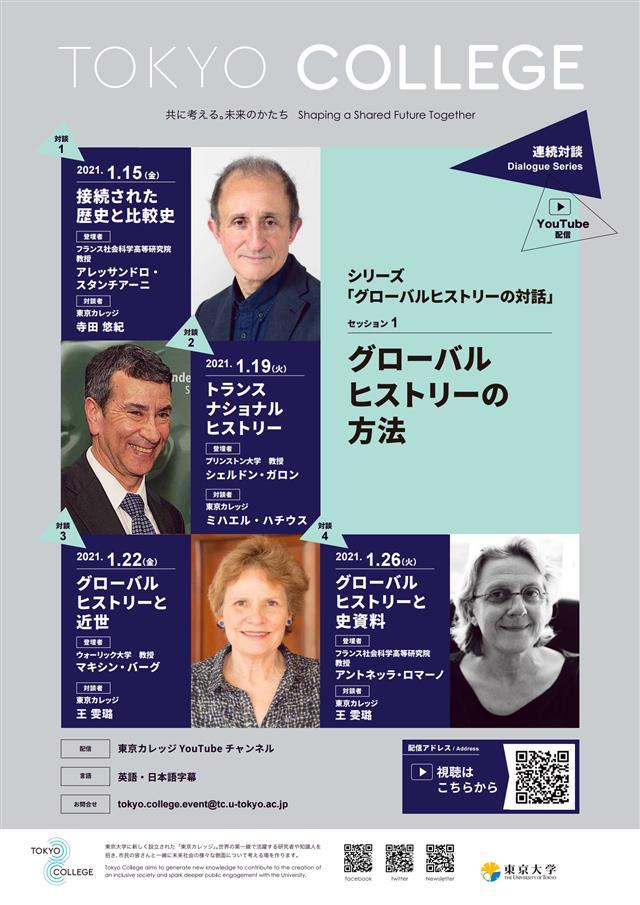
2021年1月15日(金)
対談1 接続された歴史と比較史
アレッサンドロ・スタンチアーニ(フランス社会科学高等研究院教授)
2021年1月19日(火)
対談2 トランスナショナルヒストリー
シェルドン・ガロン(プリンストン大学教授)
2021年1月22日(金)
対談3 グローバルヒストリーと近世
マキシン・バーグ(ウォーリック大学教授)
2021年1月26日(火)
グローバルヒストリーと史資料
アントネッラ・ロマーノ(フランス社会科学高等研究院教授)
|
|
|
|
|
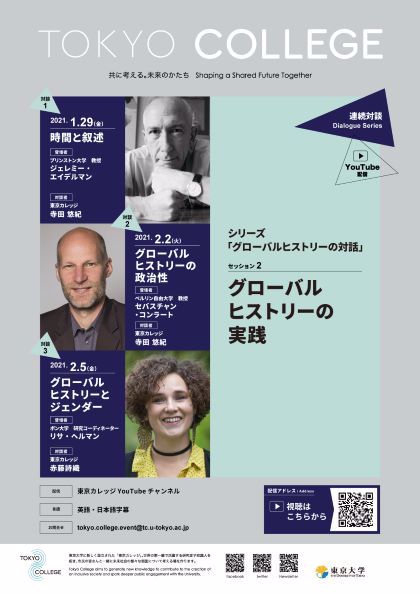
2021年1月29日(金)
対談1 時間と叙述
ジェレミー・エイデルマン(プリンストン大学教授)
2021年2月2日(火)
対談2 グローバルヒストリーの政治性
セバスチャン・コンラート(ベルリン自由大学教授)
2021年2月5日(金)
対談3 グローバルヒストリーとジェンダー
リサ・ヘルマン(ボン大学研究コーディネーター)
|
|
|
|
|
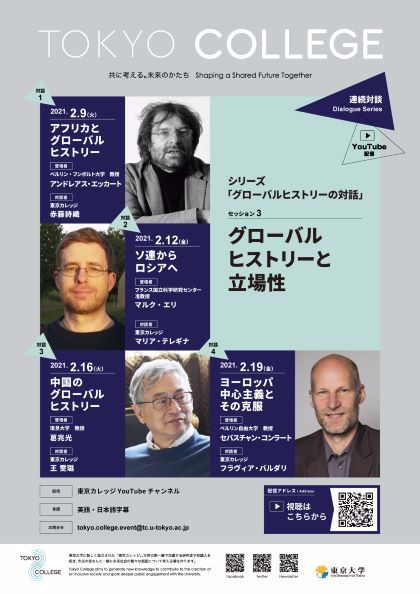
2021年2月9日(火)
対談1 アフリカとグローバルヒストリー
アンドレアス・エッカート(ベルリン・フンボルト大学教授)
2021年2月12日(金)
対談2 ソ連からロシアへ
マルク・エリ(フランス国立科学研究センター准教授)
2021年2月16日(火)
対談3 中国のグローバルヒストリー
葛兆光(復旦大学教授)
2021年2月19日(金)
対談4 ヨーロッパ中心主義とその克服
セバスチャン・コンラート(ベルリン自由大学教授)
|
|
|
|
|
|
エピローグ:グローバルヒストリーと2050年の人文学
東京カレッジ研究者 |
|
|
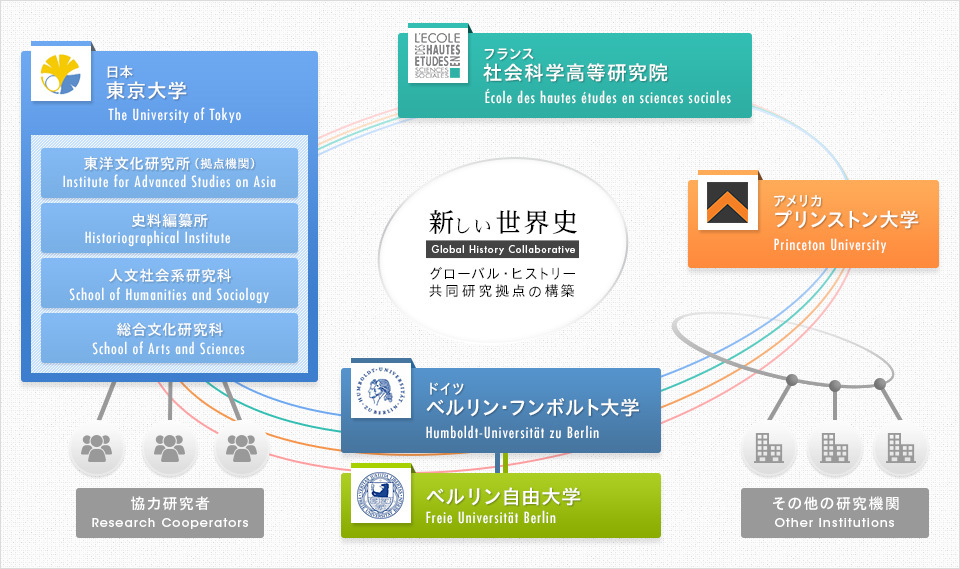
本シリーズに登壇される研究者の多くは、「新しい世界史/グローバル・ヒストリー」共同研究拠点を通して結成した国際的なネットワークのメンバーです。平成26年度〜30年度に日本学術振興会から研究拠点形成事業(先端拠点形成型)として立ち上げられたこの事業には、東京大学、プリンストン大学、フランス国立社会科学高等研究院、ベルリン・フンボルト大学、ベルリン・自由大学の数多くの研究者が参加しています。
各拠点に研究者を派遣し、共同研究を進め、国際シンポジウムや博士課程の学生を対象としたサマースクールを開催しました。五年間の緊密な交流を通じて、世界史/グローバル・ヒストリーの研究・教育の国際的ネットワークが形成され、現在も協同で様々な研究・教育活動が進められています。シリーズ「グローバルヒストリーの対話」は、これまでの研究活動への回顧であると同時に、現在の世界情勢を踏まえ、グローバルヒストリーの将来を展望する場ともなっています。 |
|
|
MAIL MAGAZINE: SPOTLIGHT
Series: Dialogues on Global History
 English Version
January 13, 2021 English Version
January 13, 2021 |
|
Dear readers,
Happy New Year! I wish that 2021 will be a wonderful year for all our readers.
For Tokyo College, founded in February 2019, this is our second New Year. There are two reasons why the college’s environment has altered radically since last year’s New Year.
|
|
|
|
|
One of these is that since last March it has become impossible to hold public lectures and symposiums where we are able to meet directly with many people. It goes without saying that this is due to COVID-19. Instead, we have held a large number of online events, and I think we have been able to realize projects with altogether different characteristics. However, these all, unavoidably, tend to be one-way communication. For instance, it is very unfortunate for us not to be able to have opportunities to meet directly and have discussions with all the readers of this mail magazine. I am hoping very much that COVID-19 will end as quickly as possible and that the day will come when we are once again able to hold onsite events.
One further change is that many young researchers have joined Tokyo College during this past year. A total of 12 research fellows, three project assistant professors, five post-doctoral researchers and four project researchers have come to the college during this time. With these researchers as the core, online research meetings are being held regularly at the college on interdisciplinary research themes. These are extremely fascinating and significant gatherings, full of liveliness, inspiration and intimacy, the like of which I have never experienced before. These gatherings have been held nearly 50 times since April of last year.
The young researchers are able to think flexibly as well as take the initiative with great passion. Captivating blogs that you just cannot leave without reading, this mail magazine, as well as the promotion video of Tokyo College and other projects were all realized based on proposals by these young researchers. I have high expectations that these researchers will grow remarkably through their experiences at Tokyo College, and that the day will come when they will lead the academic activities both in Japan and worldwide.
This year, Tokyo College will move forward with active challenges to conduct a range of new projects that the University of Tokyo has thus far been unable to realize. We appreciate your further understanding and support in the coming year. This rather difficult period will continue for some time yet, but we hope that during this time you will take the utmost care of yourself and enjoy a healthy year.
-- HANEDA Masashi
|
|
|
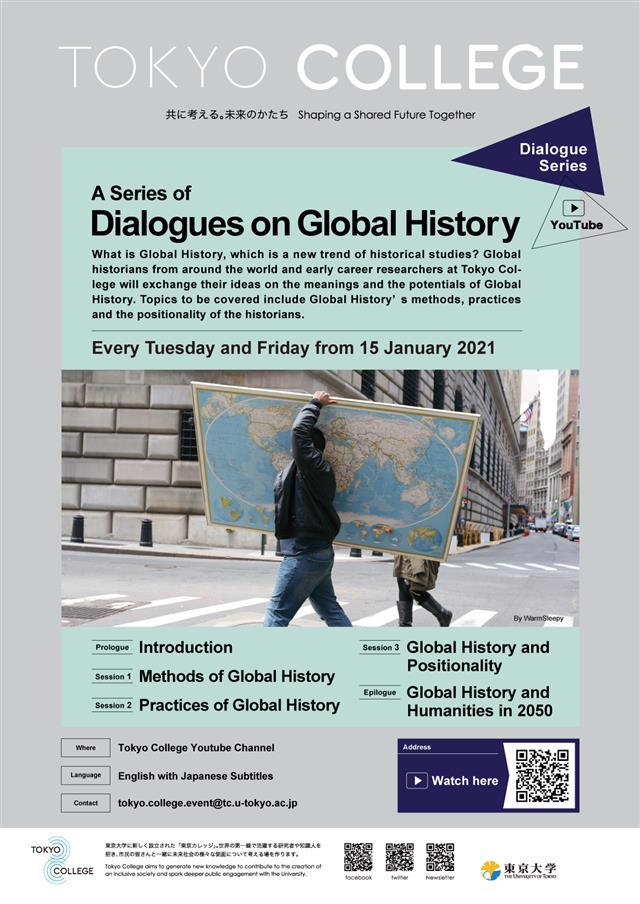
Tokyo College presents to you “A Series of Dialogues on Global History” as our first event in 2021. The past 20 years witness a growing interest all around the world in research of global history, a new trend in historical studies. This series of dialogues invite 10 distinguished researchers to join dialogues with junior researchers at Tokyo College. They will reflect on past developments of the field, and discuss various important issues concerning global history research.
At a time when the world is combating the global outbreak of coronavirus, as well as the surging nationalism worldwide, we need a global understanding towards all these matters. This is why we believe the research on global history is even more important now. What are the methods, effective topics, meaning of global history? How the positionality of historians affects their research? These are some of the questions that will be discussed in the series. We hope you enjoy! |
|
|
Every Tuesday and Friday
from 15 January 2021
videos will be available from 17:00 JST
|
|
January 15, 2021 (Friday)
Prologue: Introduction to the Series
HANEDA Masashi (Tokyo College, The University of Tokyo)
|
|
|
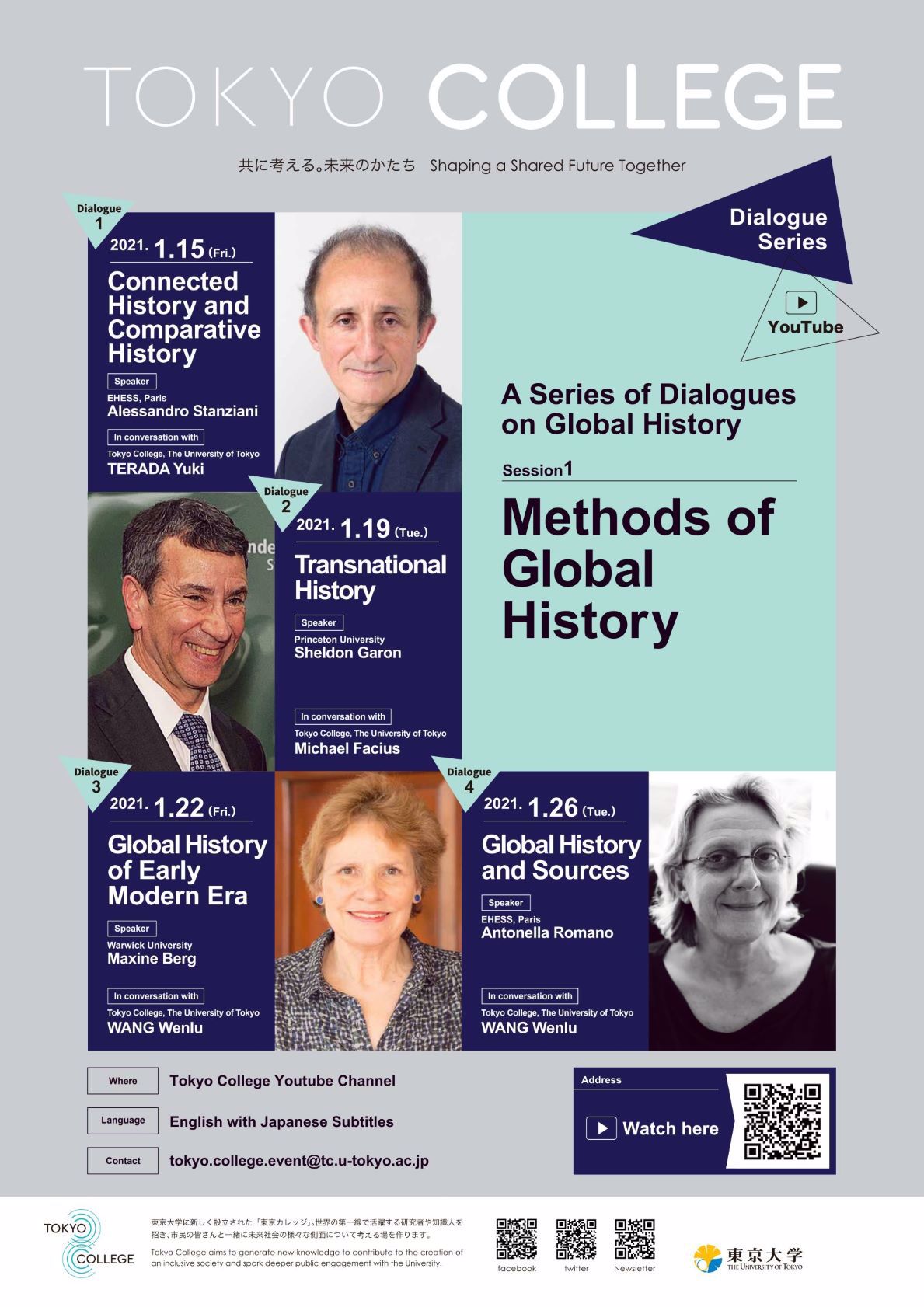
Session 1
Methods of Global History
|
|
January 15, 2021 (Friday)
Dialogue 1: Connected History and Comparative History
Alessandro Stanziani (EHESS, Paris)
January 19, 2021 (Tuesday)
Dialogue 2: Transnational History
Sheldon Garon (Princeton University)
January 22, 2021 (Friday)
Dialogue 3: Global History of Early Modern Era
Maxine Berg (Warwick University)
January 26, 2021 (Tuesday)
Dialogue 4: Global History and Sources
Antonella Romano (EHESS, Paris)
|
|
|
|
|
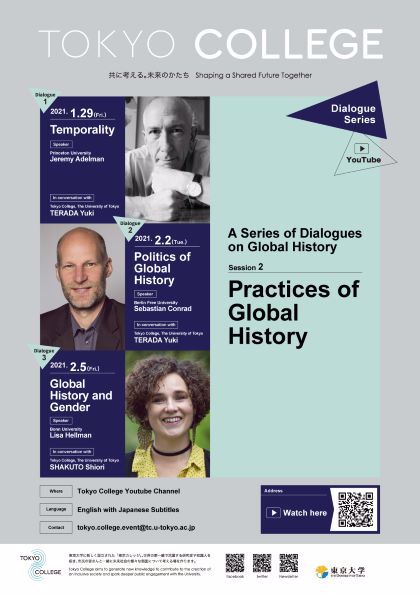
Session 2
Practices of Global History
|
|
January 29, 2021 (Friday)
Dialogue 1: Temporality
Jeremy Adelman (Princeton University)
February 2, 2021 (Tuesday)
Dialogue 2: Politics of Global History
Sebastian Conrad (Freie Universität Berlin)
February 5, 2021 (Friday)
Dialogue 3: Global History and Gender
Lisa Hellman (Bonn University)
|
|
|
|
|
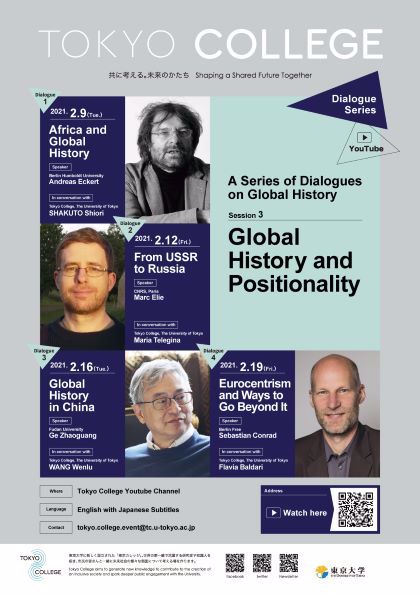
Session 3
Global History and Positionality
|
|
February 9, 2021 (Tuesday)
Dialogue 1: Africa and Global History
Andrea Eckert (Berlin Humboldt University)
February 12, 2021 (Friday)
Dialogue 2: From USSR to Russia
Marc Elie (CNRS, Paris)
February 16, 2021 (Tuesday)
Dialogue 3: Global History in China
Ge Zhaoguang (Fudan University)
February 19, 2021 (Friday)
Dialogue 4: Eurocentrism and Ways to Go Beyond It
Sebastian Conrad (Freie Universität Berlin) |
|
|
|
|
February 23, 2021 (Tuesday)
Epilogue: Global History and the Humanities in 2050
Tokyo College researchers
|
|
|
Global History Collaborative
|
|
Many of our guests for the series of dialogues on Global History are members of the Global History Collaborative, which was established in 2014 as a Japan Society for the Promotion of Science Core-to Core Program. Researchers from the University of Tokyo, Princeton University, the École des Hautes Études en Sciences Sociales, Humboldt-Universität zu Berlin and Freie Universität Berlin joined the program.
During the five years of activities, member institutes conducted collaborative research, provided exchange programs for faculty members and graduate students, co-held international symposiums and graduate student summer schools. These initiatives contribute to a global network for research and education on global history. In the series of Dialogues on Global History, fellow colleagues will reflect upon previous achievements and look into future possibilities of the field. |
|
|
|