読者の皆さまへ
日増しに春らしくなってまいりました。皆様も桜を満喫されましたか?この春に、東京カレッジは新メンバーを迎えました。本号では3月に着任したポストドクトラル・フェローMatthew MULLANEさんのインタビューをお届けします。着々と成長を続ける東京カレッジの研究チームは、新年度もカレッジの中心理念として掲げる「発見の喜び、知の力」の共有に努めて参ります。
|
|
|
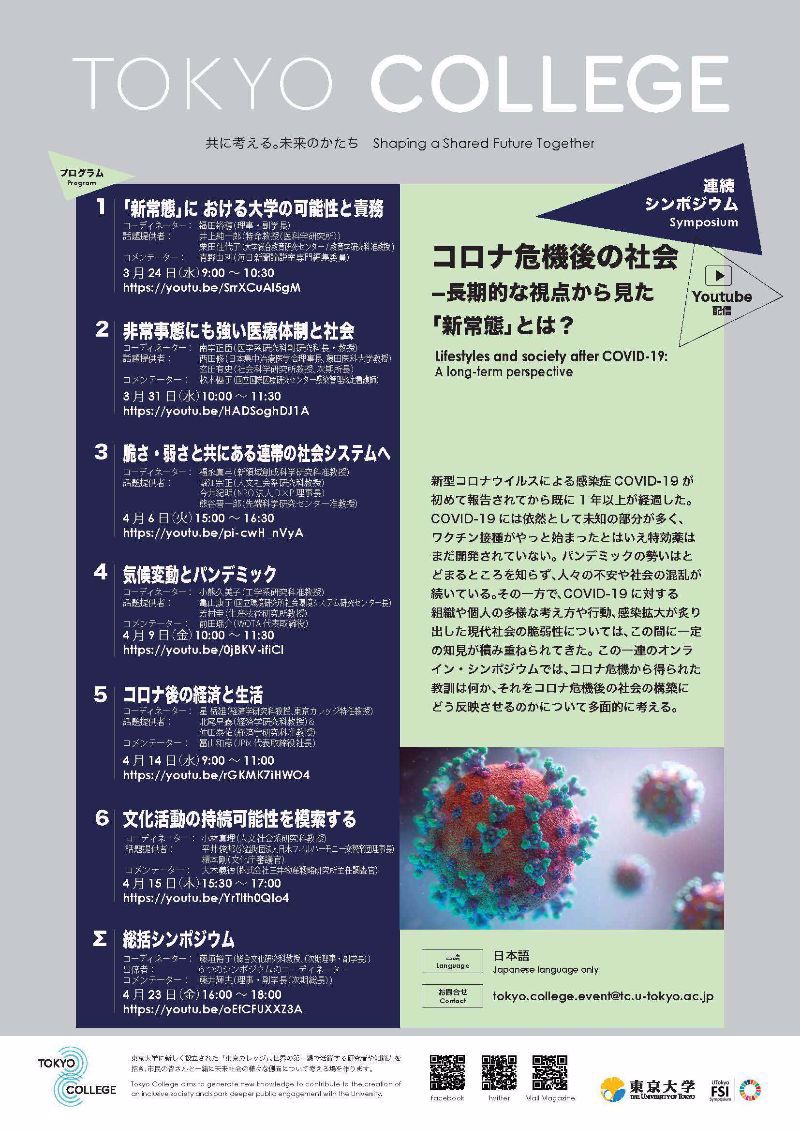
連続シンポジウム
コロナ危機後の社会ーー長期的な視点から見た「新常態」とは?
連続シンポジウムの第1回~第3回は開催終了しました。動画はYouTubeチャネルで公開しています。
連続シンポジウムのご紹介
シンポジウム1
「新常態」における大学の可能性と責務
シンポジウム2
非常事態にも強い医療体制と社会
シンポジウム3
脆さ・弱さと共にある連帯の社会システムへ
|
|
|
|
|
これからのシンポジウムは以下の通りです。
シンポジウム4
気候変動とパンデミック
日時:4月9日(金)10:00~11:30
シンポジウム5
コロナ後の経済と生活
日時:4月14日(水)9:00~11:00
シンポジウム6
文化活動の持続可能性を模索する
日時:4月15日(木)15:30~17:00
総括シンポジウム
日時:4月23日(金)16:00~18:00
|
|
|
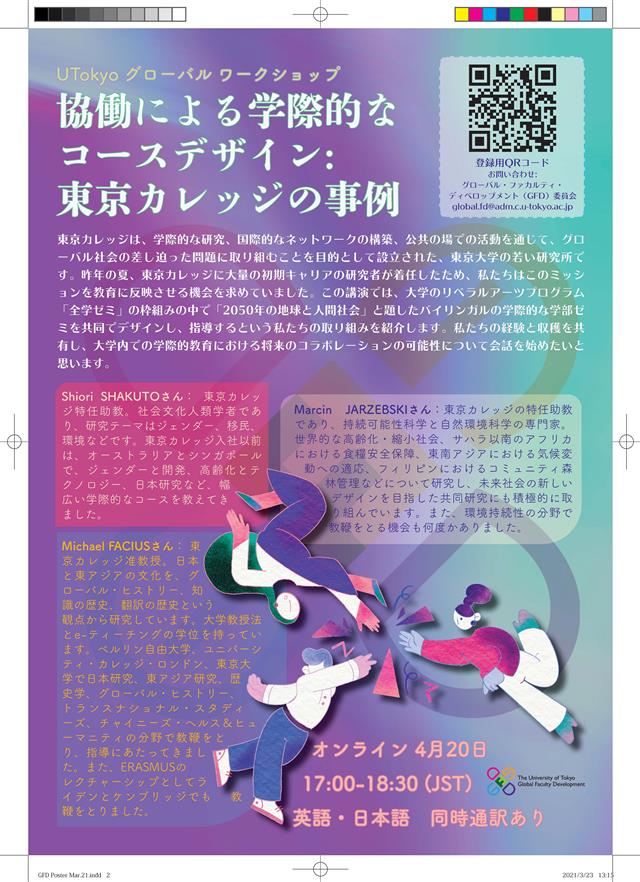
UTokyoグローバルワークショップ
協働による学際的なコースデザイン:東京カレッジの事例
主催:東京大学 Global Faculty Development Initiative
日時:4月20日17:00~18:30
言語:英語(日本語同時通訳あり)
東京カレッジは、学際的な研究、国際的なネットワークの構築、公共の場での活動を通じて、グローバル社会の差し迫った問題に取り組むことを目的として設立された、東京大学の若い研究所です。昨年の夏、東京カレッジに沢山の若手研究者が着任したため、私たちはこのミッションを教育に反映させる機会を求めていました。この講演では、大学のリベラルアーツプログラム「全学ゼミ」の枠組みの中で「2050年の地球と人間社会」と題したバイリンガルの学際的な学部ゼミを共同でデザインし、指導するという私たちの取り組みを紹介します。私たちの経験と収穫を共有し、大学内での学際的教育における将来のコラボレーションの可能性について会話を始めたいと思います。 |
|
|
|
|
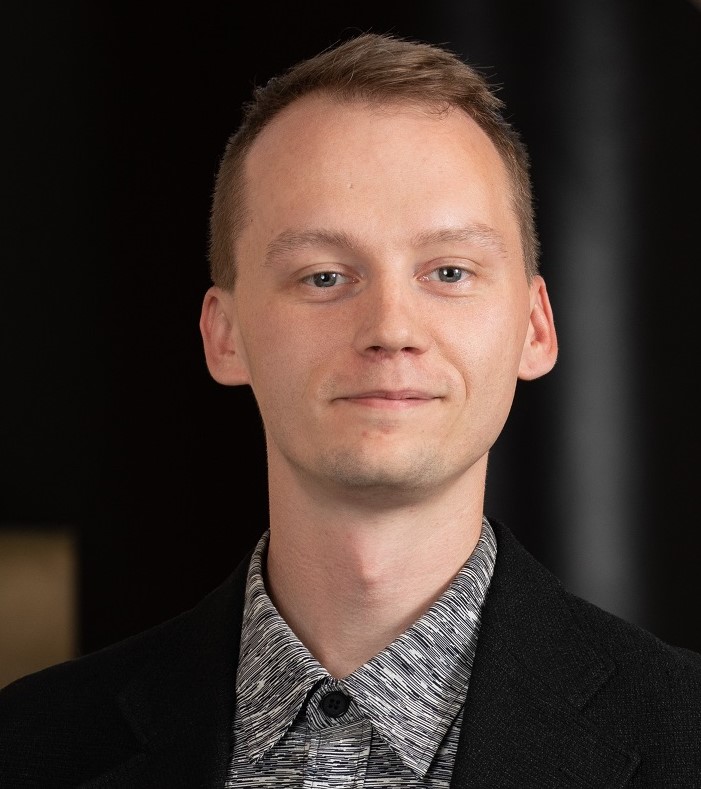
このコーナーでは東京カレッジの新任メンバーを紹介します。今回は3月よりポストドクトラル・フェローに着任したMatthew MULLANEさんにお話を伺いました。
|
|
|
|
|
東京カレッジへようこそ!まずご自身のバックグラウンドについて教えて下さい。
温かく迎えてくださりありがとうございます。私は、アメリカ出身の美術史・建築史研究者です。東京カレッジに着任する前は、オレゴン大学の美術史・建築史の客員助教授、それまでにはハーバード大学のエドウィン・O・ライシャワー日本研究所のポストドクトラル・フェローを務めていました。プリンストン大学で建築史の博士号を取得し、主な研究分野は、日本と世界を結ぶ近代建築の歴史です。過去10年間、研究のために定期的に日本を訪れていましたが、今回、東京に長期滞在して仕事をする機会を得て、とても嬉しく思います。また、東京の建築史家として、自分が研究している建築物に囲まれていることにも興奮しています。
現在の研究プロジェクトを紹介してください。
東京カレッジ滞在中の私の主なプロジェクトは、一冊の本の原稿を完成させ、出版することです。本の内容は、日本初の建築の世界史に着目してその成立プロセスを歴史化・理論化するものです。私はグローバルな歴史を語るために、建築がどのように使われてきたかに興味があります。明治時代の建築家や建築史家は、日本の建築をグローバルな言語で語ることに夢中になっていました。私の本は、明治日本におけるグローバルな歴史思想の出現に注目し、「なぜ」だけではなく「どのように」を問いかけています。「なぜ」という問いには、帝国や植民地主義といった我々にとって馴染みのある理論概念で答えられますが、「どのように」という問いは謎が満ちています。当時の学者たちはどのように外国の資料を翻訳し、グローバルな歴史を作ったのか。彼らはどのように日本や世界を旅し、新しい証拠を生み出したのか。そして当時の建築には、こうしたグローバルな関心がどのように反映されていたのでしょうか。私は、文書、図面、建物を精緻に検証しながら、歴史家と設計者が建築を「観察する」ことの意味を再定義することによって新しいタイプの建築知識を生み出したという仮説を提示しました。
そのほか、出版に向けていくつかの論文や本の章を仕上げています。東京にあるアーカイブ資料を広範囲に使用した1つの論文は、20世紀初頭の建築と昆虫の不思議な交わりに関するものです。日本の建築は木材を使用することで知られていますが、この素材は様々な害虫を引き寄せ、明治・大正時代の重要な建築物を危険にさらしました。建築家や官僚たちが、これらの昆虫を発見し、昆虫が海を越え、日本帝国と世界を旅することを知ることによって、新たな建築の世界的な伝播の地図を描きました。私の論文はこの過程に注目しています。
東京カレッジ滞在中に期待することはありますか?
建築は必然的に学際的なテーマとなります。照明器具のデザインから許可取得まで、さまざまな専門知識を持つ人々が必要となります。建築の歴史を構築するには、このような専門分野を超えたコラボレーションが必要だと思います。東京カレッジのような多様な研究者が集まる場に感謝しています。 私の研究は建築と科学の接点に焦点を当てるので、ユニークな建築空間で新しい観察・観測方法を模索し続ける科学者たちとの交流に特に期待しています。この環境に刺激され、私は現在、日本における最先端の科学観測所の建築に関する研究プロジェクトを開始し、科学者やエンジニアのグローバルネットワークがどのようにして世界規模の観測インフラを構築するのかを調査しています。 このようなプロジェクトは、東京カレッジでしかできないことだと思っています。
|
|
|
中国とイスラーム世界:葛兆光『中国は“中国”なのか』を読む
羽田 正
2021年3月25日
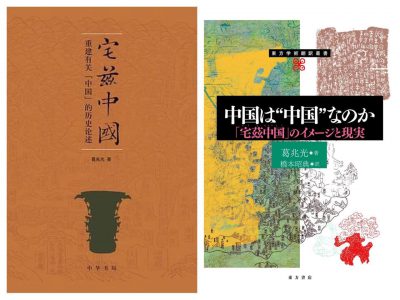
2020年1月から8ヵ月の間東京カレッジの特任教授をお務め下さった葛兆光教授の著書『中国は“中国”なのか:「宅茲中国」のイメージと現実』が東方書店から刊行された。2011年に出版された中国語の著作『宅茲中国』(中華書局、聯経出版公司)の日本語訳である。中国と中国研究についてある程度専門的な知識が必要なので、本書の読解はそう簡単ではない。しかし、内容の濃い、人文学研究全般について様々なことを考えさせられる素晴らしい書物である。本書には専門家の間でより深く議論すべき多くの重要な論点が提示されている。単に中国研究だけではなく、これからの人文学を考えるために必読の文献だと言えるだろう。…
|
|
|
2050年に向けて、未来の病院 ーアートの果たす役割ー
小畠 美穂(東京大学教養学部前期課程理科二類 学部生)
2021年4月5日
このブログ記事は、東京大学で行われた2020-2021年度全学セミナー『2050年の地球と人類社会―分野横断的なアプローチを通して』の授業の一環で執筆されました。当授業では、異なる専門分野から集まった東京大学の学生一人一人が、2050年に向けた課題をひとつ選び、その課題についてお互いにフィードバックを与えながら分野横断的な理解を深め、研究結果を発表しました。この記事はその中の一つの課題をブログにしたものです。
新型コロナウイルスの感染拡大により、医療の効率化が進んでいます。医療崩壊の危機が叫ばれる今、効率的に医療を行うことがより多くの人々を救うことになるでしょう。しかし、患者さんを真に効率的に救うためには、一見効率的でないことが必要になります。病気を治す(cure)ことに注目しすぎると、患者の状態を悪化させてしまうことがあるからです。病院は、多くの人々の人生に関わります。アートの力を用いることで、病院が病気を治す(cure)ためだけでなく、患者を気にかける(care)ようになれることを、ここで検証してみたいと思います。…
|
|
|
3年目の春
羽田 正
2021年4月5日
4月になりました。2019年2月1日に設置された東京カレッジは、3回目の春を迎えました。若手研究者の数が増え、准教授1人、特任助教2人、特任研究員5人、ポスドク研究者6人がカレッジに所属しています。もっとも、今年になって採用された2人は日本政府による渡航制限のために東京に来ることができず、北米に滞在したままです。300人以上の応募者の中から選ばれた今年度採用の5人のポスドク研究者がこれに加わると、若手研究者の数は20人に近付きます。…
|
|
|
東京カレッジに所属する研究者が行う下記二つの研究プロジェクトのリサーチアシスタント(RA)を募集しています。ご関心がある方はぜひ応募してみてください。 |
|
|
「Plastic Japan: The Social Life of Plastics from Consumption to Disposal in Contemporary Japan」
担当研究員:赤藤詩織(特任助教)
締切:4月30日必着 |
|
|
「語と語ーなんで『ひま』はつまらなくて、『後ろ』は怖い?」
担当研究員:テレギナ・マリア(ポストドクトラル・フェロー)
締切:4月16日必着 |
|
|
角川まんが学習シリーズ『世界の歴史』
羽田正教授(東京カレッジ長)が監修者となり、4年半をかけて完成させた角川まんが学習シリーズ『世界の歴史』(全20巻)が近頃刊行されました。このシリーズは従来の時系列の世界史の描き方のではなく、同時代の「横のつながり」を重視します。グローバルヒストリー研究者ならではの視点が全巻に通して反映されています。新しい世代に、現代世界を理解するための新しい歴史観を提示するものとなります。監修者羽田正教授の インタビューを併せてご覧ください。 |
|
|
|
|
このコーナでは最近公開された過去のイベント動画を紹介します。 |
|
|
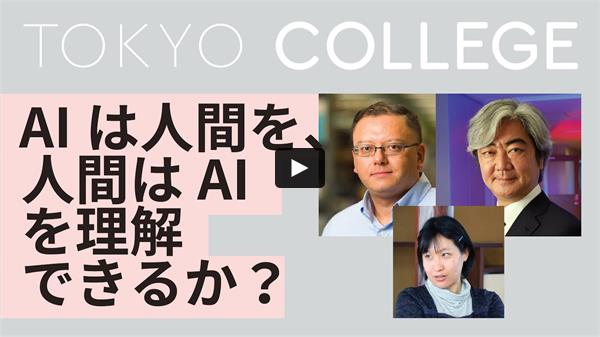
「AIは人間を、人間はAIを理解できるか」
人が脳を理解するのは困難と言われてきましたが、AIの利用で理解が進むかもしれません。では、人間は AIを理解できるでしょうか?人間の理解も AIが人間を超える日が来るのでしょうか? 一般市民の間には、期待とともに、知らないことから来る不安もあるように思われます。これらの疑問に、AI・ロボットと脳科学のそれぞれの専門家が解説し、対話とQ&Aを行います。
※2020年11月30日に開催されたZoomウェビナーに基づいた動画です。
講演で紹介された日本科学未来館の展示「知脳を○○する-脳をみて、脳をつくる研究者たち」(常設展示)は現在公開中です!
|
|
|
MAIL MAGAZINE APRIL
 English Version
April 7, 2021 English Version
April 7, 2021 |
|
Dear readers,
The Sakura season arrived early this year in Tokyo. We hope you enjoyed the cherry blossoms, whether at one of the famous viewing spots or just in your backyard. Tokyo College has welcomed new members this spring, and in this issue, we have talked to our new postdoctoral fellow Mathew Mullane. After two years of effort, the College has grown into a much larger family now. This new semester, we look forward to continuing to share with all of you the “Joy of Discovery and the Power of Knowledge.”
-- The Tokyo College Team
|
|
|
Symposium Series
“Lifestyles and Society after COVID-19: A Long-term Perspective”
The first three events of our symposium series have concluded. You can watch the recordings on our YouTube channel (
Japanese only).
Introduction
Lifestyles and Society after COVID-19
Symposium 1
Possibilities and Responsibilities of the Universities in the “New Normal”
Symposium 2
Towards a Resilient Health System and Society
Symposium 3
Towards a Social System of Solidarity with the Vulnerable
Video is currently in postproduction and will be available on our YouTube channel soon.
|
|
|
|
|
The upcoming symposiums are as follows:
Symposium 4
Climate Change and Pandemics
Date: 9 April (Fri), 10:00–11:30
Symposium 5
Life and Economy after COVID-19
Date: 14 April (Wed), 9:00–11:00
Symposium 6
The Future of Cultural Activities
Date: 15 April (Thur) 15:30–17:00
Concluding Symposium
Date: 23 April (Fri), 16:00–18:00
|
|
|
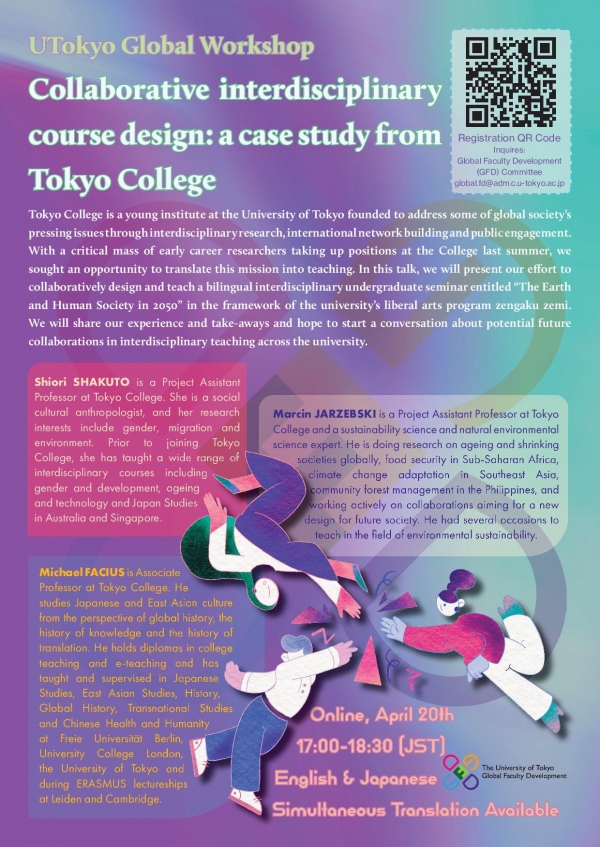 |
UTokyo Global Workshop
Collaborative Interdisciplinary Course Design: A Case Study from Tokyo College
Organized by: The University of Tokyo Global Faculty Development Initiative
Time and Date: Apr 20, 17:00-18:30 (JST)
Language: English (Japanese simultaneous translation available)
Registration required: Link
Tokyo College is a young institute at the University of Tokyo founded to address some of global society’s pressing issues through interdisciplinary research, international network building and public engagement. With a critical mass of early career researchers taking up positions at the College last summer, we sought an opportunity to translate this mission into teaching. In this talk, we will present our eff ort to collaboratively design and teach a bilingual interdisciplinary undergraduate seminar entitled “The Earth and Human Society in 2050” in the framework of the university’s liberal arts program zengaku zemi. We will share our experience and take-aways and hope to start a conversation about potential future collaborations in interdisciplinary teaching across the university. |
|
|
|
|
In this section, we continue the interview series with our new members. This time we spoke with Dr. Matthew MULLANE, a postdoctoral fellow at Tokyo College who joined us in March.
|
|
|
|
|
Welcome to Tokyo College! Please tell us a bit about your background first!
Thank you so much for the warm welcome! I'm an art and architecture historian from the United States. Before starting at Tokyo College, I was a visiting assistant professor of art and architecture history at the University of Oregon, and prior to this, I was a postdoctoral fellow at the Edwin O. Reischauer Institute of Japanese Studies at Harvard University. I received my PhD in architecture history from Princeton University and my main area of research is the history of modern architecture connecting Japan to the globe. I've been traveling to Japan routinely for the past decade for research, but I'm very excited to have the opportunity to live and work in Tokyo for an extended period of time. As an architecture historian in Tokyo, I'm also thrilled to be surrounded by the types of buildings that I study and write about!
Could you briefly introduce your current research project?
While at Tokyo College, my primary project is completing and publishing a book manuscript that historicizes and theorizes the creation of the first world history of architecture in Japan. I am interested in the ways that architecture has been used to tell global histories and during the Meiji period, architects and architecture historians became obsessed with telling the story of Japanese architecture in global terms. My book looks at the emergence of global historical thought in Meiji Japan and asks not only "why" but "how." The "why" can be answered with familiar topics like empire and colonialism, but the how question is more mysterious. How did scholars translate foreign sources to make a global history? How did they travel through Japan and around the world to generate new evidence? And how did contemporary architecture of the day reflect this global interest? Looking closely at documents, drawings, and buildings, I argue that historians and designers created new types of architectural knowledge by re-defining what it meant to "observe" architecture.
I am also currently completing several articles and book chapters for publication. One article extensively uses archival materials in Tokyo and concerns the curious intersection of architecture and insects in the early 20th century. Japanese architecture is of course known for its use of wood, but this material attracts various types of bothersome pests that compromised important buildings in the Meiji and Taisho periods. I am researching how the discovery of these insects prompted architects and bureaucrats to draw up new global maps of architectural transmission as they learned about how insects travel across oceans, through the Japanese empire, and around the world.
What do you want to get out of your time at the College?
Architecture is necessarily an interdisciplinary project; from the design of a lighting fixture to acquiring a zoning permit, it requires many different types of people with different expertise. I believe that making architecture history also requires this kind of discipline-blurring collaboration. For this reason, I'm very appreciative to be surrounded by such a diverse array of scholars at Tokyo College. My work often focuses on the intersection of architecture and science, so I'm particularly excited to be near scientists who are actively defining new types of observation in very unique architectural spaces. Motivated by this proximity, I am currently starting a new research project on the architecture of cutting-edge scientific observatories in Japan, investigating how global networks of scientists and engineers create global infrastructures of observation. I think that this type of project could only happen at Tokyo College.
|
|
|
China and the Islamic World: Reading Ge Zhaoguang’s Chūgoku wa “Chūgoku” nanoka (Is China “China”?)
HANEDA Masashi
March 25, 2021
Specially-appointed (January – August 2020) Tokyo College professor Ge Zhaoguang’s
Chūgoku wa “Chūgoku” nanoka: “Takuji Chūgoku” no imēji to genjitsu (Is China “China”? Image and reality of “Here in China I Dwell”) has been published by Toho Shoten. This volume is a Japanese translation of
Zháizī zhōngguó (Zhonghua Book Company, Sino United Publishing), published in 2011… |
|
|
Toward 2050: Hospitals of the Future – The Role of Art
KOBATAKE Miho (BA Student, Natural Sciences II, College of Arts and Sciences Junior Division)
April 5, 2021
This blog post was created as part of the seminar "The Earth and Human Society in 2050: Interdisciplinary Perspectives " offered by members of Tokyo College in autumn 2020. In this course, undergraduate students from different fields of specialization chose one pressing challenge confronting human society, developed an interdisciplinary understanding of that issue through collaborative learning, and shared their results in class. This article presents a research outcome on the role of art in hospitals carried out by one of the participants.
The streamlining of medical treatment has advanced with the spread of the coronavirus pandemic. Now in the midst of fear of over-run hospitals, implementing more efficient medical care will lead to more people being saved. However, to truly save patients efficiently, it is necessary to do some things which, at first sight, are not efficient. This is because giving too much attention to curing diseases can cause the patient’s condition to deteriorate. Hospitals are involved in many people’s lives. I would like to examine here the notion that by using the power of art, hospitals can not only cure diseases, but can also become places that care about patients.…
|
|
|
Our third Spring
HANEDA Masashi
April 5, 2021
April has arrived. For Tokyo College, which was founded on February 1st in 2019, this means we have now entered our third spring. The number of early career researchers has increased, with one Associate Professor, two Project Assistant Professors, five Project Researchers, and six Postdoctoral Fellows now housed at the College.…
|
|
|
Two of our researchers are looking for research assistants for their projects. Please kindly forward this information to your students or anyone else to whom this might be of interest.
|
|
|
Plastic Japan: The Social Life of Plastics from Consumption to Disposal in Contemporary Japan
PI: SHAKUTO Shiori (Project Assistant Professor)
Deadline: Apr 30 |
|
|
語と語ーなんで『ひま』はつまらなくて、『後ろ』は怖い?
PI: Maria Telegina (Postdoctoral Fellow)
Deadline: Apr 16 |
|
|
"Manga World History" in 20 vols.
KADOKAWA’s new Manga World History (20 volumes) supervised by Tokyo College Director HANEDA Masashi is out recently. Unlike previous manga series on world history, which usually adopt a more vertical approach, this series emphasizes connections and interactions among different regions of the world. Drawing from recent development in global history and historical studies in general, the series aims to provide the young generation a fresh perspective for understanding history and the modern world. Watch Professor HANEDA’s interview (in Japanese) on the publication of the series. |
|
|
|
|
In this section we introduce newly published video clips based on previous Tokyo College events.
|
|
|
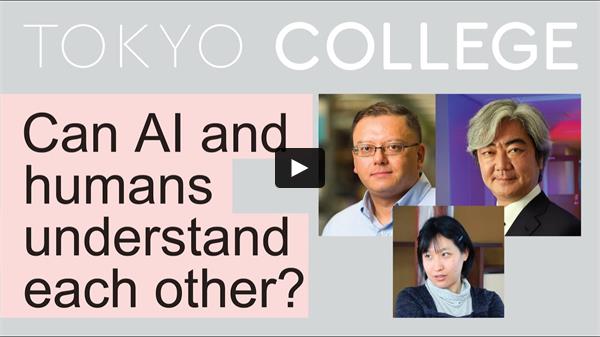
Can AI and humans understand each other?
Whether humans can understand their own brain has been a difficult question even for contemporary neuroscience. However, the use of Artificial Intelligence (AI) may improve our understanding of the human brain in the future. But can humans understand AI? Will AI ever surpass our understanding of humans? This dialogue will bring together experts in respective fields of AI and neuroscience to exchange their thoughts, followed by a discussion and Q&A.
|
|
|
|