|
|
|
Dear VPF Friends,
Welcome to the Violence Prevention Forum newsletter. We share research, resources, upcoming events and opportunities on a bi-weekly basis. We hope you find this a useful and valuable resource.
For any resources and events you'd like to share in this newsletter or queries, contact vpf@issafrica.org. You can also stay up to date with opportunities and research on our linkedIn page here
|
|
|---|
|
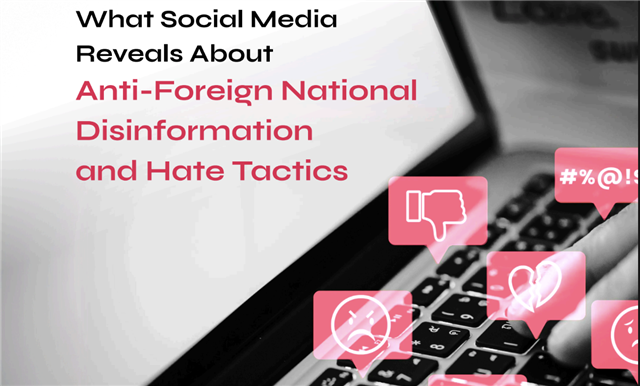 |
New Report: What Social Media Reveals About Anti-Foreign National disinformation and hate tactics
Online narratives can shape how communities understand social and political issues, particularly when real-world grievances are used to amplify fear, hostility and division. Understanding how these narratives spread is increasingly important for violence prevention, as online anti-immigrant campaigns can contribute to tensions and, in some cases, spill over into real-world violence and unrest.
Tales of Turnings latest report provides insight into the tactics being used to spread misinformation and hate speech about foreign nationals in South Africa. The findings show how these accounts leverage real-world grievances, such as unemployment, housing, crime and the disbursement of social grants, to amplify anti-foreign national sentiment, and to undermine trust in state institutions and the media. The analysis shows a critical threat level with a high probability of real-world violence, civil unrest, and operational disruption to law enforcement. |
|
|---|
|
|
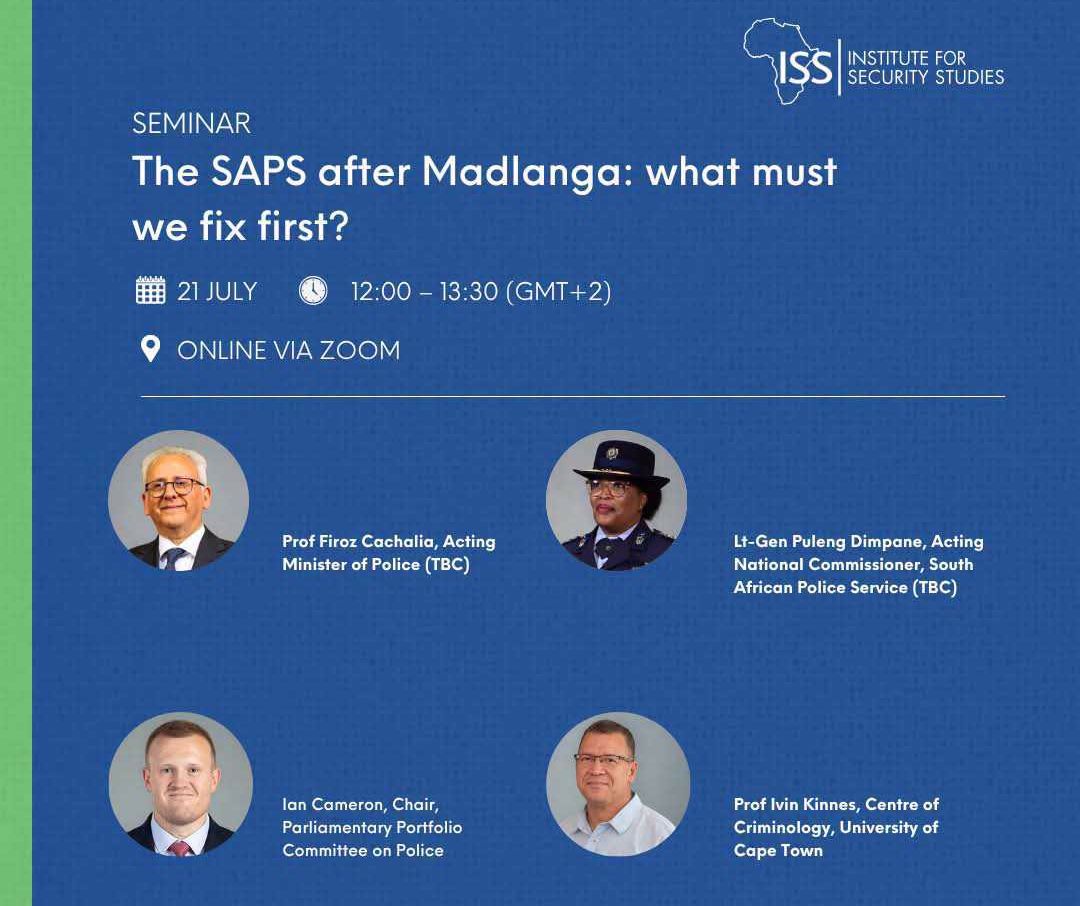
Webinar: The SAPS after Madlanga, what must we fix first?
South Africa’s Acting Minister of Police Firoz Cachalia has promised a 'bold police reset agenda' to rebuild a modern, professional and trusted police service. But with findings from the Madlanga Commission and a related Parliamentary inquiry due in the coming weeks, serious questions remain about criminality, political interference and corruption in the criminal justice system.
In this webinar leaders from the ISS, SAPS, Parliament and academia explored what these inquiries have revealed so far, and what an effective reset of policing would actually require. |
|
|---|
|
|
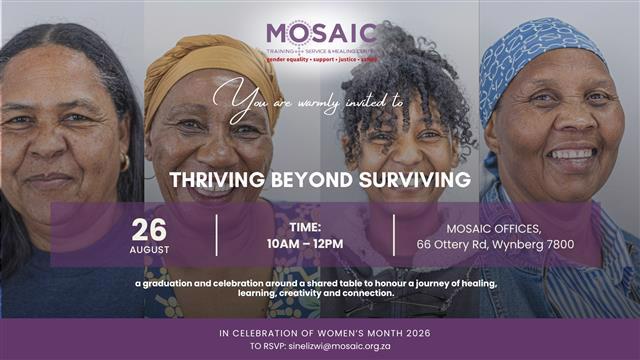 |
Invitation: Thriving Beyond Surviving Art therapy celebration
This Women’s Month, MOSAIC is celebrating Thriving Beyond Survival, an Art Therapy journey that has created a safe and creative space for women to explore healing, self-expression and possibility beyond experiences of violence.
Guided by the themes of Nurture, Nourishment and Nature, participants have explored what it means to care for the self, draw strength from connection and community, and recognise that like nature, healing can take time, change shape and unfold at its own pace. Through clay, painting, storytelling and repurposed materials, women have been able to express experiences that may not always be easy to put into words, while exercising choice over what they create, share and carry forward.
This approach is important because Thriving Beyond Survival does not define women by what has happened to them. Instead, it creates space for agency, creativity, reflection and the possibility of becoming.
The journey will culminate in a special celebration at MOSAIC on 26 August, bringing participants from the Art Therapy cohort and their Human Rights and Referral cohort together to honour their creativity, learning and growth through a gathering rooted in healing and collective care.
Date: 26 August 2026
Venue: MOSAIC offices, 66 Ottery Road Wynberg Cape Town
RSVP: sinelizwi@mosaic.org.za
|
|
|---|
|
|
Opinion piece: Reclaiming Women's Month, Celebrating Resilience, Strength, Agency
Women's Month in South Africa has increasingly become a time to focus on the devastating realities of gender-based violence and femicide. While this focus remains essential, this opinion piece by Dr Mpumi Zungu, Sibs Mthembu, Dr Zaino Petersen and Dr Whadi-ah Parker argues that the month should also retain its original emphasis on women's collective power, achievements, resilience and agency. Drawing on the legacy of the 1956 Women's March and the 2018 #TotalShutdown, the authors reflect on the history of women organising to challenge injustice and demand change.
The authors argue that recognising women's achievements and celebrating their leadership should not come at the expense of accountability for GBVF. Instead, the two should go together: naming the violence women experience while also recognising the women, movements and communities working to create change.
|
|
|---|
|
|
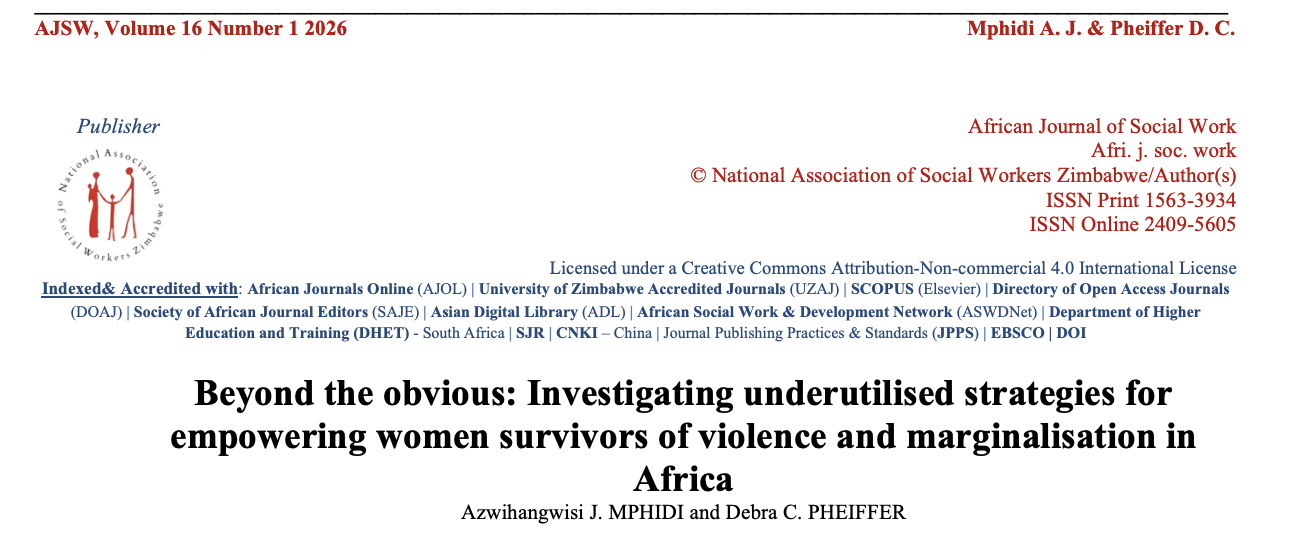
Research Paper: Beyond the obvious, Investigating underutilised strategies for empowering women survivors of violence and marginalisation in Africa
Despite decades of gender-based violence (GBV) interventions in Africa, empowerment strategies for women survivors often rely on conventional measures such as legal reform, shelters, and aid, which overlook community-rooted innovations. This article explores underutilised, culturally anchored strategies across African regions, including faith-based advocacy, storytelling cooperatives, indigenous healing, women’s energy initiatives, and stokvel networks.
The findings suggest that policies and programmes must support locally driven, survivor-led models to address survivors’ complex needs from safety to self-actualisation. It is recommended that policymakers, practitioners, and funders prioritise investment in integrated, culturally relevant, and sustainable empowerment approaches that amplify survivor voices and leverage indigenous
knowledge.
|
|
|---|
|
|
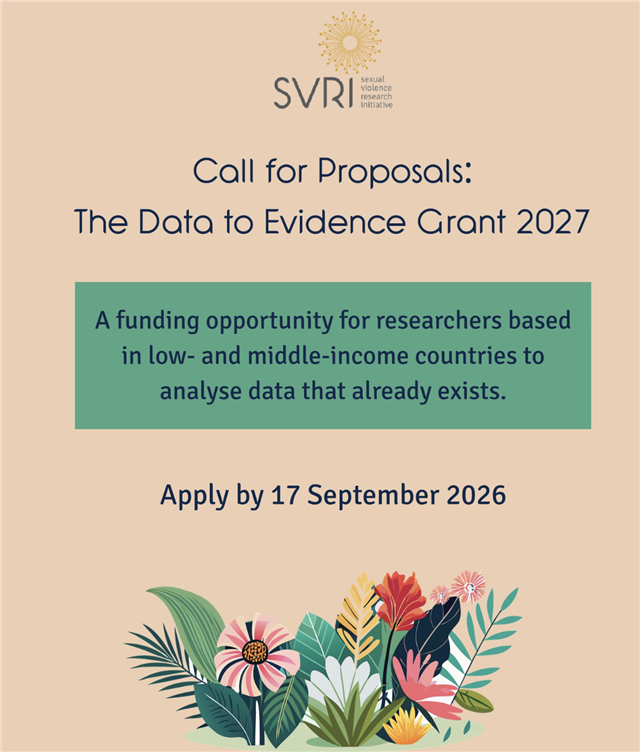 |
Call for proposals: SVRI Data to Evidence Grant 2027 (Knowledge for Action to End Violence Against Women and Child Sexual Violence)
The Sexual Violence Research Initiative (SVRI) is inviting applications for its Data to Evidence Grant 2027, supporting researchers in low- and middle-income countries to generate new evidence on violence against women, violence against children and other forms of gender-based violence. This grant supports the analysis of existing datasets to answer important research questions and strengthen evidence for policy and practice.
The grant is open to researchers based at universities, research institutions and non-governmental organisations in low- and middle-income countries. Successful applicants will receive funding to conduct secondary data analysis and produce research outputs that contribute to improving violence prevention and response. Individual grants range from USD 30,000 to USD 50,000 for projects of up to 12 months.
Closing date: 17 September 2026
Learn more: here |
|
|---|
|
|
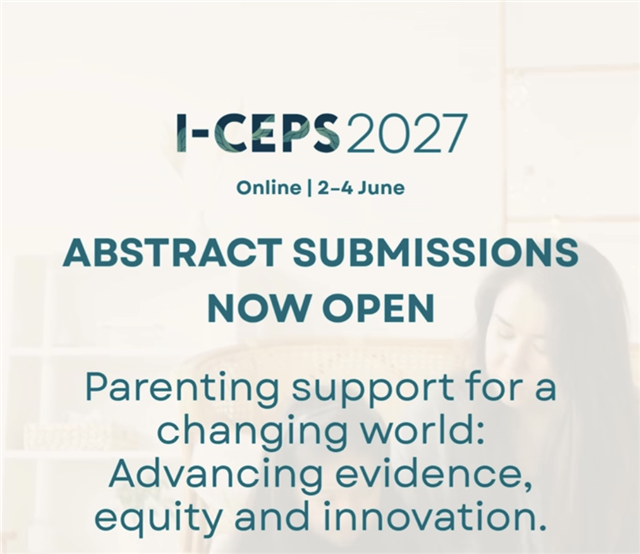
Call for applications: International Congress on Evidence-based Parenting Support (I-CEPS) 2027
The Parenting and Family Research Alliance (PAFRA) is inviting researchers, practitioners, policymakers, implementation leaders and parent advocates to submit abstracts for the International Congress on Evidence-Based Parenting Support (I-CEPS) 2027. The Congress provides a global platform to share research, implementation experiences and policy innovations that strengthen parenting support and improve outcomes for children, families and communities.
Abstracts are invited across a range of themes, including parenting in contexts of adversity, digital technologies and AI, implementation and systems change, and population-level approaches to parenting support. Contributions can be submitted in a variety of formats, including research papers, implementation case studies, rapid presentations and policy dialogues.
Closing date: 27 November 2026
Learn more: here |
|
|---|
|
|
SVRI Forum 2026: Connect, Share, Learn
The SVRI Forum is the world’s leading conference dedicated to research, evidence, and solutions to prevent and respond to violence against women and children. This dynamic and action-driven event brings together over 1,000 global stakeholders—including researchers, practitioners, policymakers, funders, and activists—to share cutting-edge research, challenge the status quo, and co-create solutions for a world free from violence.
Registration is now open via the Oxford Abstracts platform. Standard registration opened from 1 March to 15 August 2026.
Dates: 5-9 October 2026
Venue: Centara Grand Hotel and Bangkok Convention Centre
Learn more: here
|
|
|---|
|
|
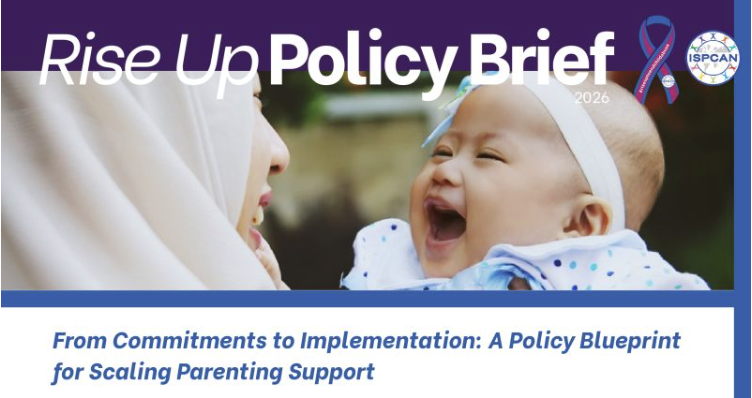
Policy Brief: From Commitments to Implementation, A Policy Blueprint for Scaling Parenting Support
Evidence-based parenting programmes have demonstrated effectiveness in preventing violence against children, strengthening family environments, and enhancing child well-being - yet scaling these interventions remains a persistent challenge. Despite global commitments to expand parenting support, including pledges made at the 2024 Global Ministerial Conference on Ending Violence Against Children in Bogotá, few countries have translated these commitments into sustainable, large-scale action.
This policy brief highlights what it takes to build a world where every parent is equipped to protect their children and support their health, safety, and development. It explores practical strategies to bridge the gap between commitment and implementation.
|
|
|---|
|
|
| |
| |
|
View this email in your browser
You are receiving this email because of your relationship with Violence Prevention Forum @ the Institute for Security Studies. Please reconfirm your interest in receiving emails from us. If you do not wish to receive any more emails, you can unsubscribe here.
|
|
|
|
|