|
|
|
Dear VPF Friends,
Welcome to the Violence Prevention Forum newsletter. We share research, resources, upcoming events and opportunities on a bi-weekly basis. We hope you find this a useful and valuable resource.
For any resources and events you'd like to share in this newsletter or queries, contact vpf@issafrica.org. You can also stay up to date with opportunities and research on our linkedIn page here
|
|
|---|
|
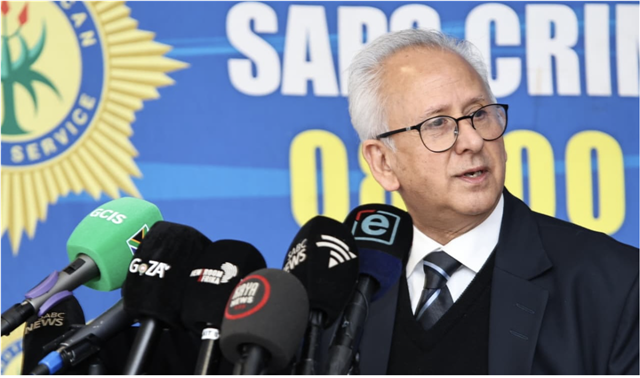
ISS Today: Debate about SA's falling murder levels masks a deeper crisis
South Africa's recent decline in murder rates has sparked considerable debate, with explanations ranging from improved policing and reduced load-shedding to shifts in organised crime.
In this ISS Today, Dr Chandré Gould argues that sustained reductions in violence will require more than effective policing. Drawing on recent crime statistics, she highlights that much of South Africa's violence occurs in homes and communities, often between people who know one another. Preventing violence will require greater investment in proven prevention interventions, including parenting support, family-strengthening programmes and survivor services.
|
|
|---|
|
|
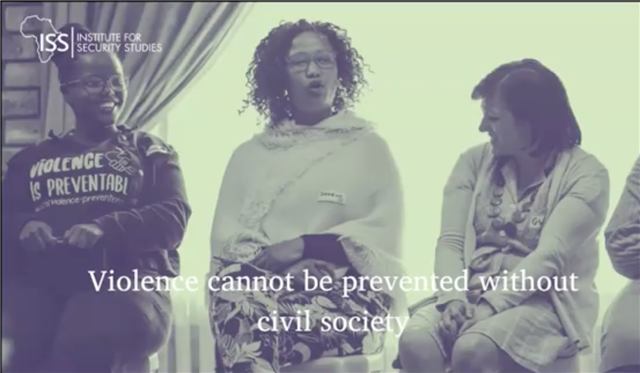 |
Webinar: Violence cannot be prevented without civil society
As governments and international agencies prepare for the upcoming Global Ministerial Conference on Ending Violence Against Children, questions arise about who shapes prevention agendas and decision-making. While civil society organisations implement interventions, drive innovation, and work directly with communities, they are often excluded from spaces where priorities and resources are decided.
These issues were the focus of a webinar co-hosted by the Institute for Security Studies, Save the Children South Africa, and Raising Voices. Bringing together practitioners from Africa, Asia, and Latin America to discuss the role of civil society in preventing violence against children and what we can do differently to ensure that it is recognised. The conversation reinforced the message that sustainable violence prevention depends on meaningful partnerships that value the knowledge, experience, and leadership of those closest to communities.
|
|
|---|
|
|
Observations report: Gender mis/disinformation and hate speech
Digital spaces are increasingly shaping how people understand gender, identity and belonging. Yet alongside opportunities for connection, these platforms can also amplify harmful narratives that reinforce inequality, exclusion and violence. Recognising the links between online discourse and real-world harm is becoming an important part of violence prevention.
This report by Tales of Turning explores how online hate targets women, feminists and LGBTQI+ communities through narratives that shame, dehumanise and silence. The report argues that addressing these harms requires moving beyond reactive content moderation towards more proactive approaches, including social listening, dialogue and the promotion of positive community narratives.
|
|
|---|
|
|
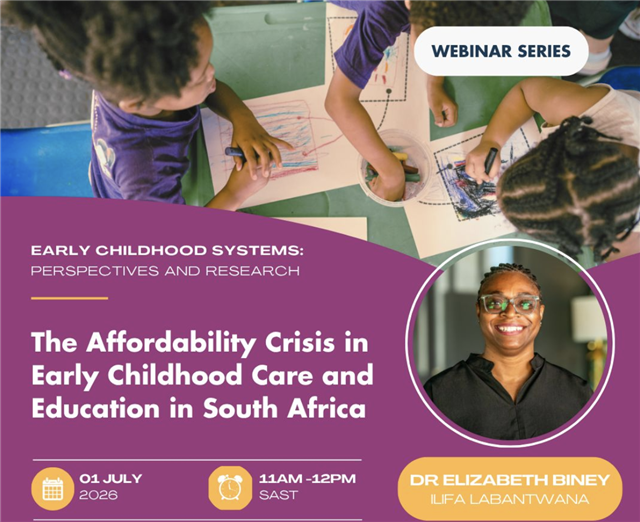
Webinar: The affordability crisis in Early Childhood Care and Education in South Africa
Ilifa Labantwana, together with RESEP and DataDrive2030, invite you to this webinar exploring why quality early childhood care and education remain out of reach for many South African families, despite it being widely recognised as key to development.
Drawing on a new research brief, the session will examine the systemic drivers of the affordability crisis, including income inequality, service costs and regulatory requirements. Participants will explore the changes needed to improve access at scale and to strengthen South Africa's early childhood development system, enabling more children to benefit from quality early learning opportunities.
Date: 1 July 2026
Time: 11:00-12:00 (SAST)
Read the research brief: here.
|
|
|---|
|
|
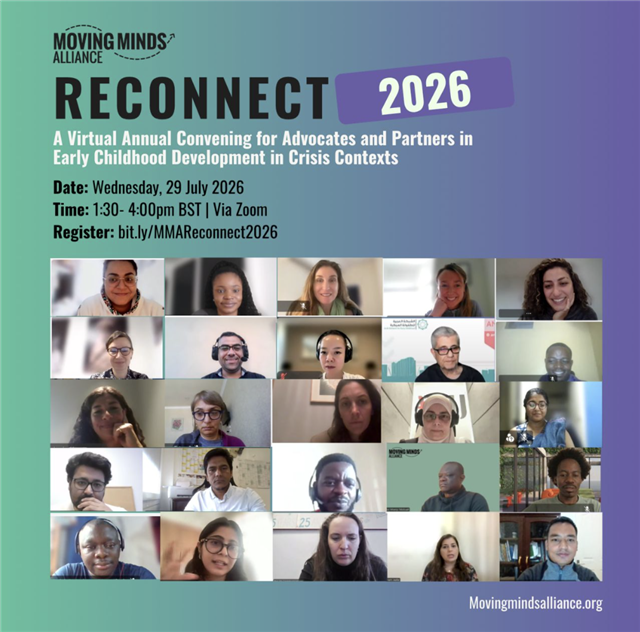
Virtual session: What does it take to advance early childhood development in the hardest places?
Moving Minds Alliance (MMA) Reconnect 2026 is an open house gathering designed to strengthen collective momentum across the Moving Minds Alliance and beyond. This year, the event expands its reach to welcome not only MMA members but also strategic partners and aligned networks, bringing a wider community of advocates together to connect, exchange, and act. This session is open to all early childhood advocates and stakeholders.
The session will include three breakout rooms for parallel workshops focused on three areas:
- Measuring advocacy impact: How do you know your advocacy is working? How to use advocacy tools to influence states and funders.
- Building champions, key messaging and coalitions.
- Media & Journalism for Advocacy: How can we engage journalists as co‑advocates for ECD in crisis settings?
Date: 19 July 2026
Time: 14:30-17:00 (SAST)
|
|
|---|
|
|
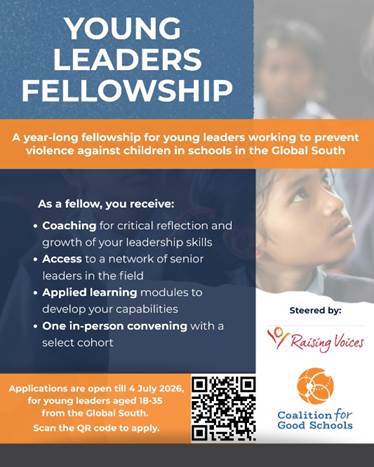
Fellowship opportunity: Young leaders fellowship
The Coalition for Good Schools and Raising Voices are inviting applications for the Young Leaders Fellowship, a one-year programme designed for emerging leaders from the Global South working to prevent violence against children in and through schools. The fellowship aims to strengthen leadership, connect practitioners across contexts, and support the next generation of changemakers committed to creating safer learning environments.
Fellows will participate in peer learning, receive coaching from experienced violence prevention practitioners, gain exposure to the broader violence prevention ecosystem, and take part in an in-person convening. The programme is open to young leaders aged 18–35 who are actively involved in initiatives focused on keeping children safe in and through schools, whether their ideas are at an early stage or already underway.
Closing date: 4 July 2026
|
|
|---|
|
|
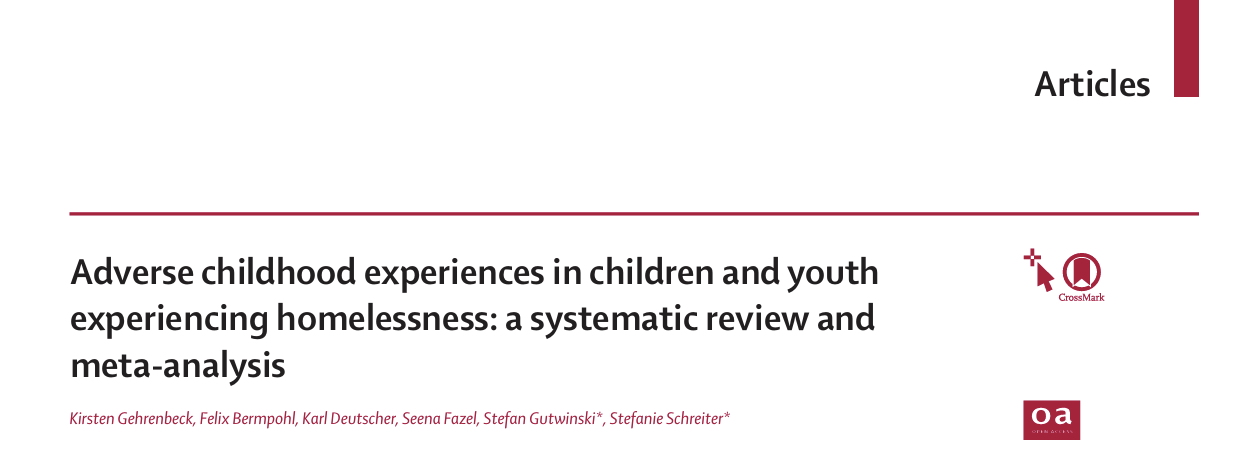
Research Paper: Adverse childhood experiences in children and youth experiencing homelessness, a systematic review and meta-analysis
Children and youth experiencing homelessness are highly affected by adverse childhood experiences (ACEs) and related health harms. This paper aimed to synthesise ACE prevalence in this population, examine whether study characteristics influenced prevalence estimates, and summarise associations of ACEs with health-related outcomes.
This study provides the first quantitative synthesis of ACE prevalence in children and youth experiencing homelessness and indicates a high burden of abuse, with pooled estimates for physical and sexual abuse markedly higher than general-population estimates. Integrated multiagency services and ACE-focused prevention strategies are needed. |
|
|---|
|
|
| |
| |
|
View this email in your browser
You are receiving this email because of your relationship with Violence Prevention Forum @ the Institute for Security Studies. Please reconfirm your interest in receiving emails from us. If you do not wish to receive any more emails, you can unsubscribe here.
|
|
|
|
|