|
|
|
Dear VPF Friends,
Welcome to the Violence Prevention Forum newsletter. We share research, resources, upcoming events and opportunities on a bi-weekly basis. We hope you find this a useful and valuable resource.
For any resources and events you'd like to share in this newsletter or queries, contact vpf@issafrica.org. You can also stay up to date with opportunities and research on our linkedIn page here
|
|
|---|
|
Policy brief: Parenting Support for Early Childhood Development to Achieve Transformation
This new policy brief from Families 4 Children and the South African Parenting Programme Implementers Network (SAPPIN)
highlights the critical role of parenting support in transforming early childhood development in South Africa.
The brief makes the case for scaling evidence-based parenting programmes and strengthening systems that support families. It argues that supporting parents and caregivers is not just a social good, but a key strategy for improving child outcomes and breaking cycles of poverty and violence. It highlights the need for coordinated action across government and civil society to ensure that all caregivers are empowered to provide nurturing and non-violent care, laying the foundation for healthier, more equitable families and communities.
|
|
|---|
|
|
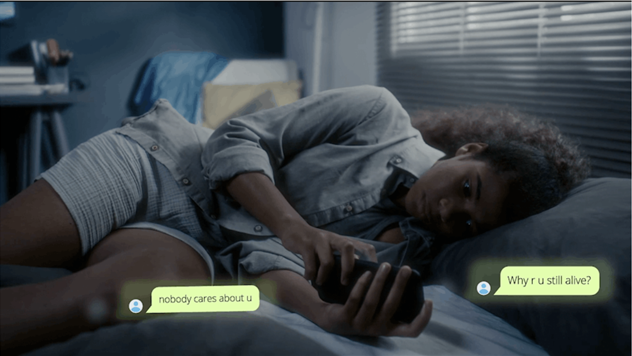 |
New campaign: Build or Break, New campaign challenges young men to reject online hate
A new campaign in South Africa is confronting the rise of online misogyny and technology-facilitated gender-based violence (TFGBV), calling on young men to rethink what respect, success and legacy mean in the digital age. Build or Break? speaks directly to young men navigating complex online spaces, where ideas of masculinity are constantly shaped and challenged.
Part of UNESCO’s Social Media 4 Peace initiative, the campaign combines research and storytelling to address the attitudes and behaviours that drive online abuse. It uses music as its central tool, featuring an original track by emerging artist Xtreem Makhayeni, designed to engage young audiences in a way that feels real, relatable and non-judgemental.
Grounded in research from the Centre for Analytics & Behavioural Change, the campaign invites young men to reflect on their role in shaping digital spaces and to choose more constructive, accountable forms of engagement. By linking audiences to platforms like HeCareZA, it also provides practical pathways for support and behaviour change.
The Build or Break? Campaign video can be found here.
|
|
|---|
|
|
Webinar:The role of the health sector in supporting parents and their caregiving potential
Parents and caregivers play a pivotal role in shaping the health, development and well-being of children across the life course. But they cannot do it alone. All caregivers need some support. This webinar will explore how the health sector can better support parents and caregivers, from pregnancy through to adolescence. Participants will learn:
- Why the health sector matters,
- What types of support can be provided through health services (e.g., anticipatory guidance, strengthening caregivers’ capacities to care for themselves and their children, information sharing), and
- How the health sector can work with others to strengthen care pathways and enhance family well-being.
Date: 22 April 2026
Time: 15:00-16:00 (CET)
|
|
|---|
|
|
Webinar: Launch of the Digital Innovation Playbook
UNICEF, the Van Leer Foundation and ECDAN invite you to this webinar launching a new Playbook on Digital Innovation for Supporting Families. As families navigate a rapidly changing digital world, the session will explore how digital tools, from trusted information to AI-enabled solutions, are reshaping how caregivers access support, connect with others and manage everyday challenges.
This session will introduce a practical framework developed through global expert dialogue, offering a roadmap for building more human-centred, equitable and scalable digital support systems. Bringing together global partners, the webinar will explore how digital ecosystems can strengthen parental wellbeing, improve caregiving capacity and better support families in their daily lives.
Date: 28 April 2026
Time: 15:00-16:15 (SAST)
|
|
|---|
|
|
Webinar: Parenting Programmes to Prevent Violence and Advance Gender Equality, Findings from a Global Mapping
Equimundo, Parenting for Lifelong Health (PLH), the Prevention Collaborative and UNICEF Office of Research – Innocenti invite you to this webinar launching new global findings on parenting programmes that promote gender equality and prevent violence. While parenting support plays a vital role in helping children thrive, many programmes do not yet address both violence against children and intimate partner violence together.
This session will share insights from a global mapping of 69 programmes, highlighting key gaps and opportunities to strengthen prevention efforts. Bringing together researchers and practitioners, the webinar will explore how scaling gender-transformative parenting approaches within national systems can support safer, more equitable families.
Date: 30 April 2026
Time: 12:00-13:00 (CET)
|
|
|---|
|
|
Call for abstracts: Technology-Facilitated Gender-Based Violence and Healthcare Responses
A new special issue on Technology-Facilitated Gender-Based Violence (TFGBV) is calling for papers to address a critical gap in the field: how healthcare systems respond to survivors of digital forms of violence. While global efforts have focused on legal and regulatory responses, the role of healthcare in identifying, supporting and referring survivors remains largely underdeveloped.
The call invites contributions that explore TFGBV as a public health issue, examine barriers to care, and propose innovative, survivor-centred approaches across clinical, community and policy settings. With a strong focus on equity and intersectionality, this special issue aims to strengthen evidence and inform more integrated responses to violence that increasingly spans both online and offline spaces.
Closing date: 30 April 2026
submit abstract here: cerc.healthwellbeing@torontomu.ca |
|
|---|
|
|
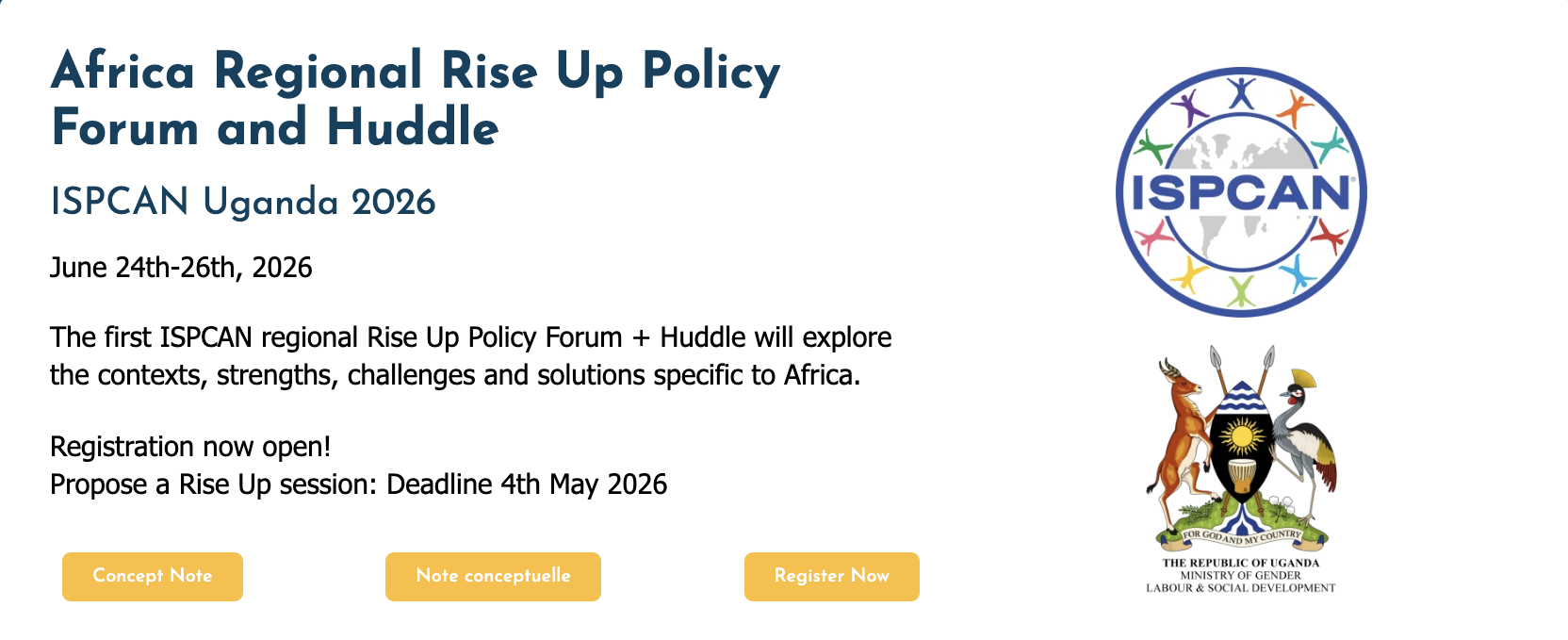 |
Call for Proposals: Rise Up Sessions, African Regional Rise Up Policy Forum and Huddle, ISPCAN Uganda 2026
ISPCAN is inviting proposals for a Rise Up Session as part of the African Regional Rise Up Policy Forum and huddle. The ISPCAN Rise Up Policy Forum and Africa Huddle will bring together policymakers, practitioners, researchers and partners from across the continent to strengthen child protection through a public health and systems approach. Taking place in June 2026 in Kampala, Uganda, the forum aims to build on global momentum by supporting countries to translate commitments into practical, evidence-based action.
The programme includes a deep-dive “Huddle” exploring a real case of child abuse to identify gaps and opportunities in response systems, followed by a two-day policy forum focused on sharing knowledge, strengthening collaboration and advancing scalable, context-specific solutions. Together, these sessions aim to foster a community of practice and support more coordinated, data-informed approaches to preventing violence against children across the region.
Closing date: 4 May 2026
|
|
|---|
|
|
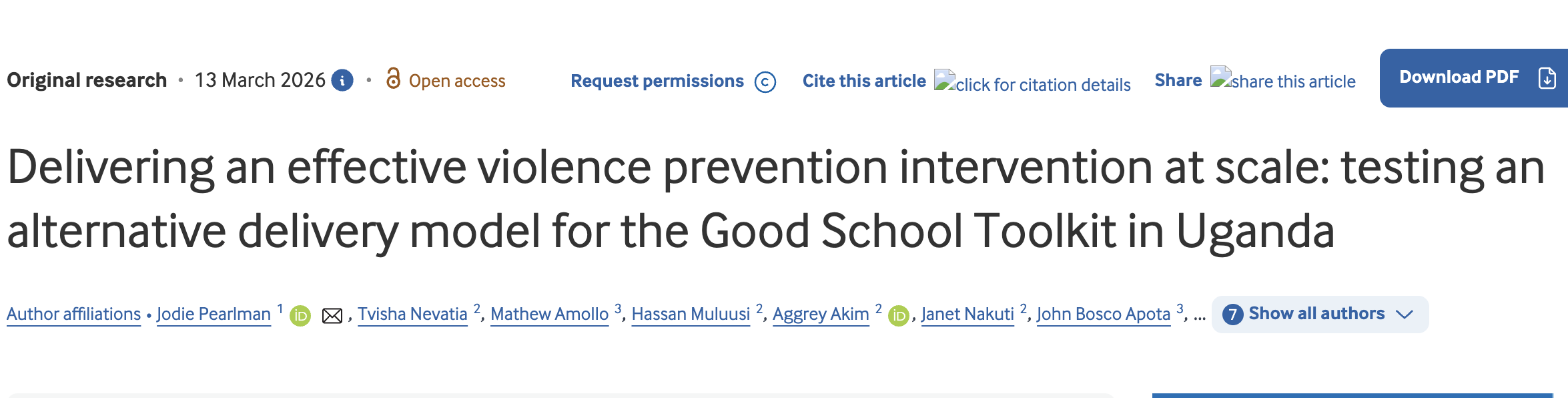
Research paper: Delivering an effective violence prevention intervention at scale, testing an alternative delivery model for the Good School Toolkit in Uganda
This study explores how evidence-based violence prevention programmes can be delivered at scale in low- and middle-income settings. Focusing on the Good School Toolkit in Uganda, the research tests an alternative delivery model designed to expand reach through existing systems.
The findings show that scaling prevention requires adapting programmes for real-world contexts, with implementation and exposure playing a key role in reducing violence. The study offers important insights for policymakers and practitioners on how to move from small-scale interventions to more sustainable, system-level approaches to violence prevention.
|
|
|---|
|
|
| |
| |
|
View this email in your browser
You are receiving this email because of your relationship with Violence Prevention Forum @ the Institute for Security Studies. Please reconfirm your interest in receiving emails from us. If you do not wish to receive any more emails, you can unsubscribe here.
|
|
|
|
|