|
|
|
Dear VPF Friends,
Welcome to the Violence Prevention Forum newsletter. We share research, resources, upcoming events and opportunities on a bi-weekly basis. We hope you find this a useful and valuable resource.
For any resources and events you'd like to share in this newsletter or queries, contact vpf@issafrica.org. You can also stay up to date with opportunities and research on our linkedIn page here
|
|
|---|
|
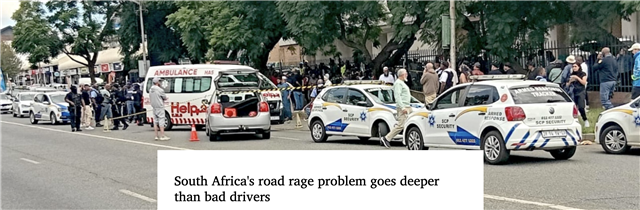
ISS Today: South Africa's road rage problem goes deeper than bad drivers
Accumulated stress and normalised violence often manifest on the roads, where a misperception can have fatal consequences. The recent shooting in Johannesburg, in which 48-year-old driver Faisal Ul Rehman was killed, and his wife Tehseen Zahara Faisal was critically injured, has highlighted the dangers of road rage.
In this piece, Dr Thandi van Heyningen highlights how road rage is frequently viewed as a problem of "bad drivers" or as isolated incidents of anger. This perspective is simplistic and misleading. Instead, road rage should be understood as a form of interpersonal violence influenced by psychological factors and situated within a broader social context characterised by stress, inequality, and normalised aggression.
|
|
|---|
|
|
Research Report: Investment Case, Strengthening the Social Service Workforce for Child Protection
In 2024, Cornerstone Economic Research was commissioned by UNICEF ESARO, in collaboration with UNICEF Kenya and UNICEF Zambia, to develop and pilot a methodology for building an investment case for the social service workforce. Piloted in Kenya and Zambia, the methodology integrates workforce mapping, budget analysis, costing, cost-of-inaction analysis and investment case development.
One of the key outputs of this work is a synthesis report that draws together lessons from the pilot studies and provides practical guidance for governments, UNICEF country offices and partners seeking to develop evidence-based investment cases.
The report contributes to ongoing efforts to build stronger, better-planned and more sustainable child protection systems across the region. |
|
|---|
|
|
Invitation: The National Campaign to Prevent Gender-Based Violence and Femicide
Are you a South African organisation working to prevent Gender-based Violence?
Join the National Campaign to Prevent Gender-based Violence and Femicide by 2030.
Led by Ambassador Nozipho January-Bardill, the coalition includes the UN Global Compact SA, SAWID, GBVF Fund, Wise 4 Africa, and Tales of Turning. Its goal is to create a coherent, society-wide movement for systemic change and the elimination of GBVF.
By joining, your organisation contributes to a coordinated effort to strengthen prevention, boost impact, and speed up action, connecting expertise and resources to build safer communities and workplaces.
|
|
|---|
|
|
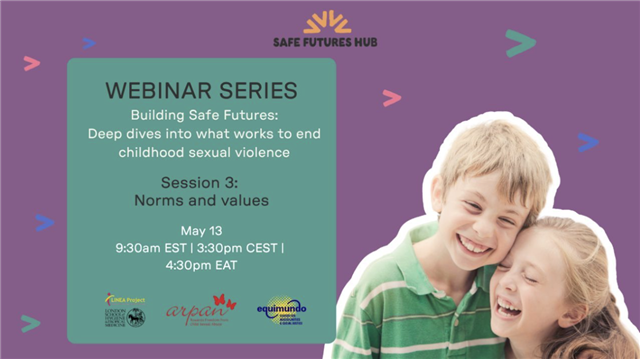
Webinar: Norms Matter, What Works in Shifting Attitudes and Preventing Abuse
Safe Futures Hub invites you to session 3 of the Building Safe Futures webinar series, where they will explore why norms and values are central to preventing childhood sexual violence. The beliefs communities hold about gender, power, sexuality, and childhood shape how violence is understood and how communities can support safety for all children.
In this session, experts and practitioners will share their implementation experience, reflect on lessons learned, and address the gaps identified in the evidence. The webinar will explore what has made norm-focused work effective in different settings, the obstacles that continue to stand in the way, and what needs to shift to strengthen prevention efforts going forward.
Date: 13 May 2026
Time: 15:30 (SAST)
Learn more: here
|
|
|---|
|
|
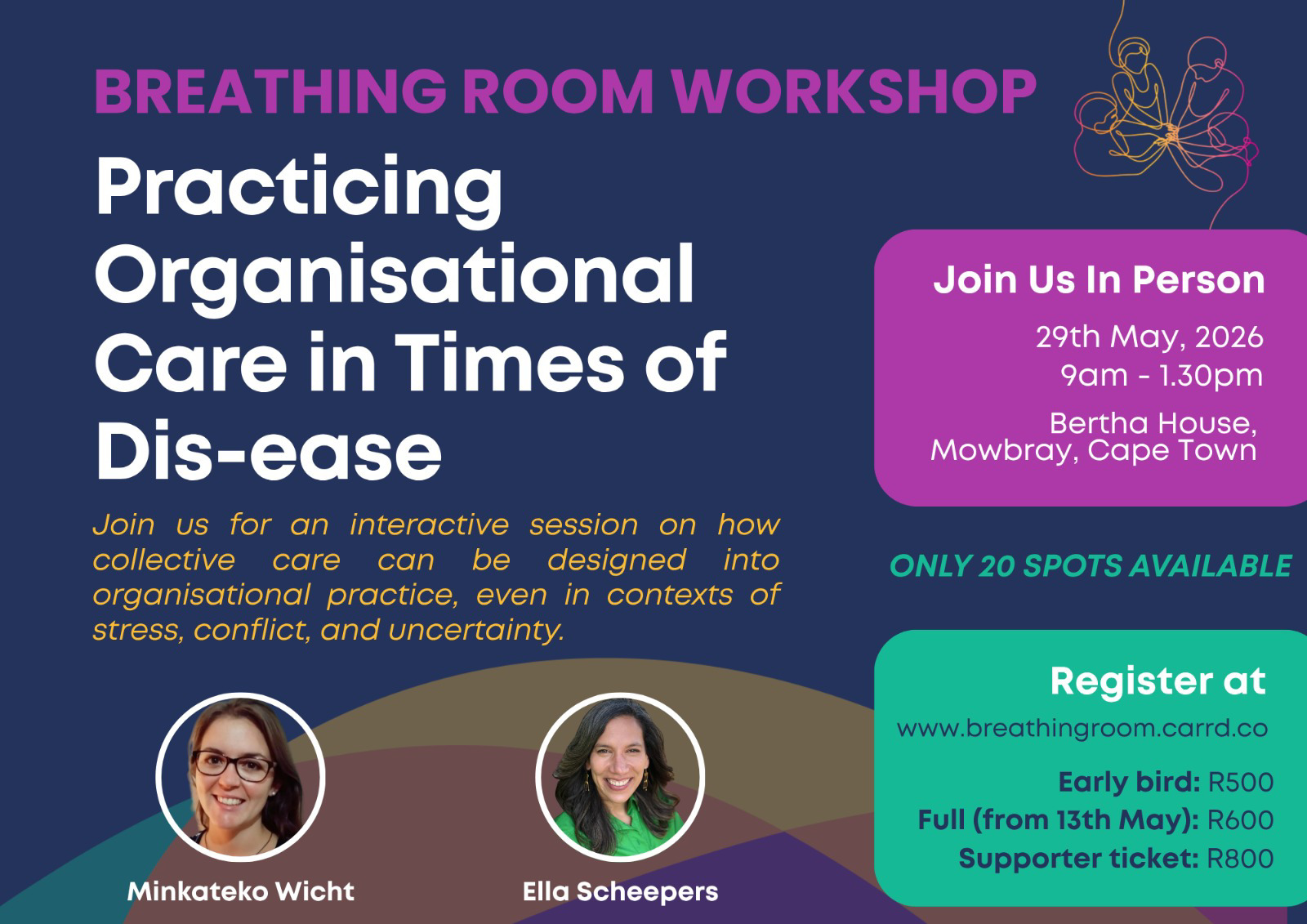
Workshop: Breathing Room, Practising Organisational care in times of dis-ease
Hands-on in collaboration with Wellbeing Architects, invite you to a one-day interactive workshop exploring how collective care can be designed into organisational practice, even in contexts of stress, conflict, and uncertainty.
Breathing Room is the relational, emotional, and learning capacities that allow people and organisations to remain connected, adaptive, and humane in the midst of disruption. It is the invisible network of behaviours, practices, relationships, and shared norms through which trust is built, conflict is engaged, and collective work can continue.
Date: 29 May 2026
Time: 09:00-13:30
|
|
|---|
|
|
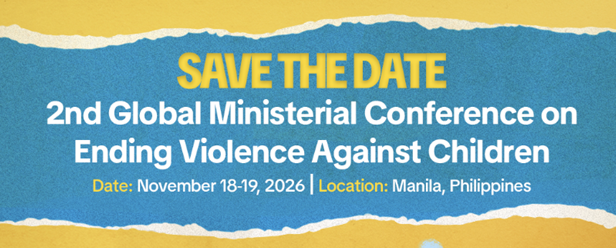
Save the date: 2nd Global Ministerial Conference on Ending Violence Against Children
In November 2024, over 100 governments pledged concrete action for child protection at the first Global Ministerial Conference on Ending Violence Against Children.
The Conference was a milestone in shaping a collective framework to end violence against children – a historical moment that recognised the global scale of the issue, the urgent need to invest in child protection and wellbeing, and the power of evidence-based, high-impact solutions. These include parenting and caregiver support, safe and nurturing schools, and strong response and support services.
The second conference is a moment of both opportunity and responsibility. Turning words into action demands shared commitment, strategic support, and real accountability.
|
|
|---|
|
|
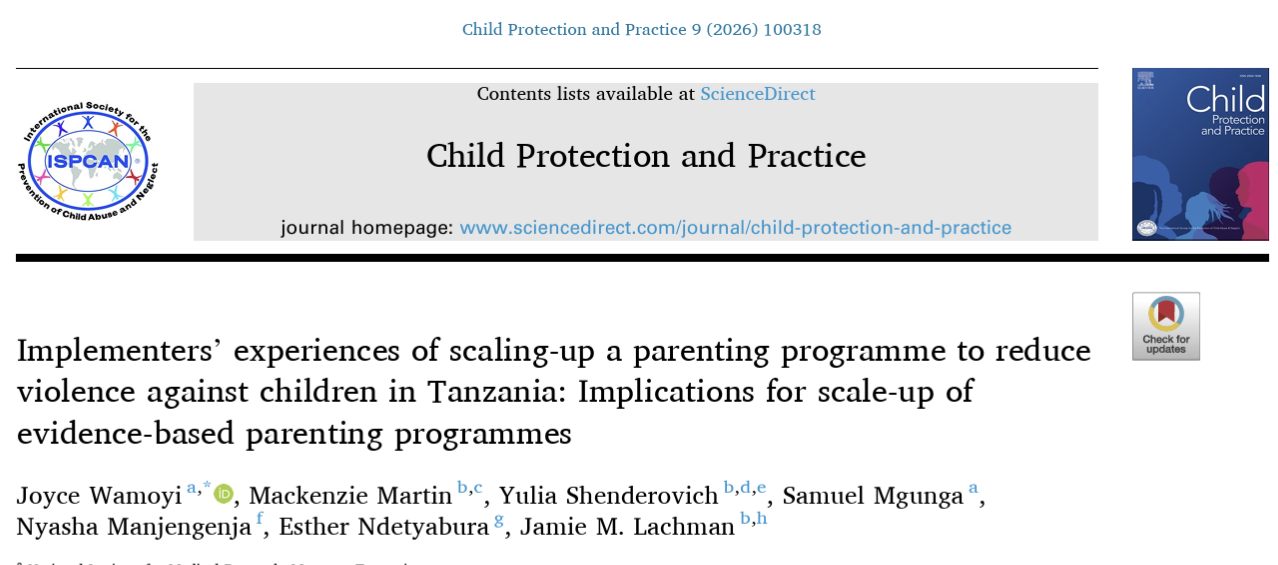
Research Paper: Implementers’ Experiences of Scaling-up a Parenting Programme to Reduce Violence Against Children in Tanzania
Considerable evidence suggests that parenting programmes reduce violence against children (VAC) and point to readiness for scale-up. However, there is limited evidence on implementation quality and scale-up from low-resource settings.
This paper explores the experiences of implementers who delivered Parenting for Lifelong Health for Teens (PLH-Teens) to 75,061 beneficiaries in Tanzania. It shows that while it is possible to deliver an evidence-based parenting intervention at scale in a low-resource country like Tanzania, it is key to consider the challenges expressed by implementers to sustain the programme at scale. |
|
|---|
|
|
| |
| |
|
View this email in your browser
You are receiving this email because of your relationship with Violence Prevention Forum @ the Institute for Security Studies. Please reconfirm your interest in receiving emails from us. If you do not wish to receive any more emails, you can unsubscribe here.
|
|
|
|
|