|
|
Chess in Every Classroom
|
|
|
Surprisingly quiet
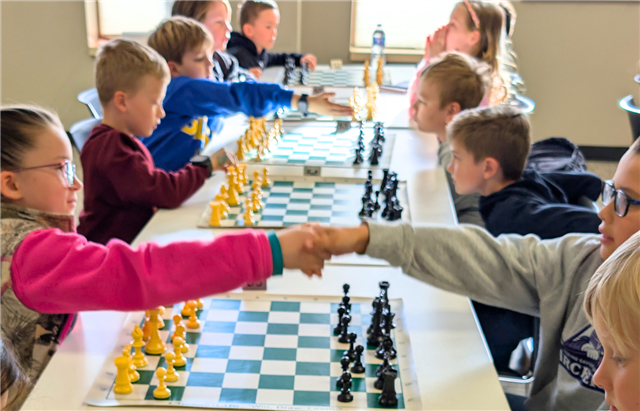
Ask any teacher who’s run a chess club. The boards come out, the room gets loud — then it goes quiet. Surprisingly quiet. The bell rings and nobody moves.
To a kid it’s just a game. They’re plotting, thinking three moves ahead, changing their mind at the last second, trash-talking a rook, and having far too much fun to notice that any of it counts as study.
|
Start with what you have
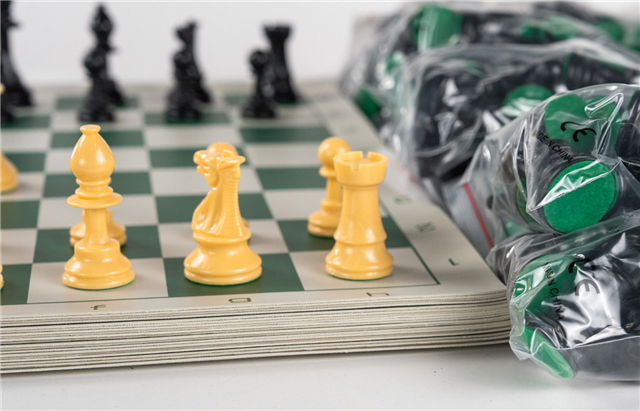
You don’t need a finished program, a trained coach, or a curriculum to begin. A handful of durable sets and a room after lunch is actually enough, and most of the schools we work with started exactly there. Club sets with weighted pieces on roll-up boards are built to survive daily classroom use and priced so you can outfit a whole room at once. A roll-up or wall demo board lets you teach thirty students at the same time instead of crowding them around one table. Workbooks such as
Chess Rules for Students,
Chess Tactics for Students, and
Checkmate! Ideas for Students let kids move at their own pace, which matters when half the room has never played. Clocks and scorebooks come later, when students are ready for real games.
|
|
The small stuff keeps them coming back
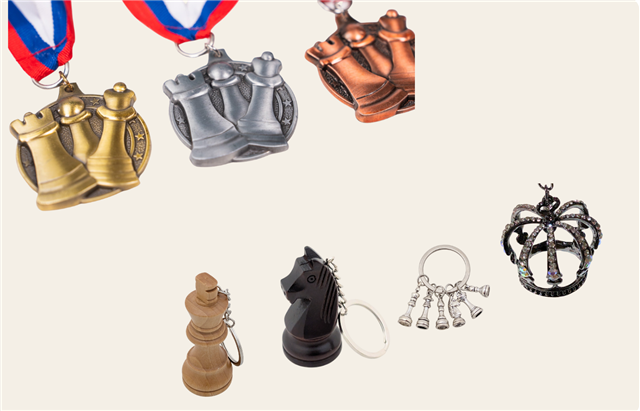
Medals, wristbands, pencils, knight erasers, chess piece key chains. They cost very little and they do a surprising amount of work getting students back the following week. Teachers tell us this more often than anything else — that the club survived its first term because there was something to hand out. It is the cheapest line on any club budget and usually the most important one.
|
|
Giant chess, for the kids who’d never join a club
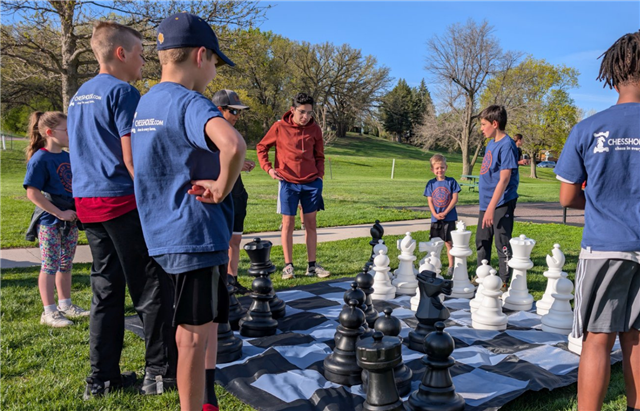
The Giant game turns chess into something a whole schoolyard can watch. Twenty-five-inch pieces on a roll-out mat work on a field, a courtyard, a gym floor, or a library corner, and they pull in students who would never put their name on a club sign-up sheet. Schools use it for field day, recess, open houses, and reading nights. Mats come in indoor and outdoor versions, there’s a rolling storage bag so one person can move the whole thing, and sets start well below what most people assume.
|
|
How schools actually buy
More than 70% of U.S. school districts already have Chess House as an approved vendor, so in most cases the paperwork is already done. Teachers and coaches can order online with a card or school purchasing card, or set up a free teacher account to pull a PDF quote and have a purchase order issued against it. Approval is fast. Schools and educational nonprofits provide a tax-exempt certificate once and every future order ships without sales tax. Districts buying for several schools can set up an account with school pricing, direct invoicing, and terms. And when a knight goes missing, our piece replacement program will complete the sets again.
|
|
|
Everything a school or club needs, in one place.
|
Two things that are free
|
|
Free guide
Our Start a Chess Club guide walks a teacher, coach, or parent volunteer from a first thirty-minute session to a program that lasts. It costs nothing and you don’t have to buy anything to get it.
Get the free guide →
|
|
|
Monthly giveaway
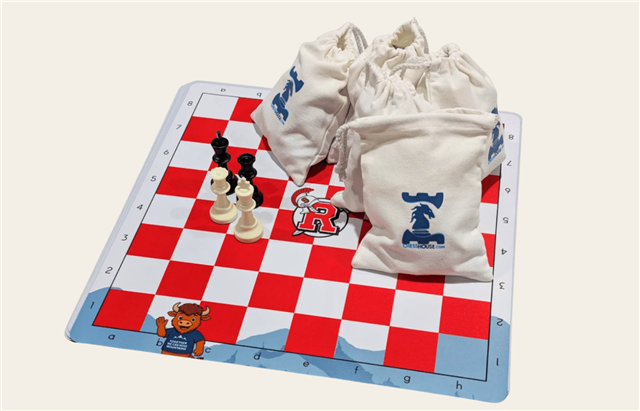
Every month we give one U.S. school five complete chess sets — tournament-grade Staunton pieces with felt bases, drawstring bags, and custom roll-up boards printed with that school’s own logo, shipped free. Applying takes about three minutes, and one application keeps your school in the drawing for a full twelve months. Every applicant gets the guide, win or not.
Tell us about your school →
|
|
|
|
Questions? schools@chesshouse.com · 1-800-348-4749
|
|
Chess House on K12 Academics
Explore the full affiliate profile
|
|
|
|